





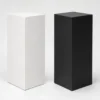





A display pedestal made from steel, not board
Most display pedestals on the market are MDF or laminate over a board core. This one is folded and welded from cold-rolled steel sheet, then powder coated. It is also known as a display plinth, gallery plinth or gallery pedestal, depending on who you ask and where they trained.
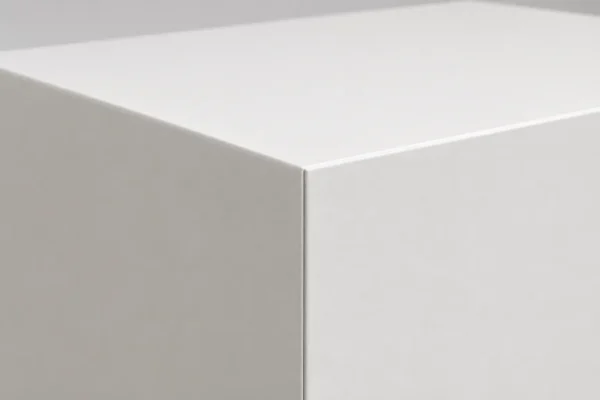
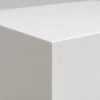
The practical difference shows up at the edges and corners. Board pedestals chip and dent where they get knocked, and the damage is hard to hide because the substrate is a different colour from the finish. A powder-coated steel pedestal has no soft edge to crush, and the finish is baked on rather than painted over.
Where it works
Galleries and artist studios, sculpture and object display, retail merchandising and window displays, boutiques and showrooms, hospitality and interior fit-outs, product launches, trade shows and exhibitions, and residential art display. It is designed for indoor use.
How it is made
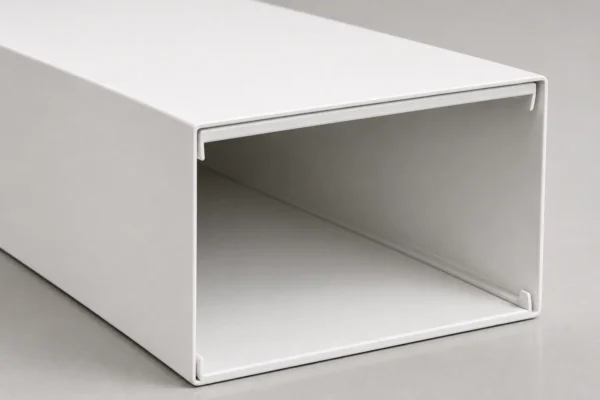
Each pedestal is cut from two flat blanks, a body wrap and a top cap. The body is bent into a C, the top cap is dropped in from above, and every weld is made on the inside of the box. Nothing is ground back on the visible faces, because there is nothing on the visible faces to grind.
- Cold-rolled mild steel sheet. 18 gauge (0.048 in / 1.22 mm) on 12 to 20 inch tops; 16 gauge (0.060 in / 1.52 mm) on 24 inch tops and larger.
- Welded from the inside. No weld seams on the show faces.
- Open bottom with inward return flanges. The flanges give a flat landing for felt pads or rubber glides, and let you lift the pedestal by getting your fingers under the edge.
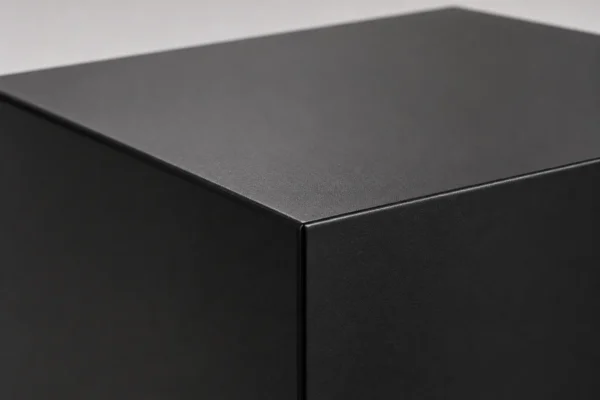
- Powder coated in Matte White or Matte Black.
- Built to order in Metro Vancouver.
Choosing a size
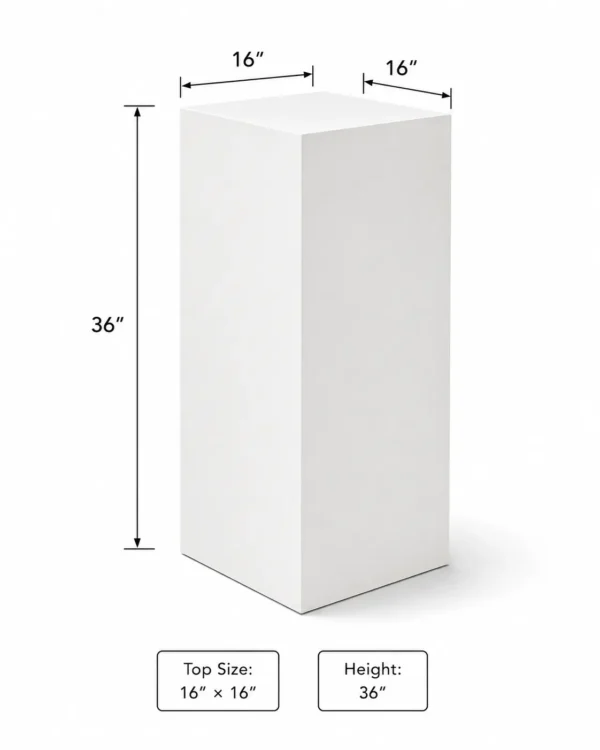
The top is square. A 16 in top is 16 in by 16 in. Height is measured from the floor to the top surface, so an order for a 16 in top at 36 in high gives you a 16 x 16 x 36 in pedestal.
Two rules of thumb used across the display trade:
- Top size. Measure the base of the object, then add roughly 2 to 4 inches in each direction and round up to the next size. A top that is slightly wider than the widest point of the piece reads as deliberate; one that is narrower reads as an accident.
- Height. Aim to put the visual centre of the object near standing eye level, around 60 in for most adults. Small objects usually want a taller pedestal; a tall sculpture usually wants a shorter one.
If you are grouping pedestals, varying the heights and keeping the top size constant reads better than the reverse.
Finishes
Matte White and Matte Black, powder coated. Both cost the same, so the choice is purely visual. Matte White disappears against a gallery wall; Matte Black holds its own edge in a darker retail or hospitality interior.
Ordering
Buy any quantity. Order one pedestal or fifty at the price shown. The price on this page is the per-unit price and applies to every size, in either finish.
Volume pricing on 5+ units. Order five or more pedestals in one finish, in any mix of sizes and heights, and a lower per-unit price is applied automatically in the cart.
Mixed finishes. Ordering both Matte White and Matte Black together needs a colour change during finishing, so mixed-finish orders are handled by quote rather than through the cart. Tell us the split you want and we will confirm the total.
Freight is not included in the price. These are steel, and the larger sizes are heavy. Local pickup from our North Vancouver shop is available. For delivery anywhere else, freight is quoted separately once we know the size, quantity and destination.
Custom sizes
The sizes listed here are our stocked programs. We fabricate to order, so other top sizes, heights and proportions are possible, as are non-square tops. Send us the dimensions and we will quote it.