
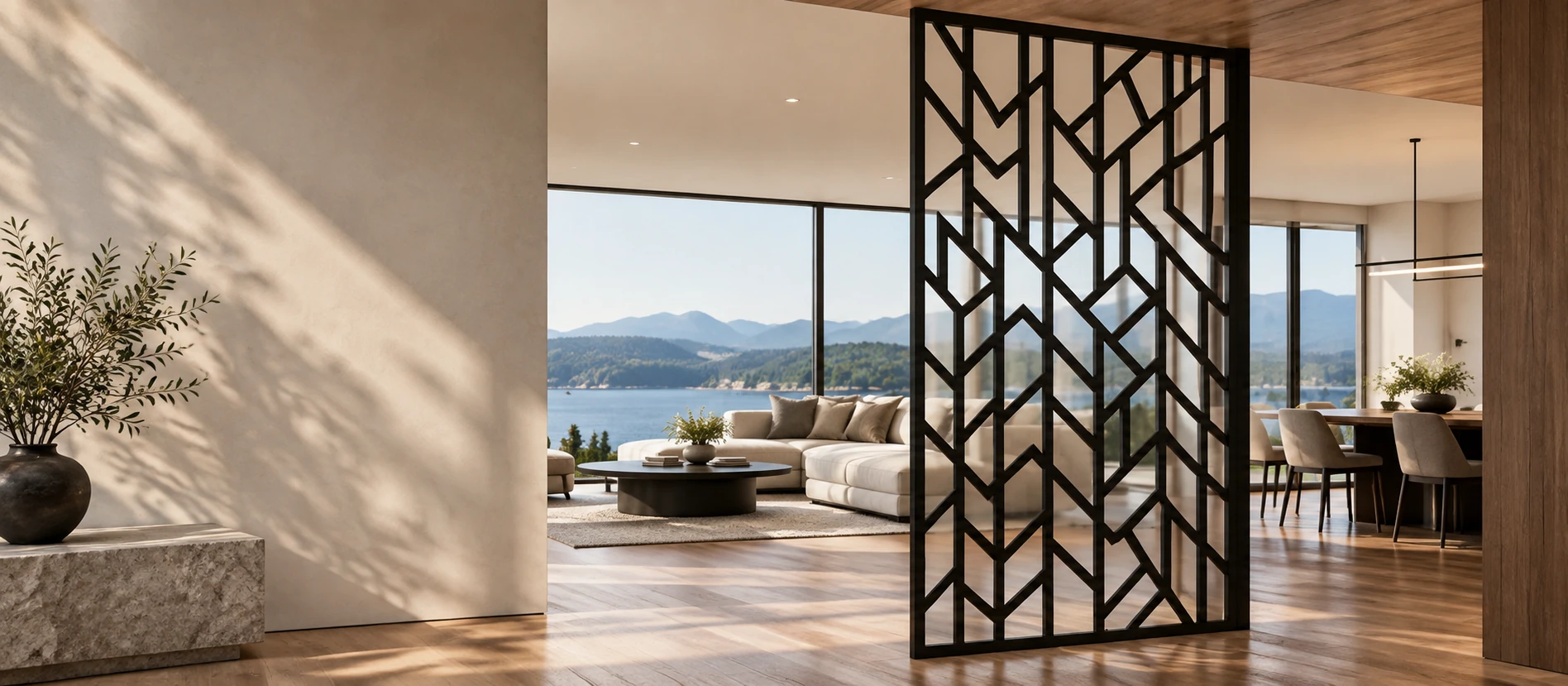
Decorative Metal Screens and Room Dividers
Laser-cut steel panels that divide a room without closing it. Sixty patterns to choose from, made to measure, freestanding or fixed. Drawn, cut and finished for the room they are going into.
What a Screen Is Actually Doing
A decorative screen solves a problem that a wall would solve badly. It breaks a sight line between a front door and a dining table, gives a desk in a corner of a living room some separation, or holds the edge of an open-plan space without shutting off the light. Because it is read as an object rather than as building fabric, people judge it visually rather than by the weight of steel in it.
That is a different job from an outdoor privacy screen, which has to deal with wind and weather, and different again from a glazed partition. If the screen is going outside, start with privacy screens, which are detailed for that work. If you want steel-framed glass between two rooms, that is a metal partition.
The Pattern Library
Sixty patterns in six styles. Each one can be scaled, stretched or thinned to suit the panel it is going on, so the density you see here is a starting point rather than a fixed drawing. Pattern density changes what the screen does: an open pattern reads as texture, a tight one gives you real separation at an angle. Each pattern is marked open, balanced or private as a guide to how much it closes down a sight line.
Design visualizations shown for configuration and pattern reference. Final dimensions, detailing and mounting are confirmed for each project. Pricing is confirmed by quotation based on size, pattern, frame and mounting format.
Showing all 60 patterns
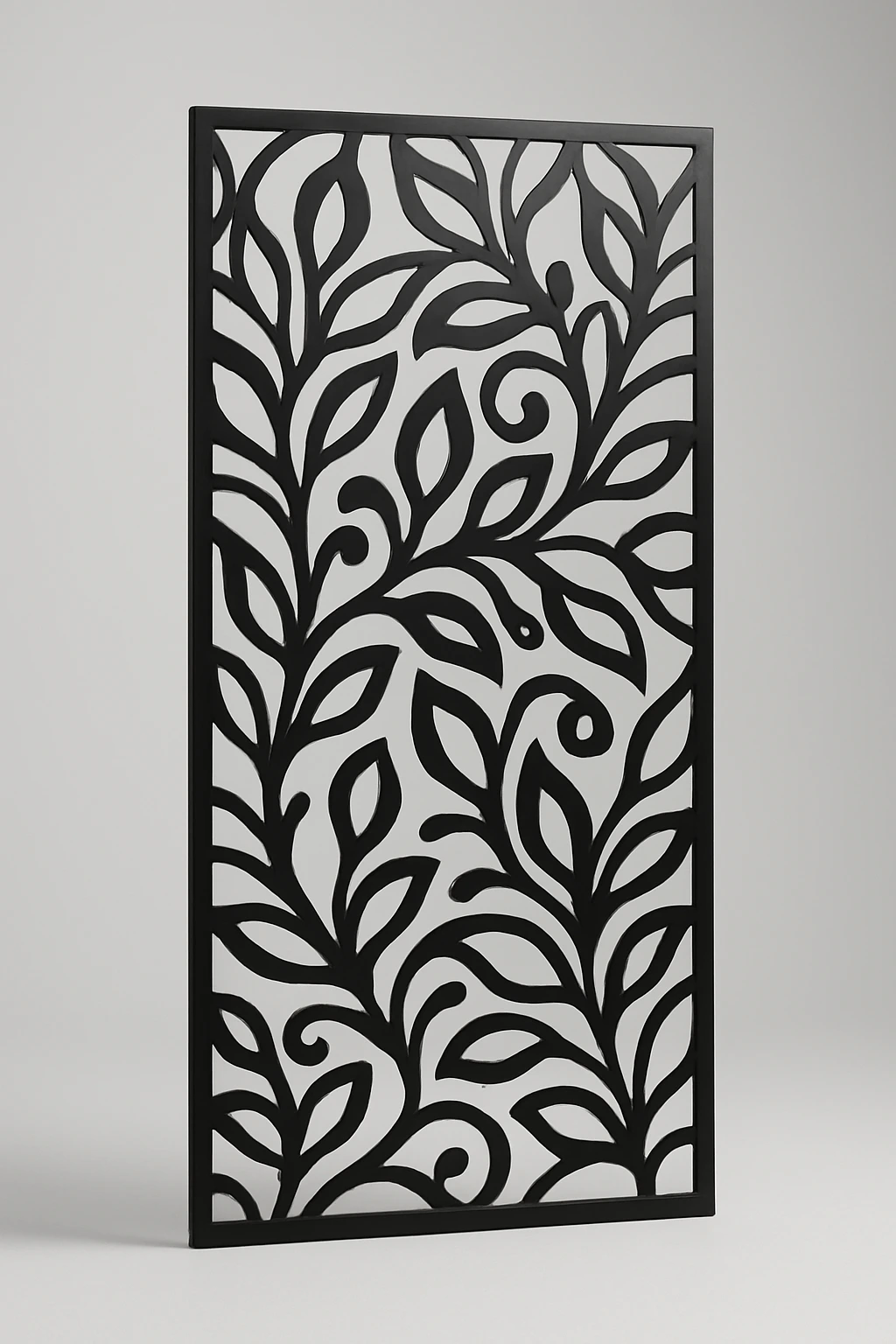
A leafy branch pattern with large, well-spaced leaves. The most open of the botanical group and the one that reads as texture rather than as a barrier.
Request this pattern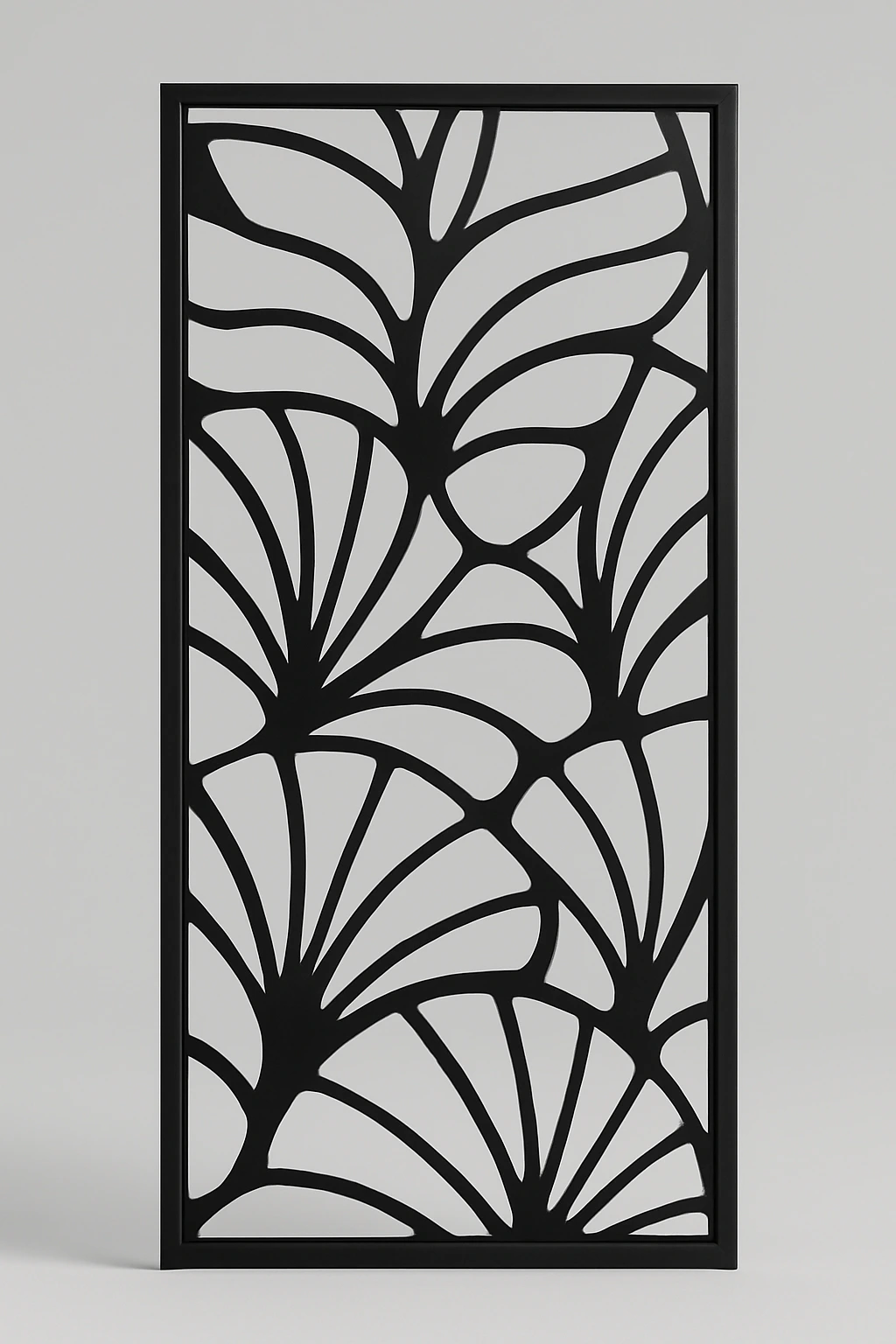
Overlapping fan-shaped leaves at a large scale. Reads as a single graphic from across a room and as separate leaves up close.
Request this pattern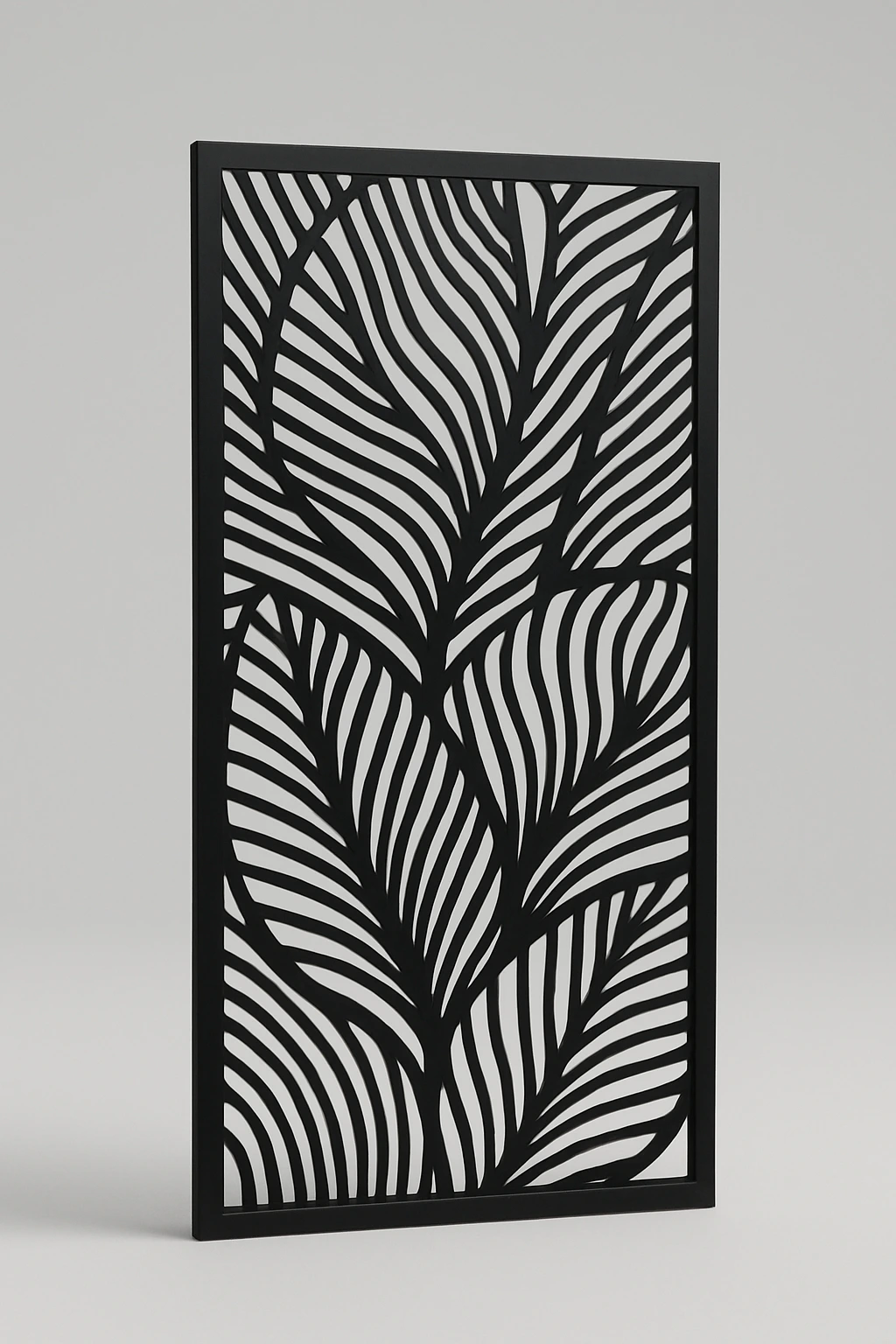
Fine feathered fronds sweeping across the panel. Dense enough to soften a sight line while keeping the panel light.
Request this pattern
Branching fern fronds packed edge to edge. One of the more private botanical patterns.
Request this pattern
Large stylised leaf outlines drawn in a heavy line. Suits a screen that is meant to be looked at rather than through.
Request this pattern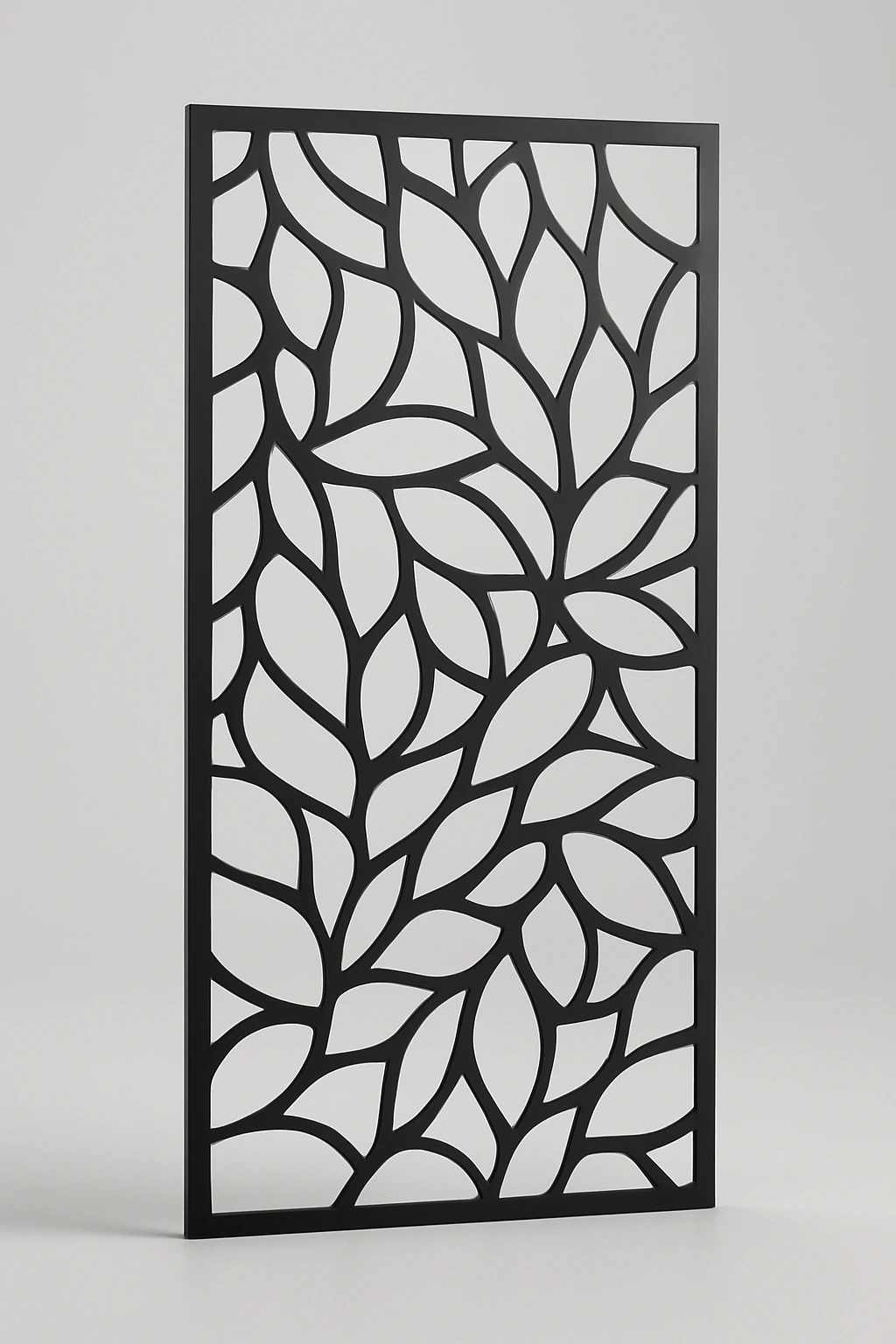
A dense mosaic of small leaves. High coverage with no repeat that the eye can lock onto.
Request this pattern
Tight palm fronds running the full height of the panel. The densest pattern in the botanical group.
Request this pattern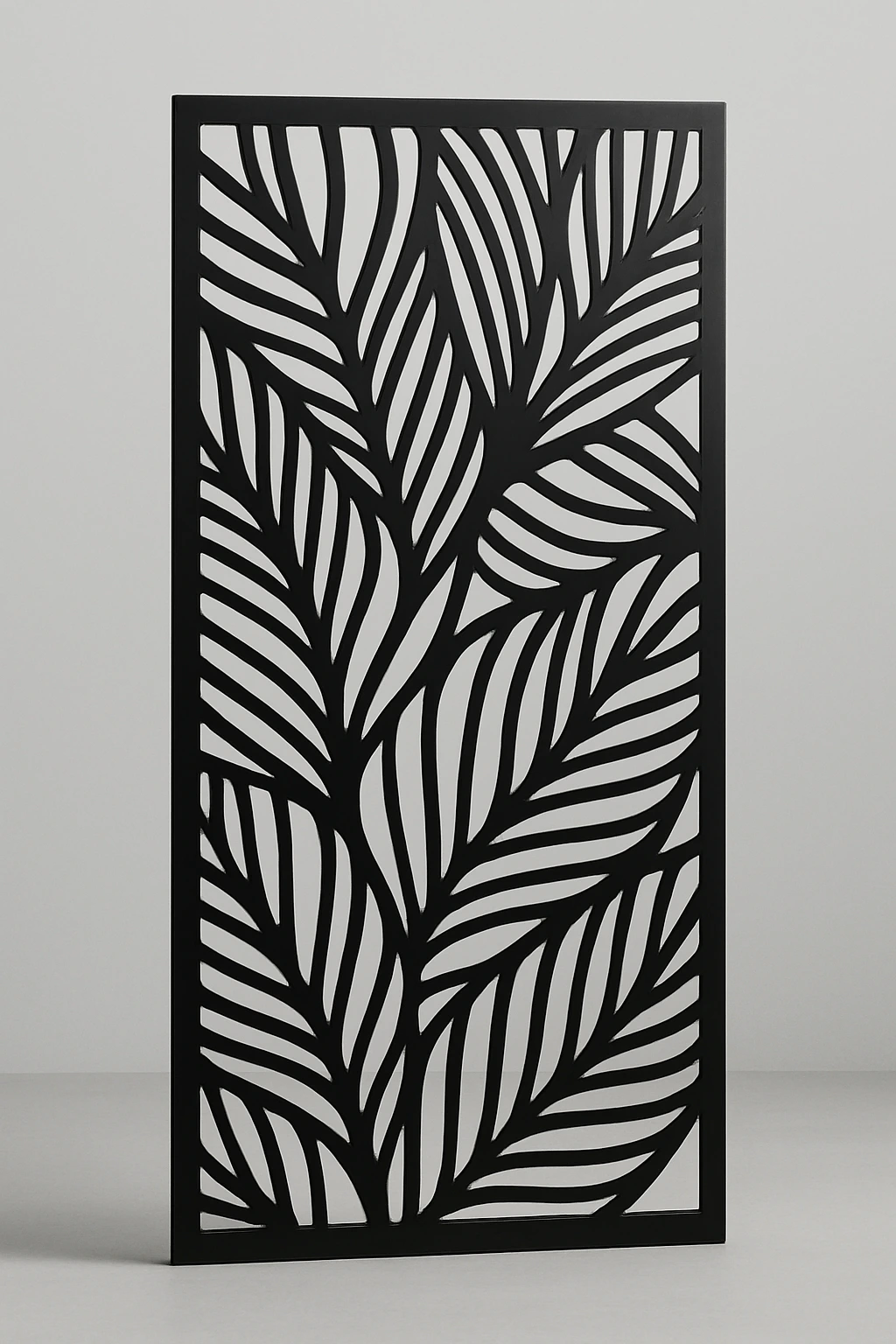
Large tropical fronds layered over each other. Bold at a distance, detailed close up.
Request this pattern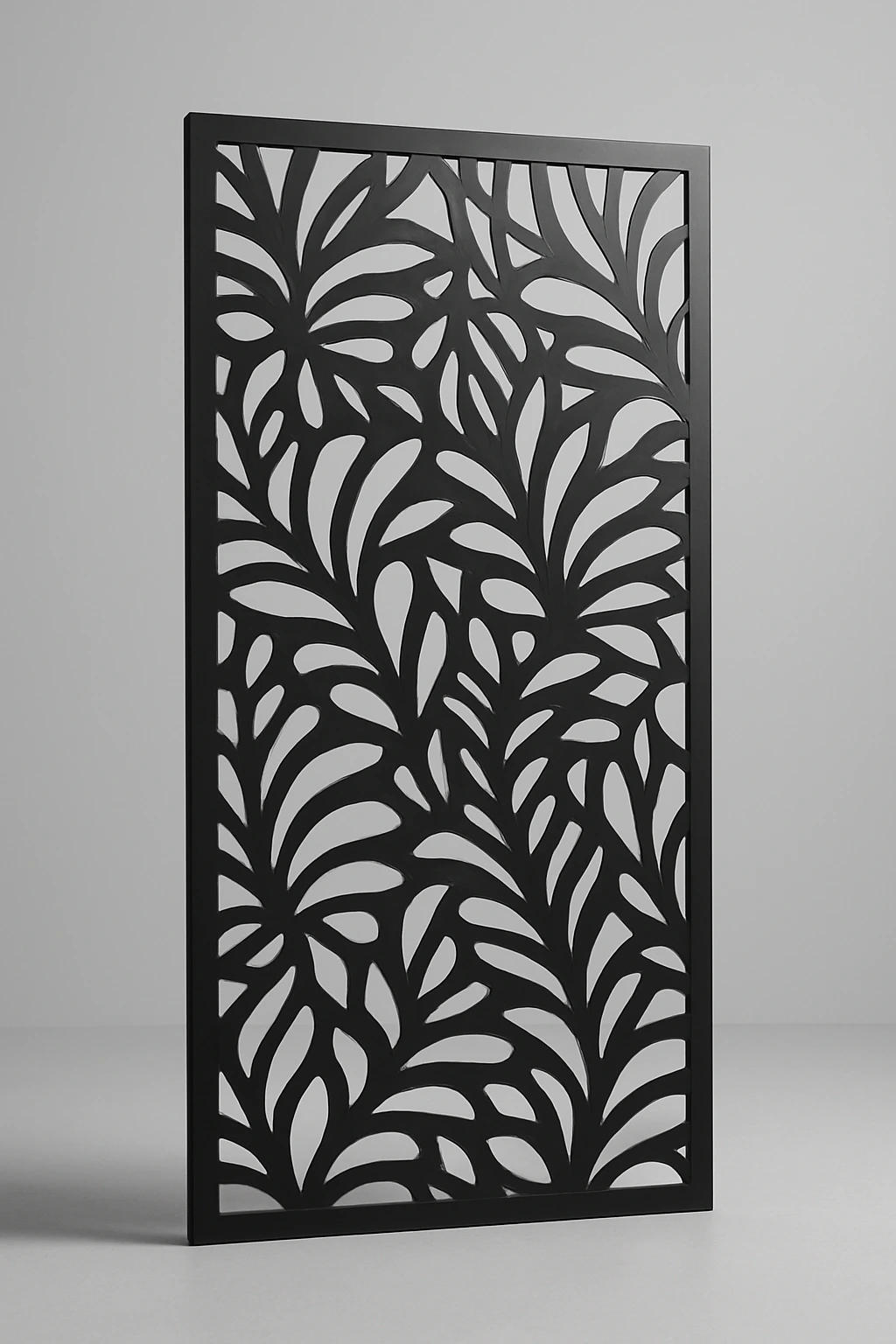
Fine fern foliage that thins toward the top of the panel, so daylight still comes over.
Request this pattern
A small-leaf vine running vertically. Quiet enough to sit behind furniture without competing.
Request this pattern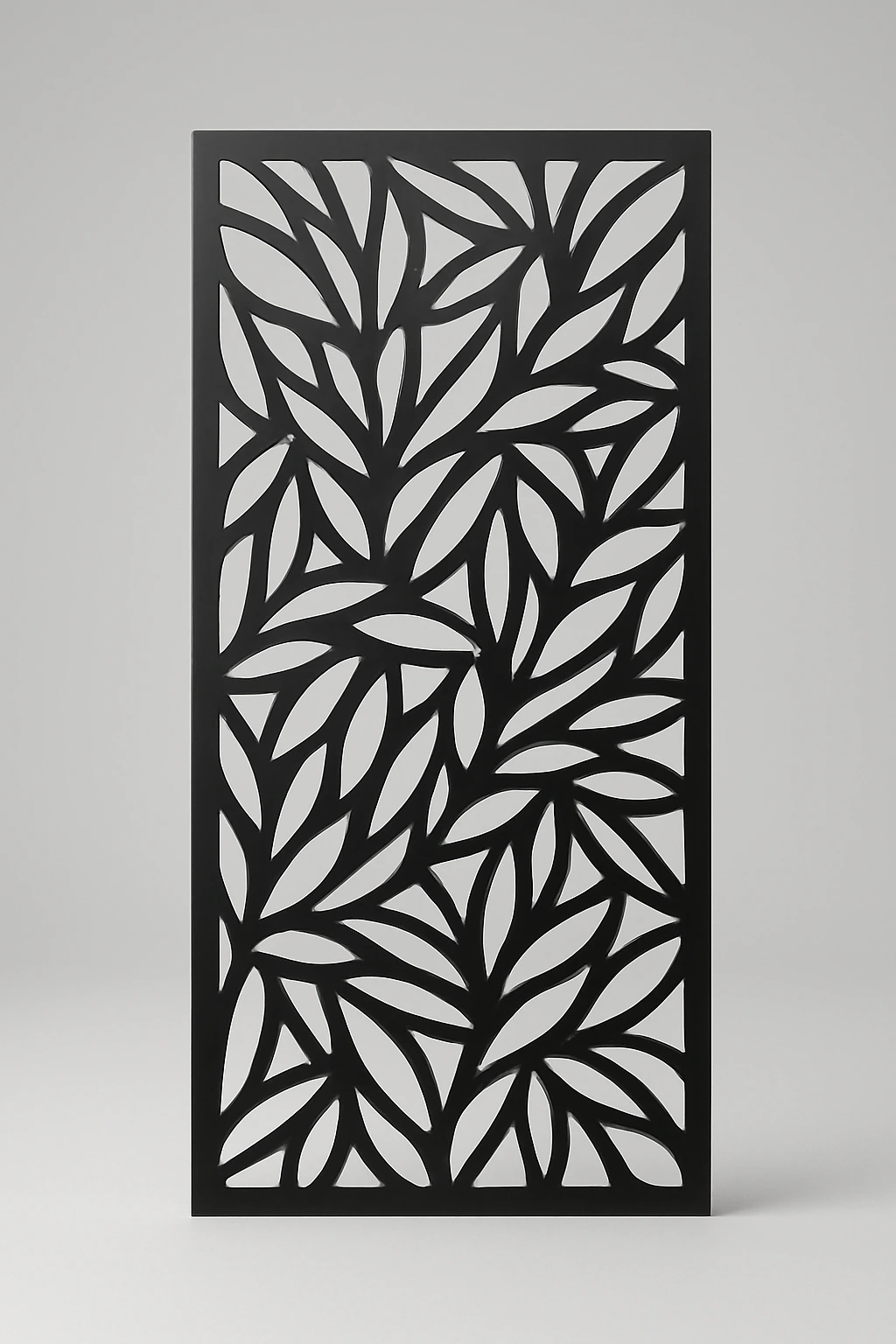
A leaf spray with clear open ground between the sprigs. Reads as drawing rather than as pattern.
Request this pattern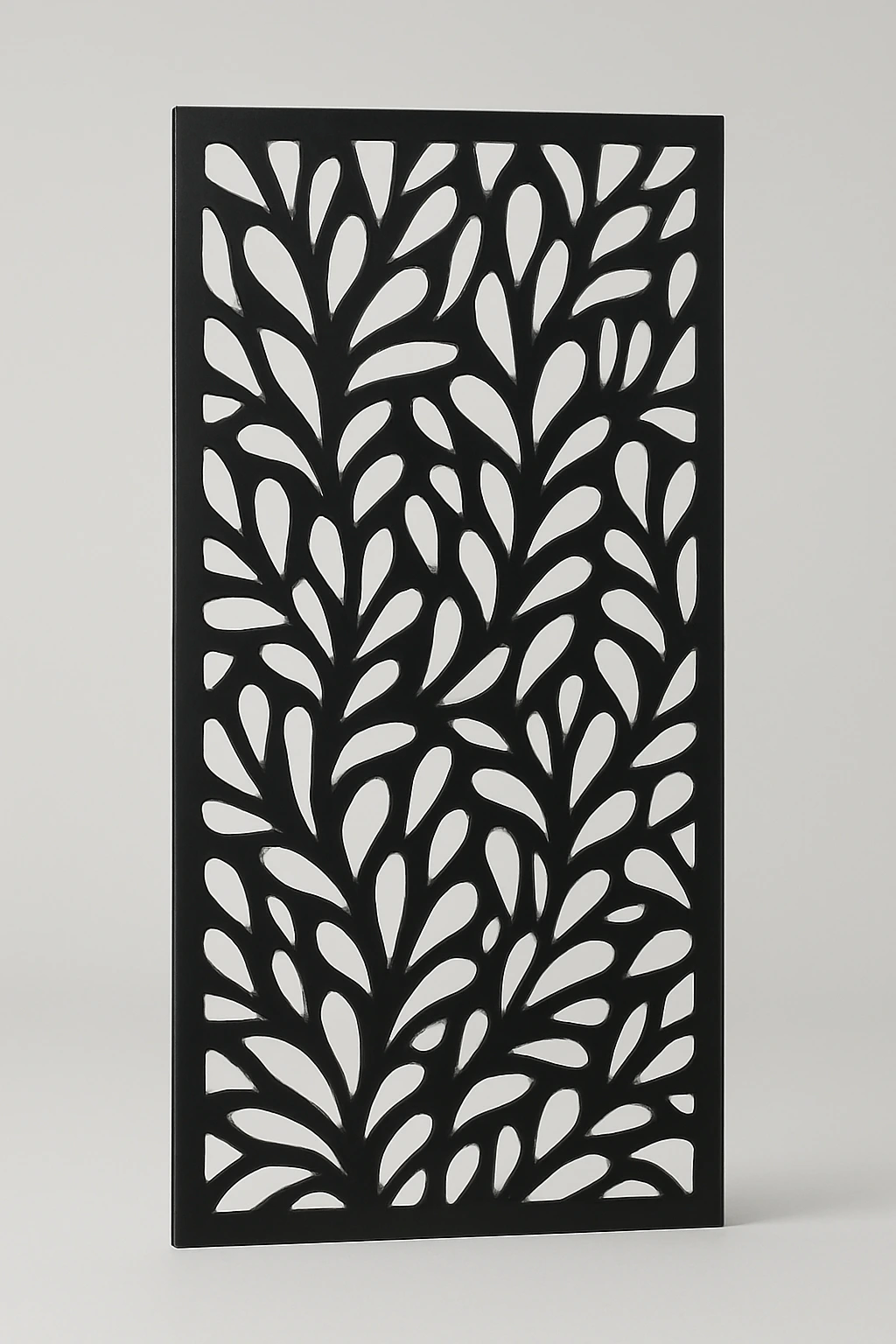
Cascading petal shapes, densest at the base and opening upward.
Request this pattern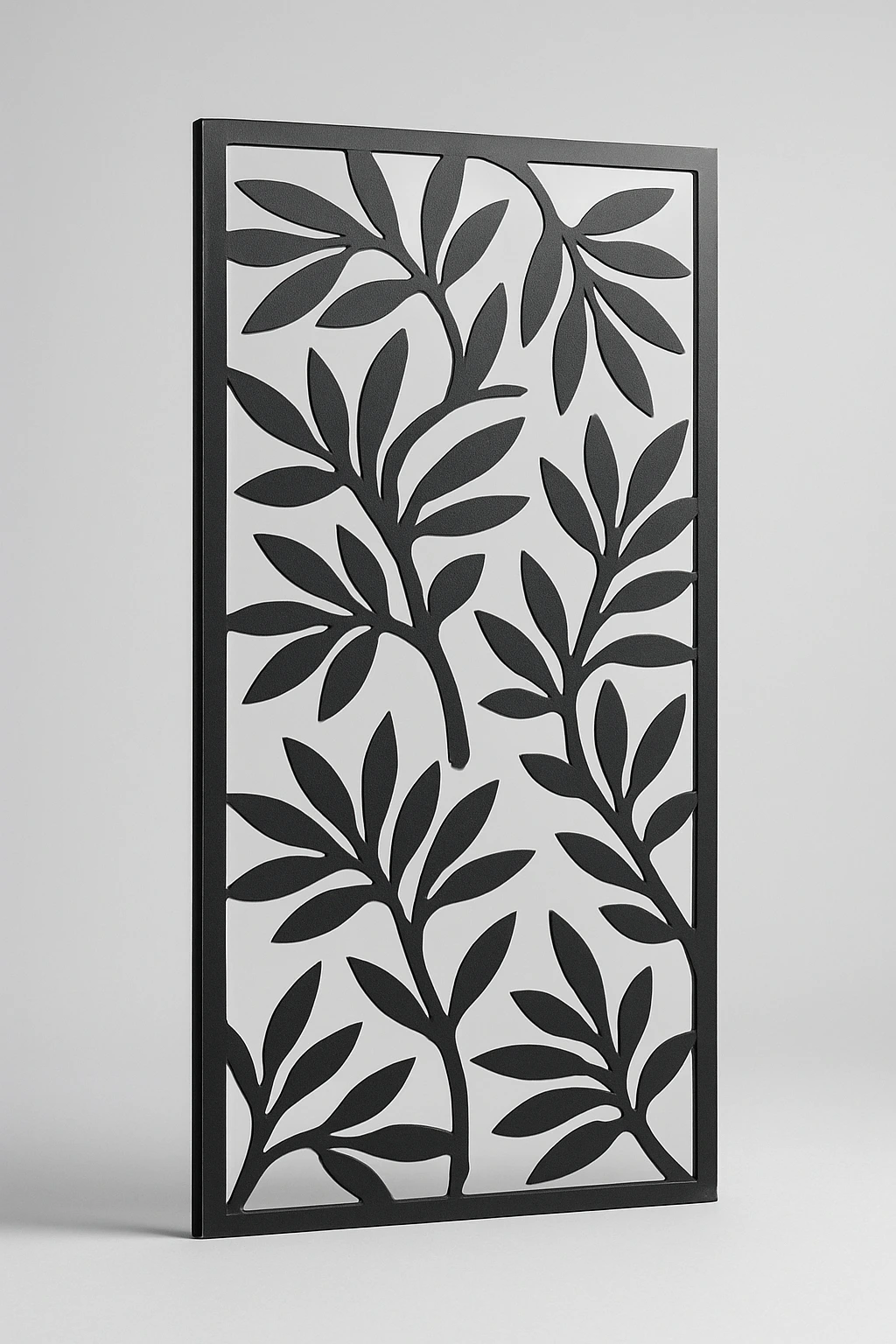
Open leafy sprigs on bare ground. The lightest coverage in the library.
Request this pattern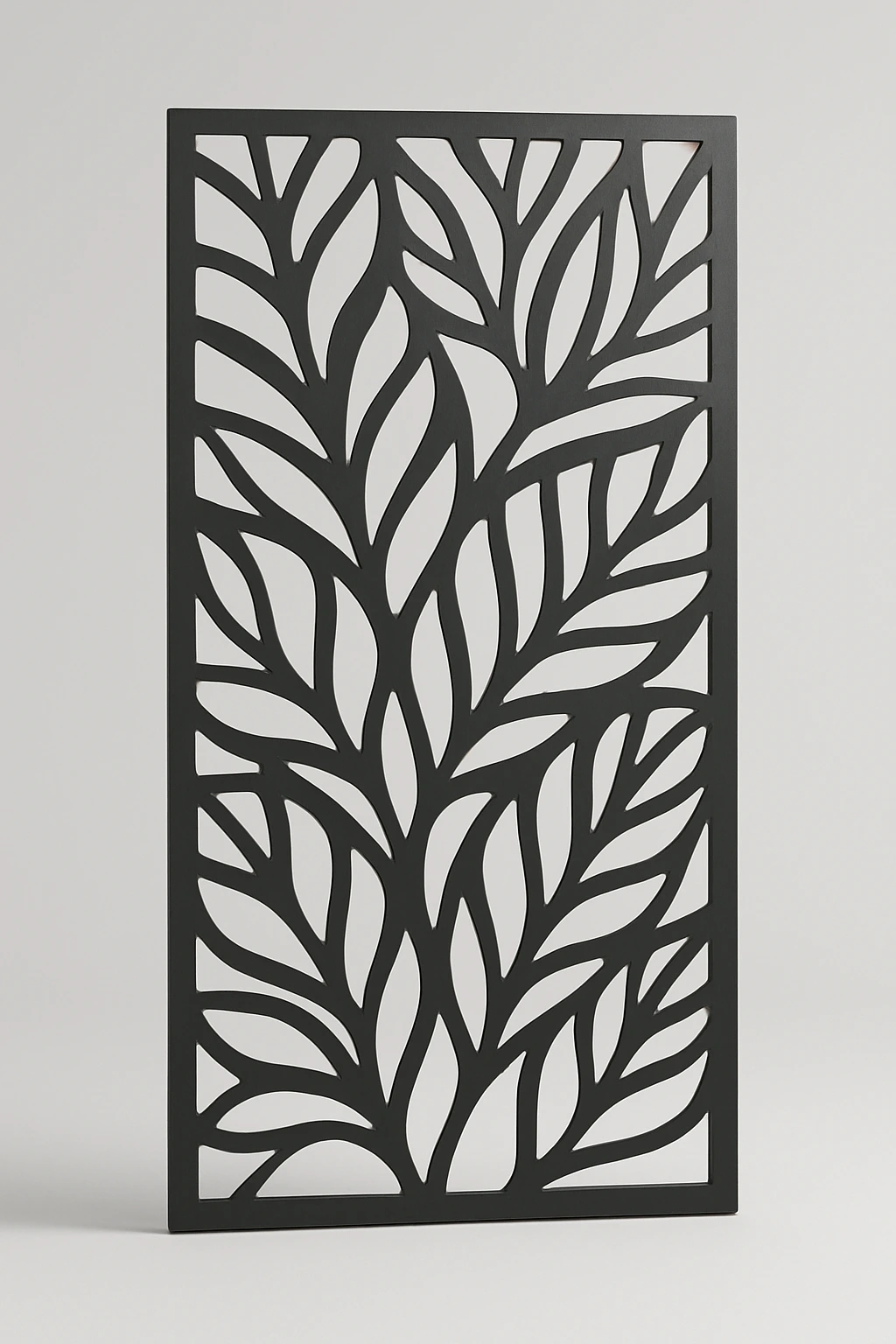
An open branching tree drawn across the full panel, weighted to one side.
Request this pattern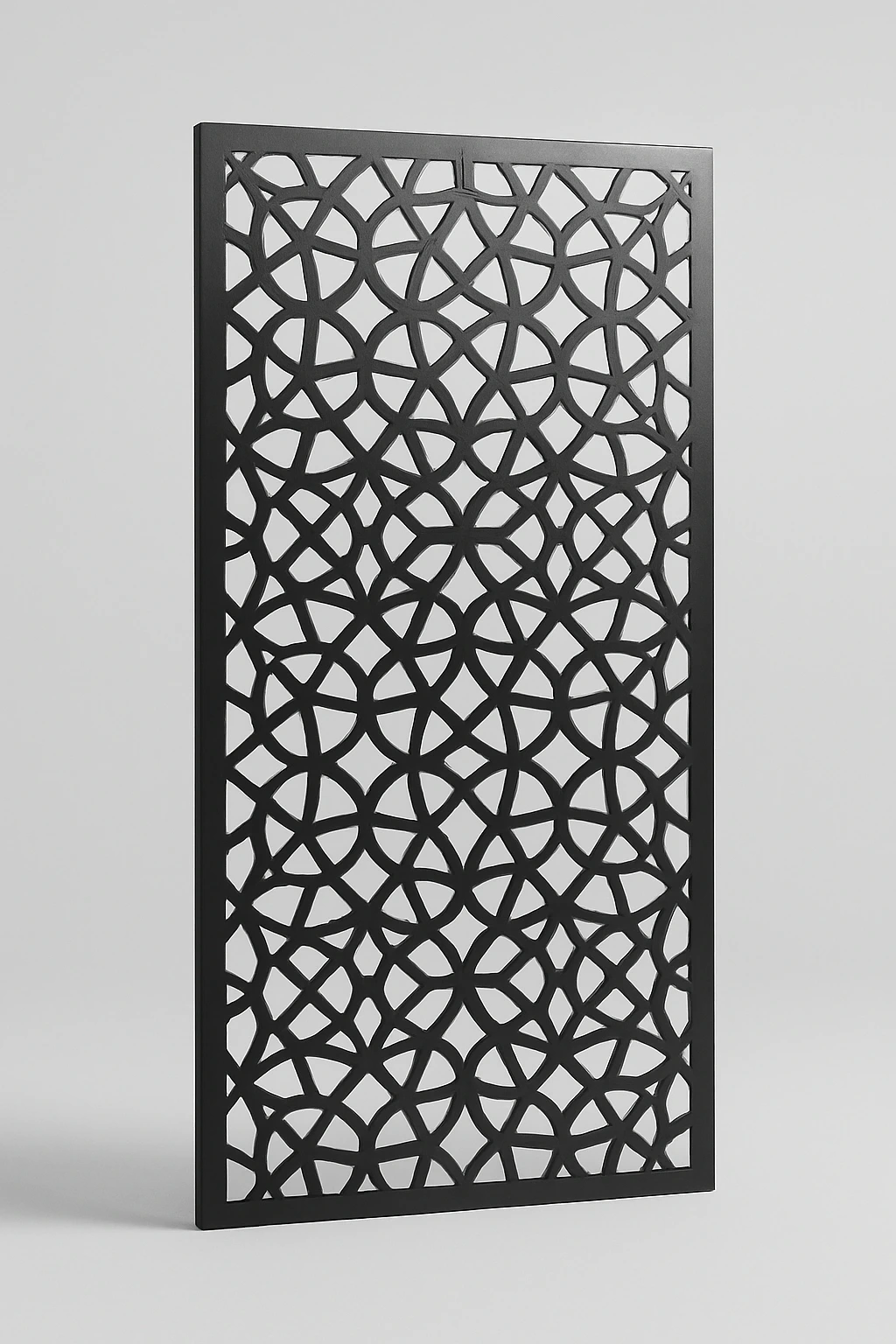
An interlaced lantern lattice at fine scale. Dense, even, and quiet from a distance.
Request this pattern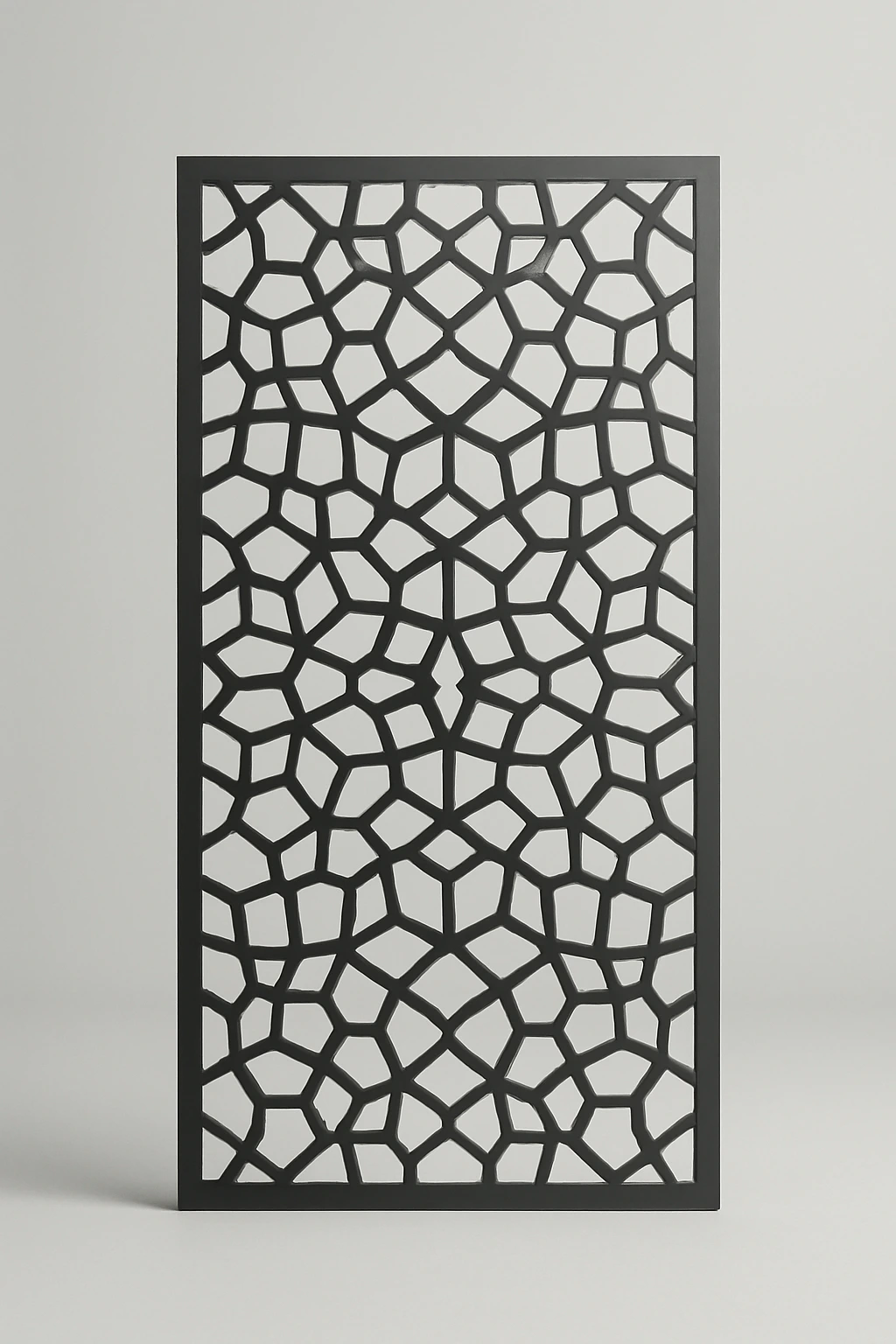
A fine geometric mosaic with no dominant motif. The choice when the pattern has to disappear into the room.
Request this pattern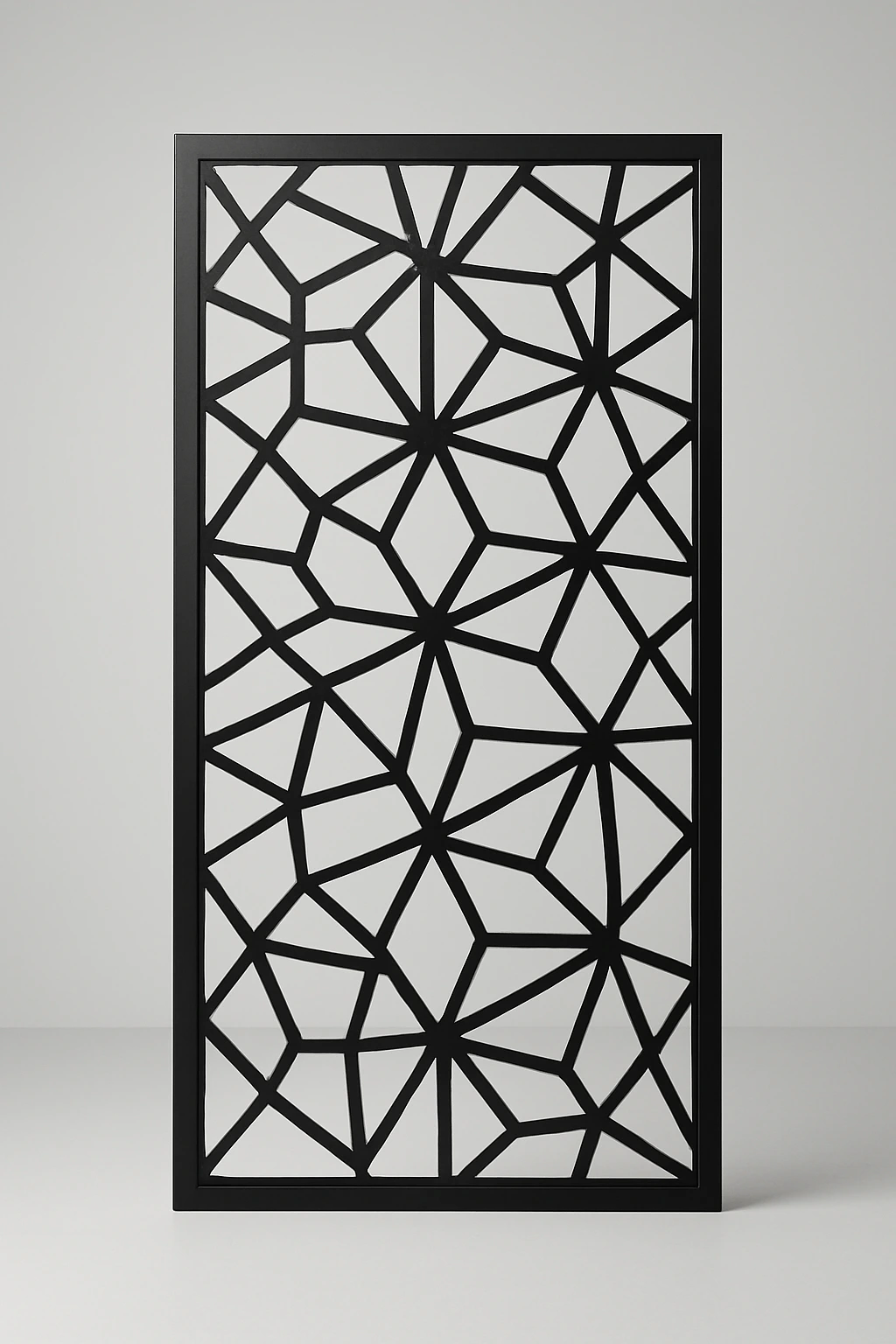
A faceted star net with clean straight edges. Reads as crisp geometry rather than ornament.
Request this pattern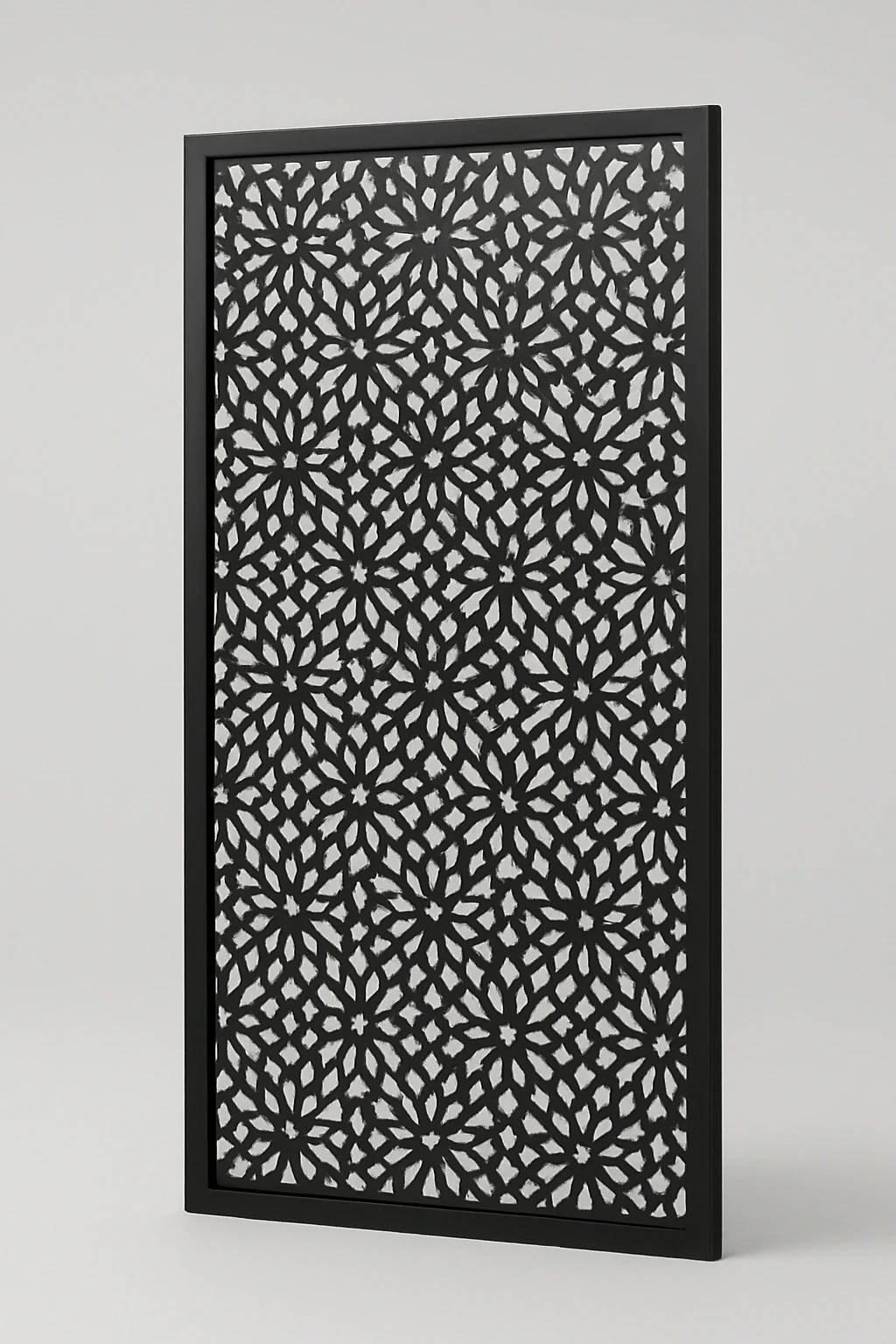
Small floral rosettes tiled edge to edge. High privacy, very fine grain.
Request this pattern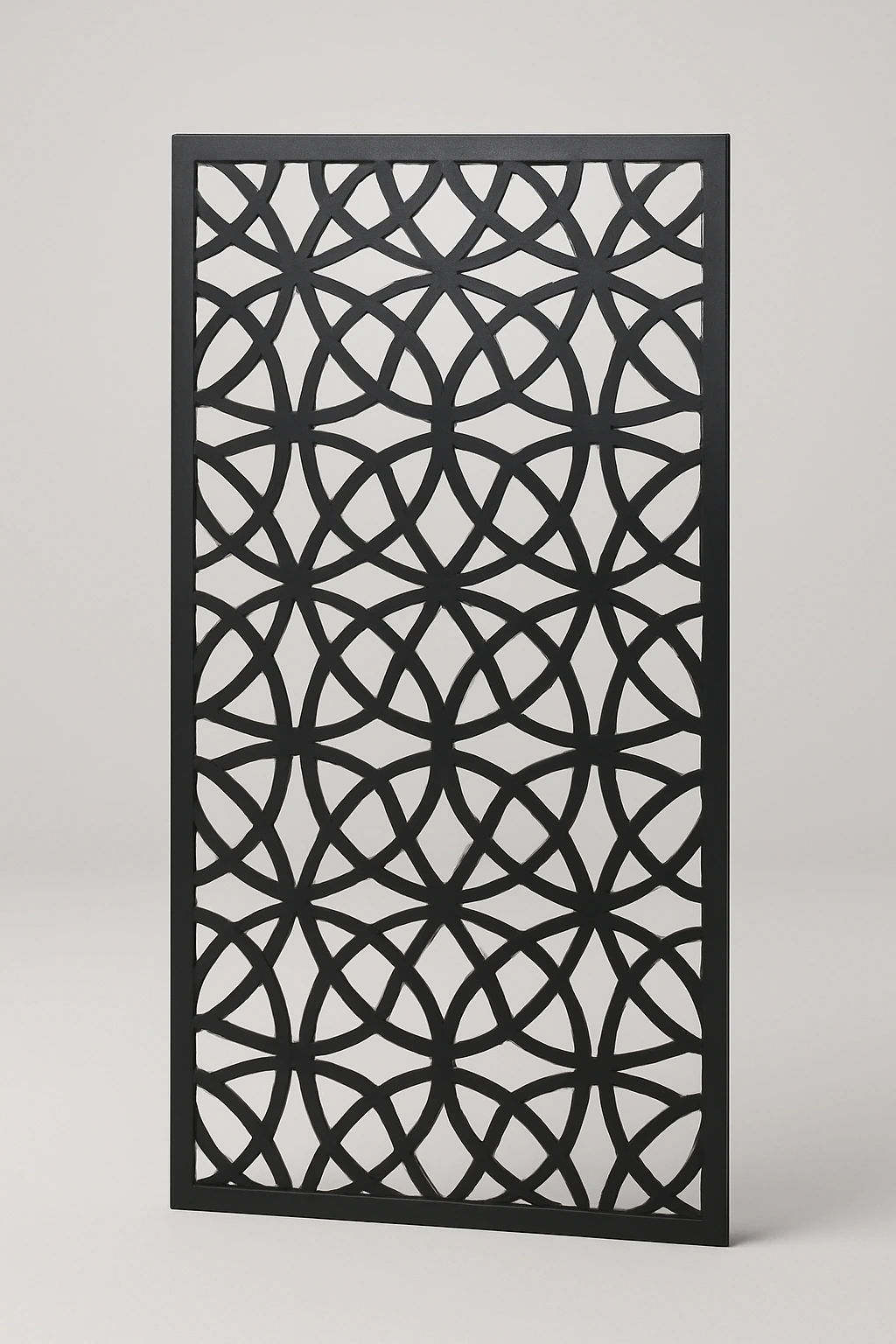
Interlocking circles forming a continuous net. Symmetrical in every direction.
Request this pattern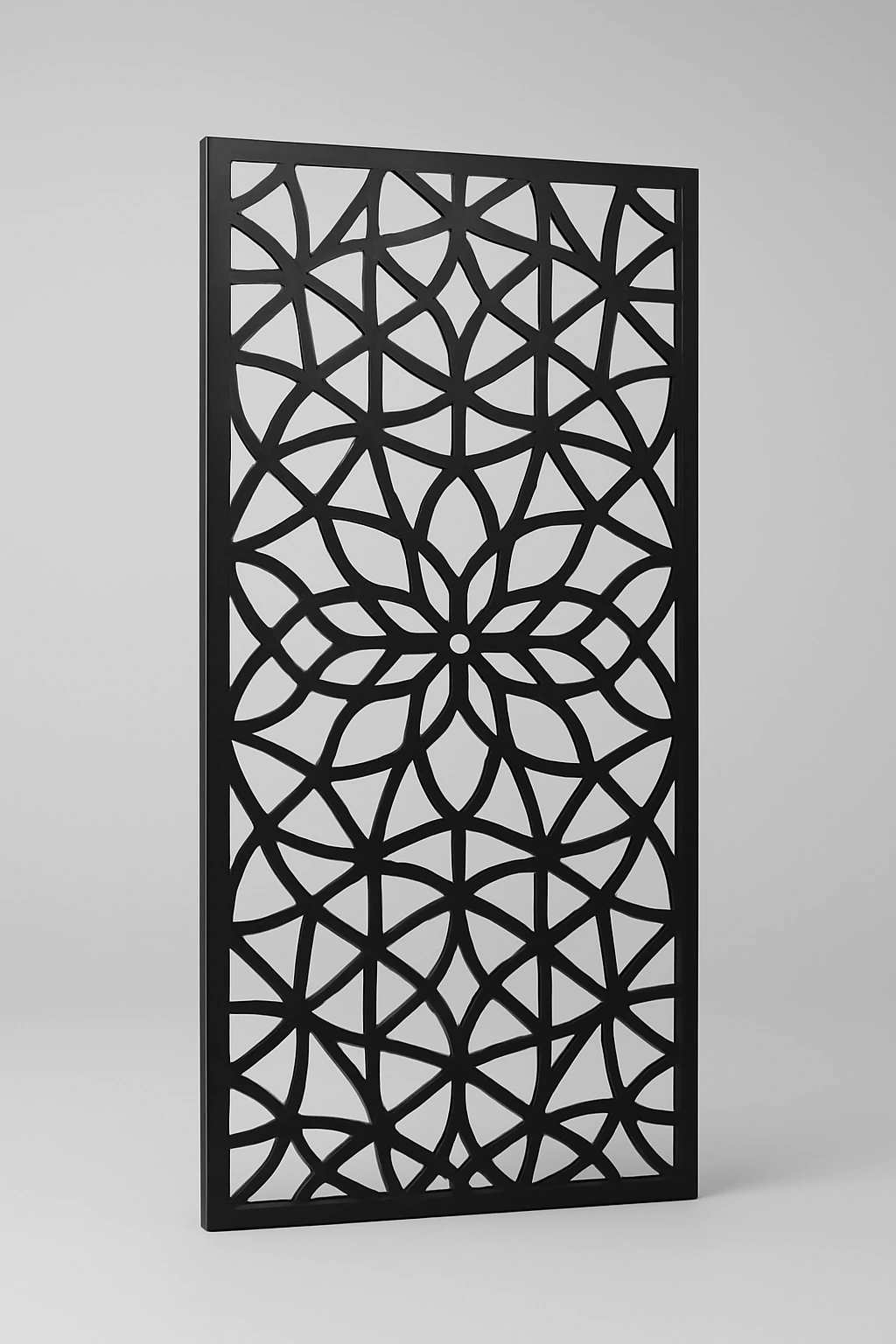
Circle geometry that resolves into flowers at the centre of each block.
Request this pattern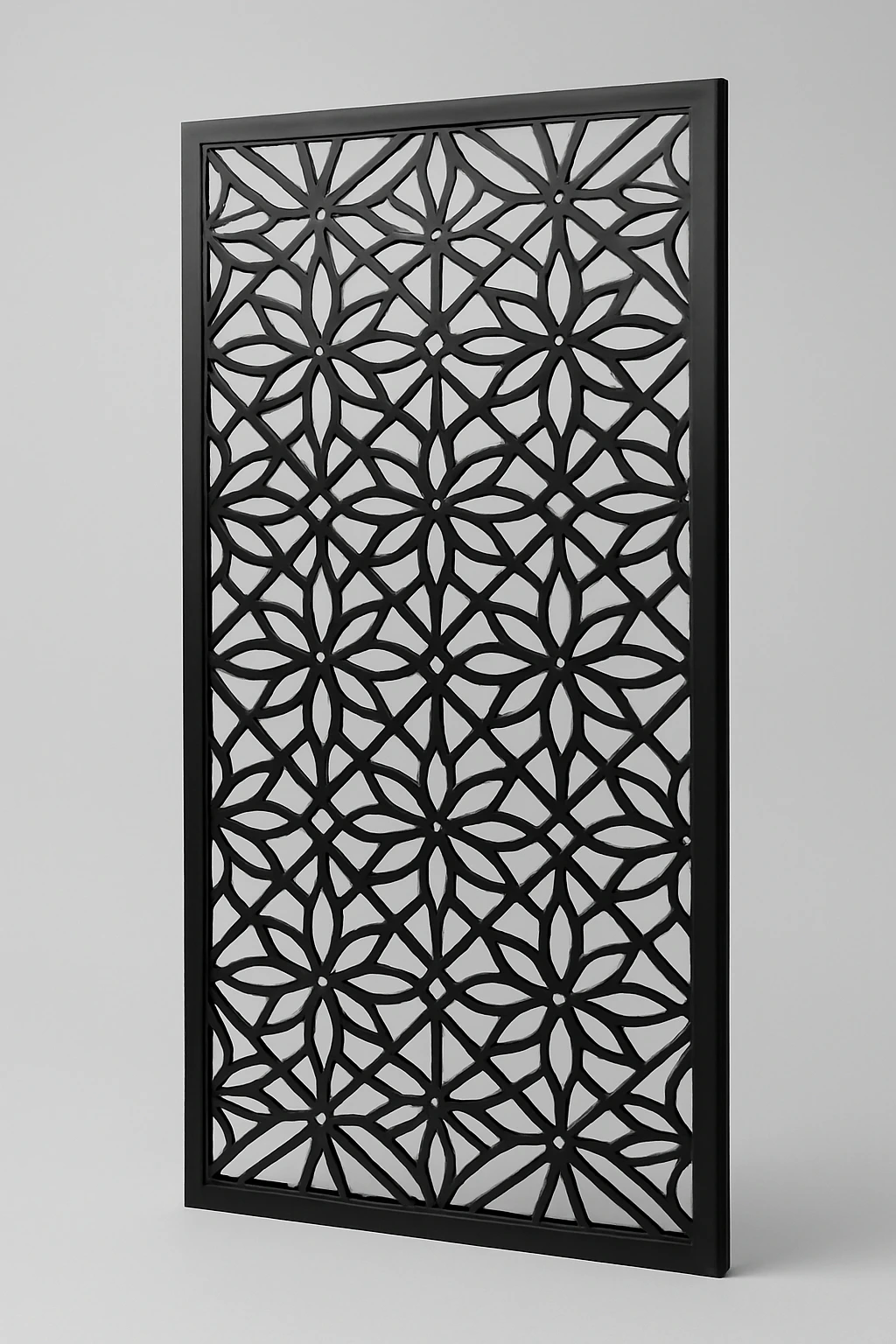
Dense star rosettes on a fine ground. One of the highest-coverage geometrics here.
Request this pattern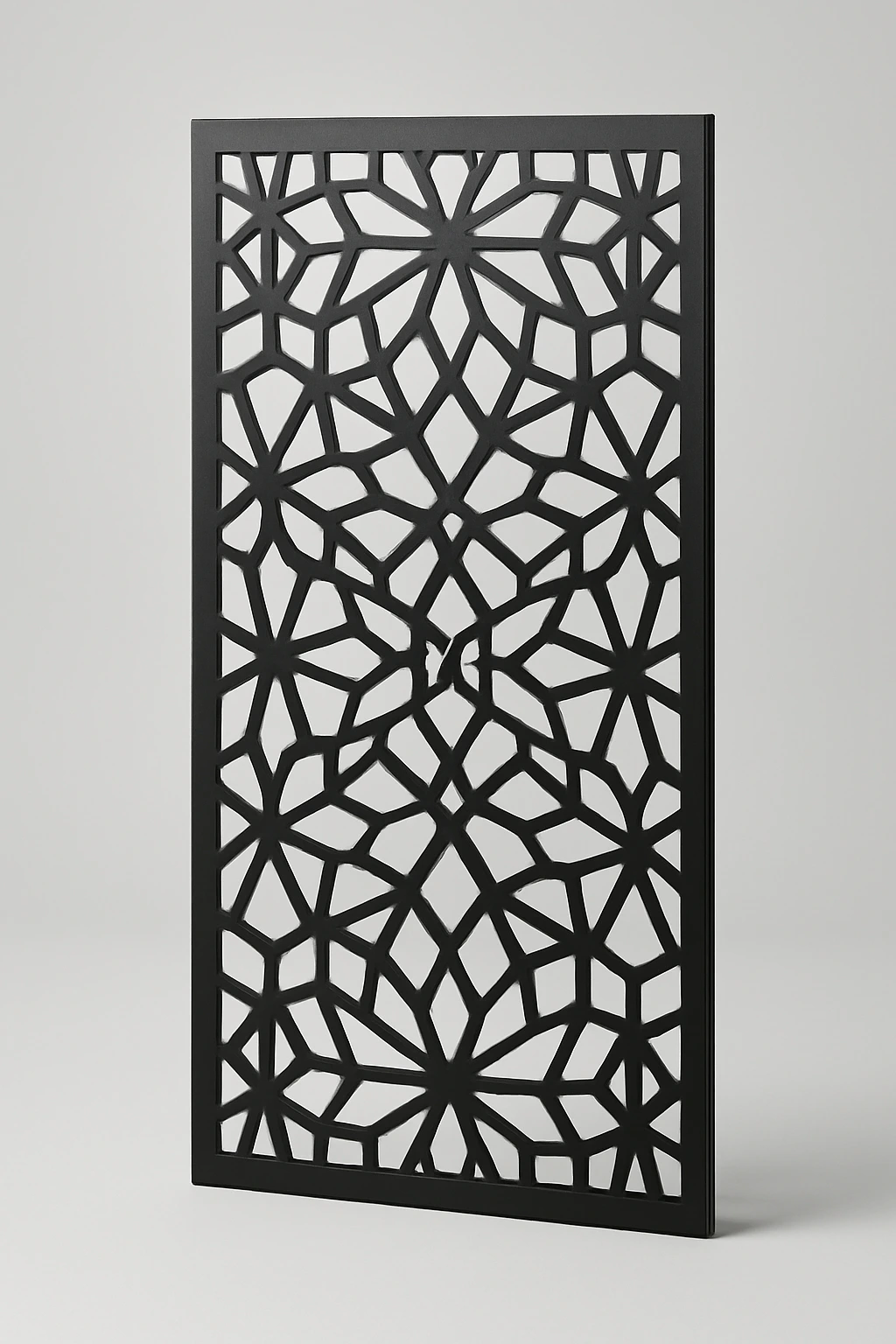
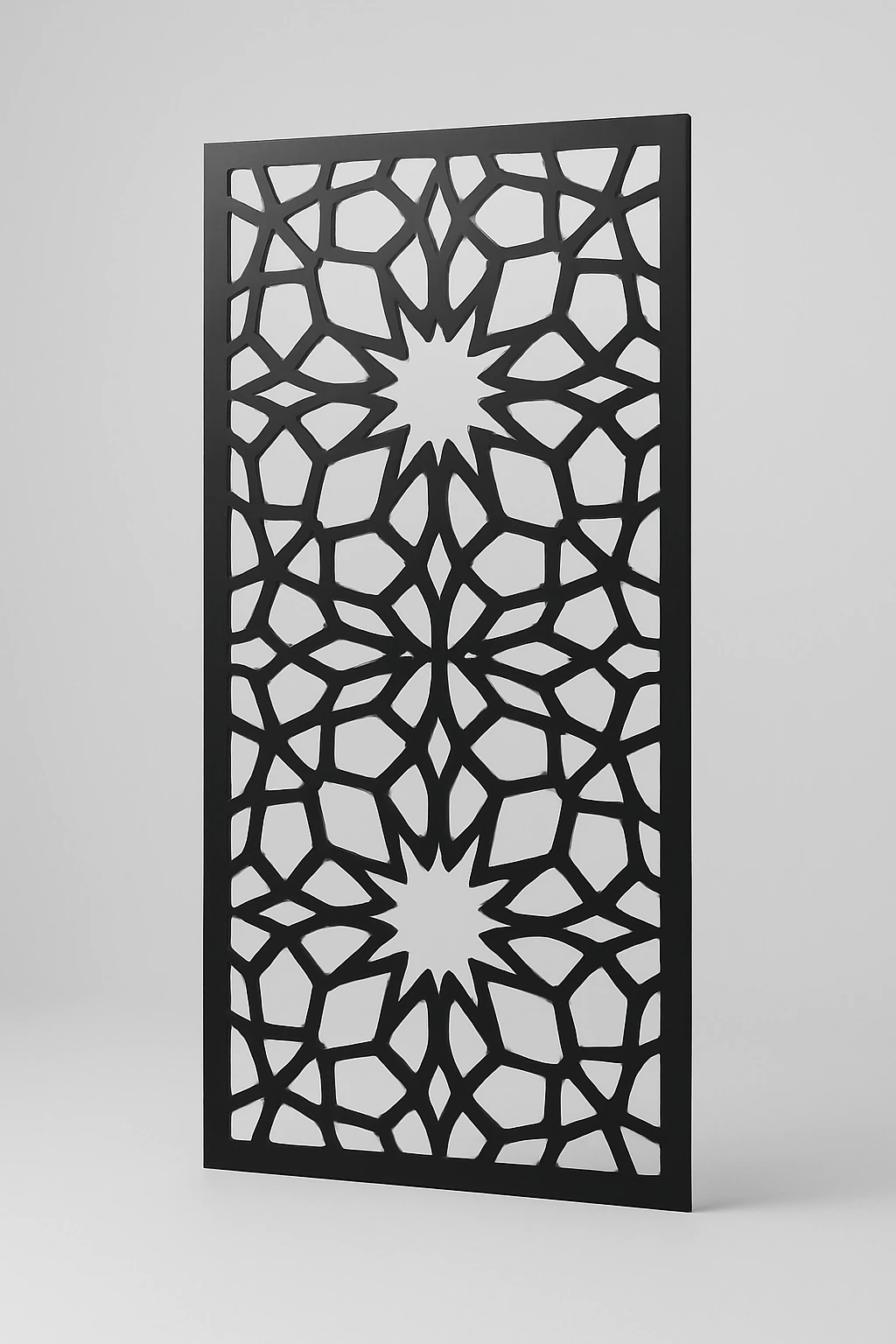
A fine geometric ground broken by two large open stars. The most graphic of the geometrics.
Request this pattern
A tight triangular mesh with no motif at all. Structural-looking and very even.
Request this pattern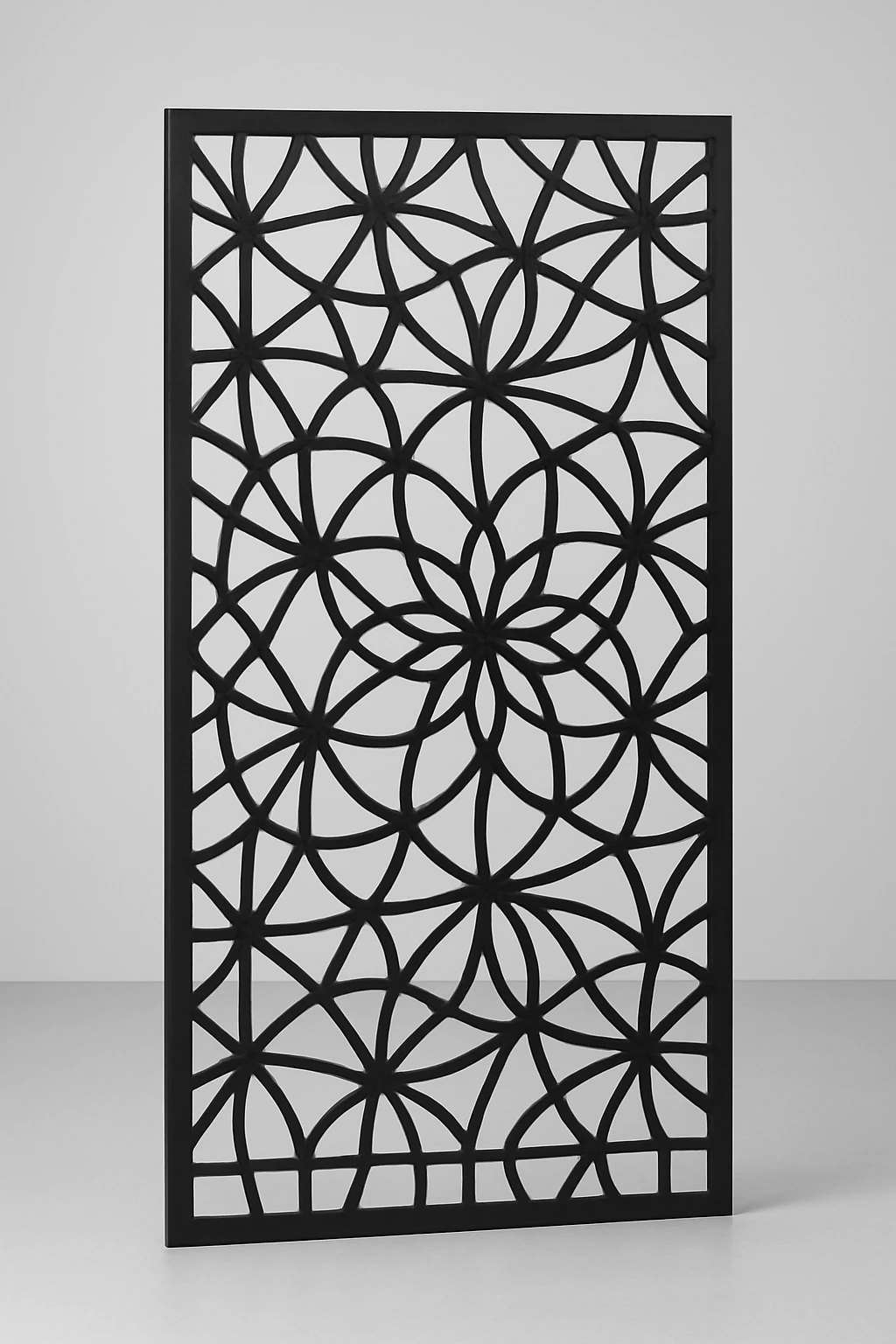
Overlapping circles building into rosettes. Busy up close, calm from across a room.
Request this pattern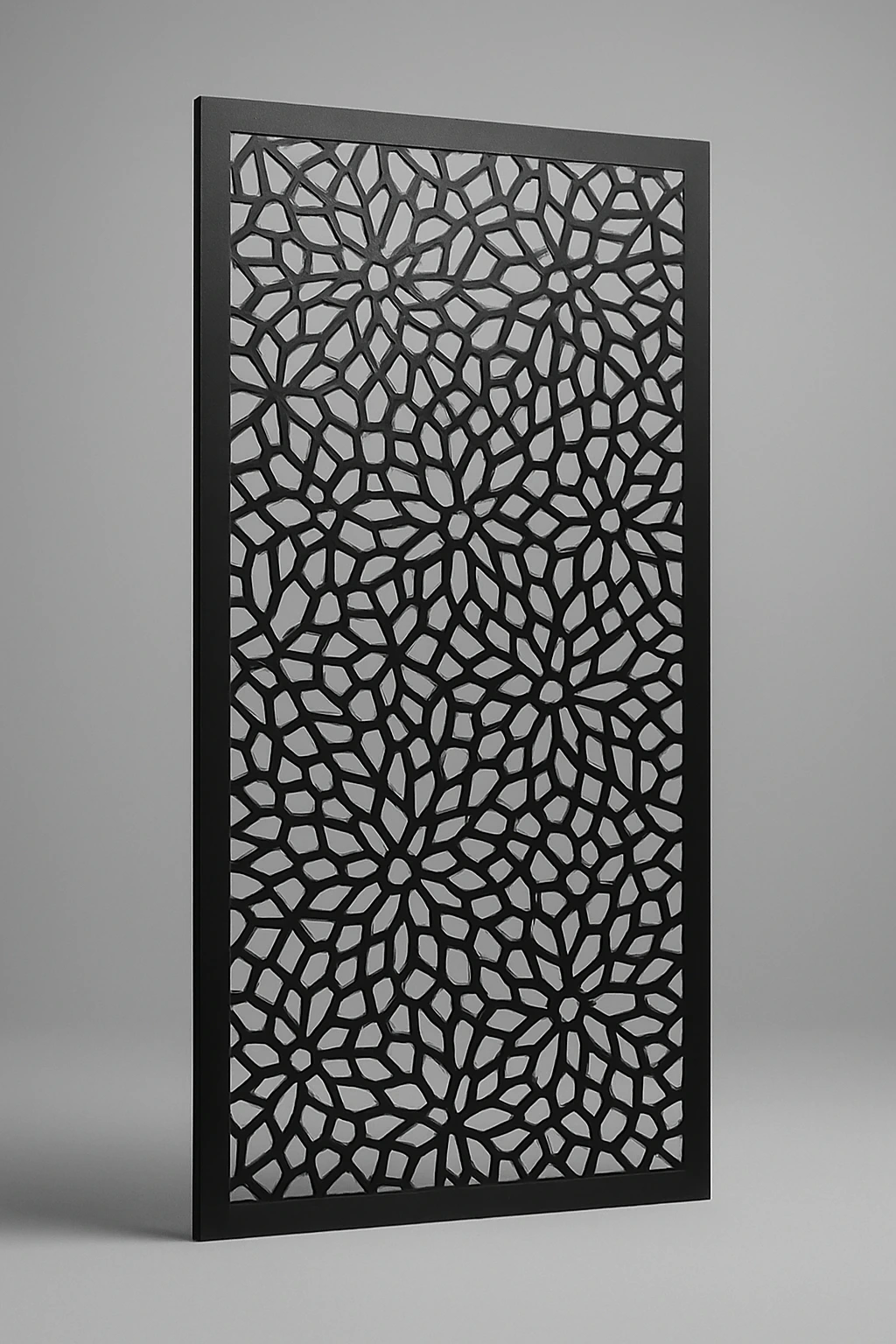
Dense petal geometry laid out on a strict grid. Traditional in feel, fine in grain.
Request this pattern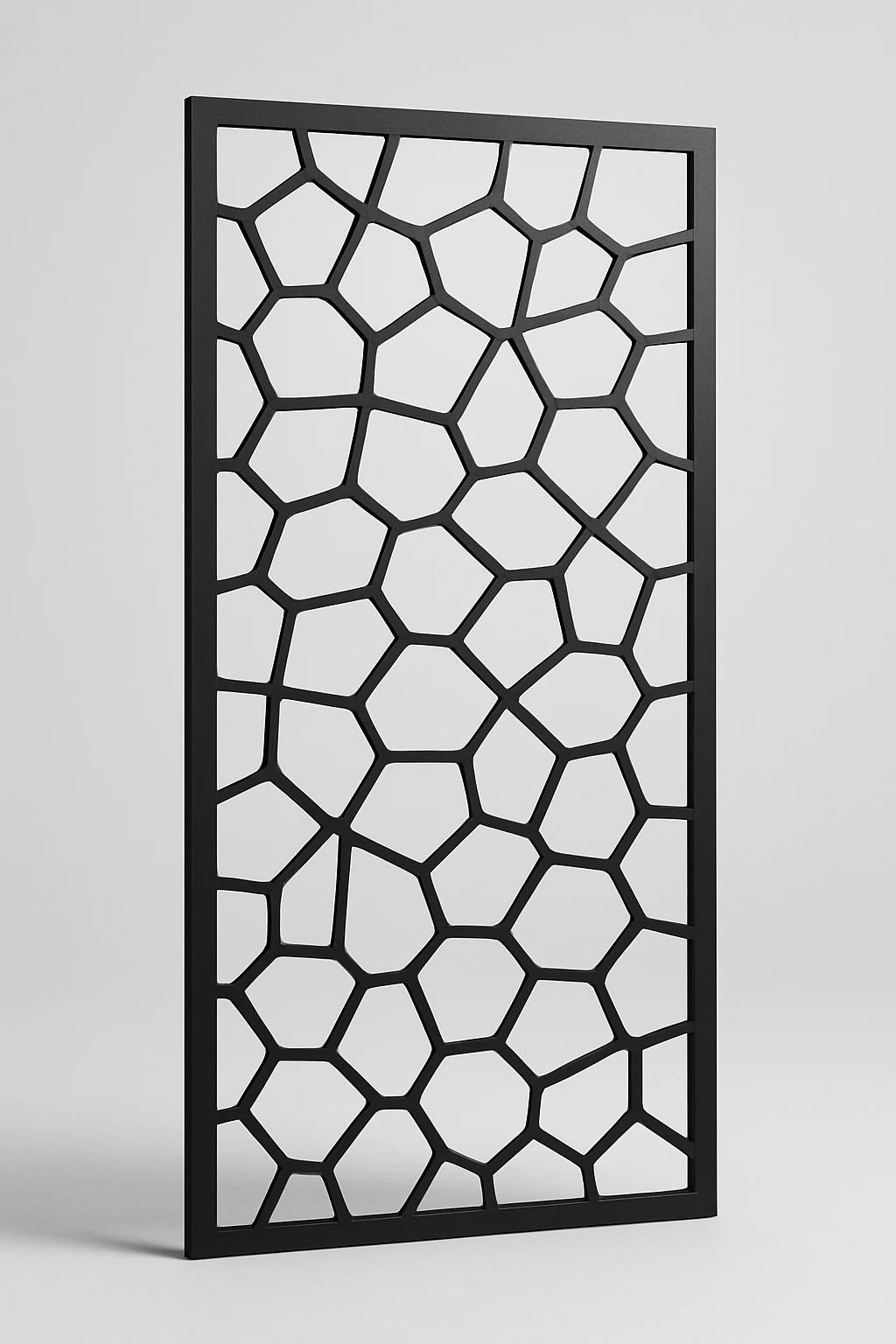
Large irregular cells with heavy webs between them. The most open pattern in the library.
Request this pattern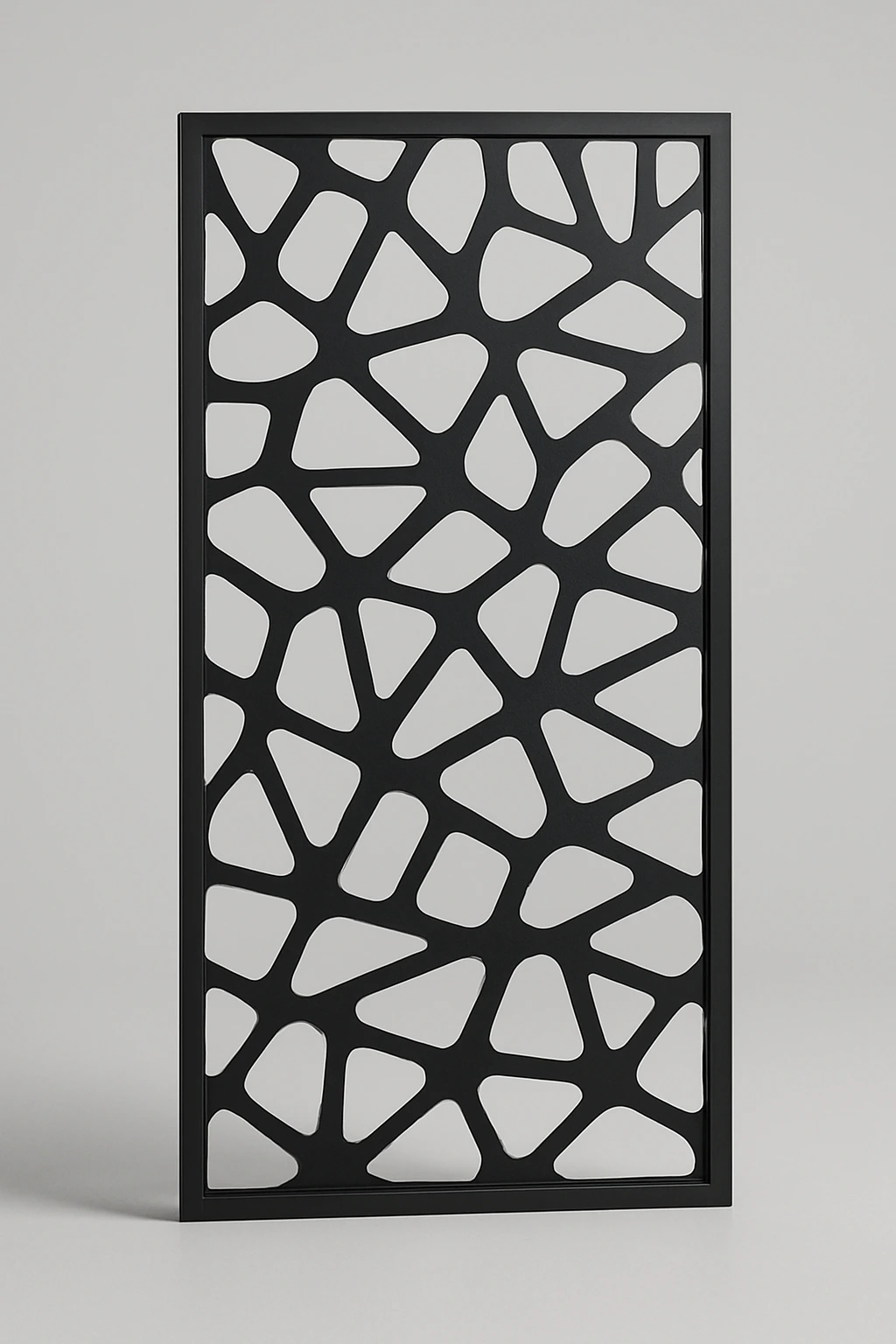
Rounded organic cells at a medium scale. Soft edges throughout, no straight lines.
Request this pattern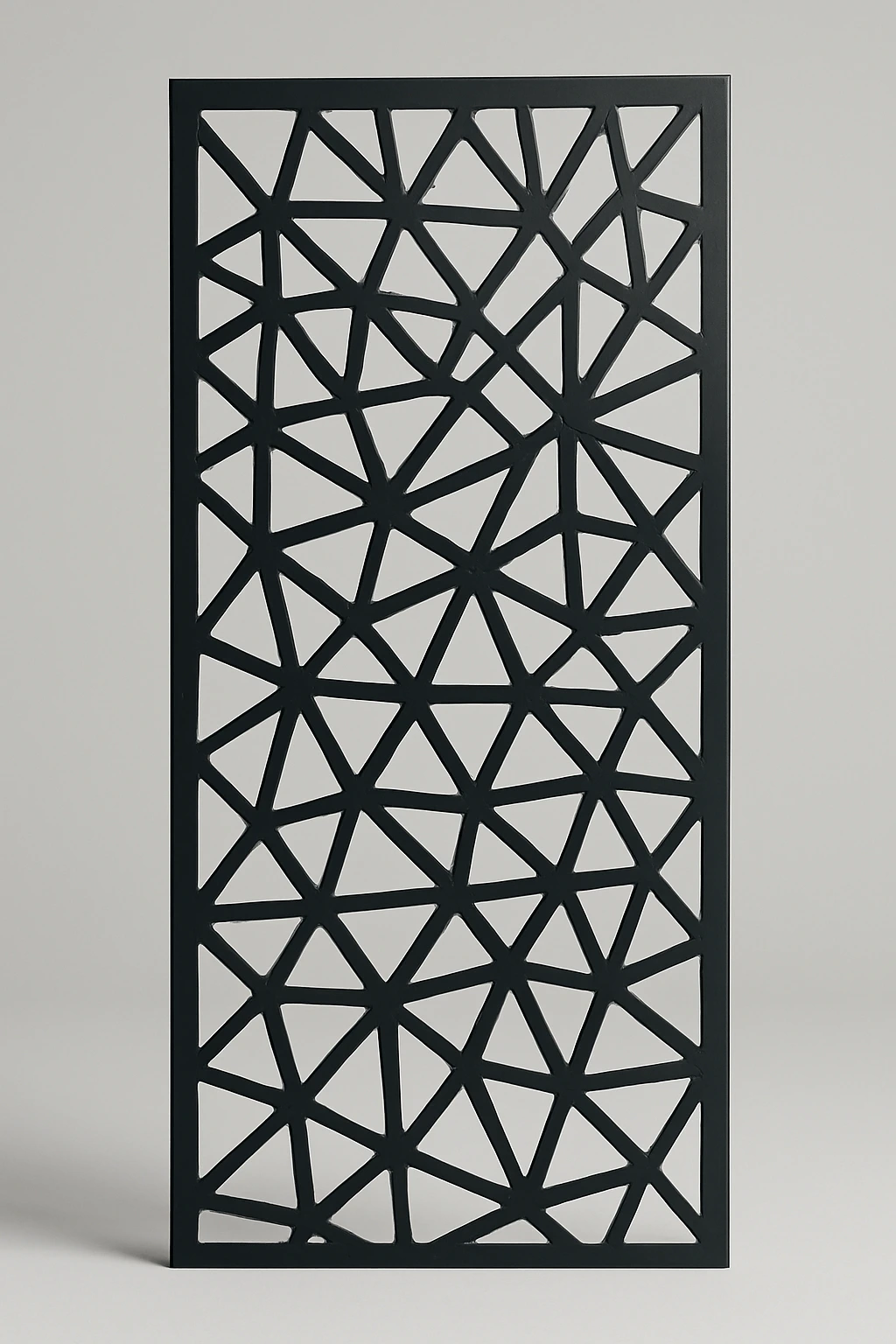
A fine triangulated web. Reads as texture rather than as a pattern with a direction.
Request this pattern
An angular shard net with varied cell sizes. Contemporary and deliberately irregular.
Request this pattern
Large rounded cells with generous openings. Sculptural at close range.
Request this pattern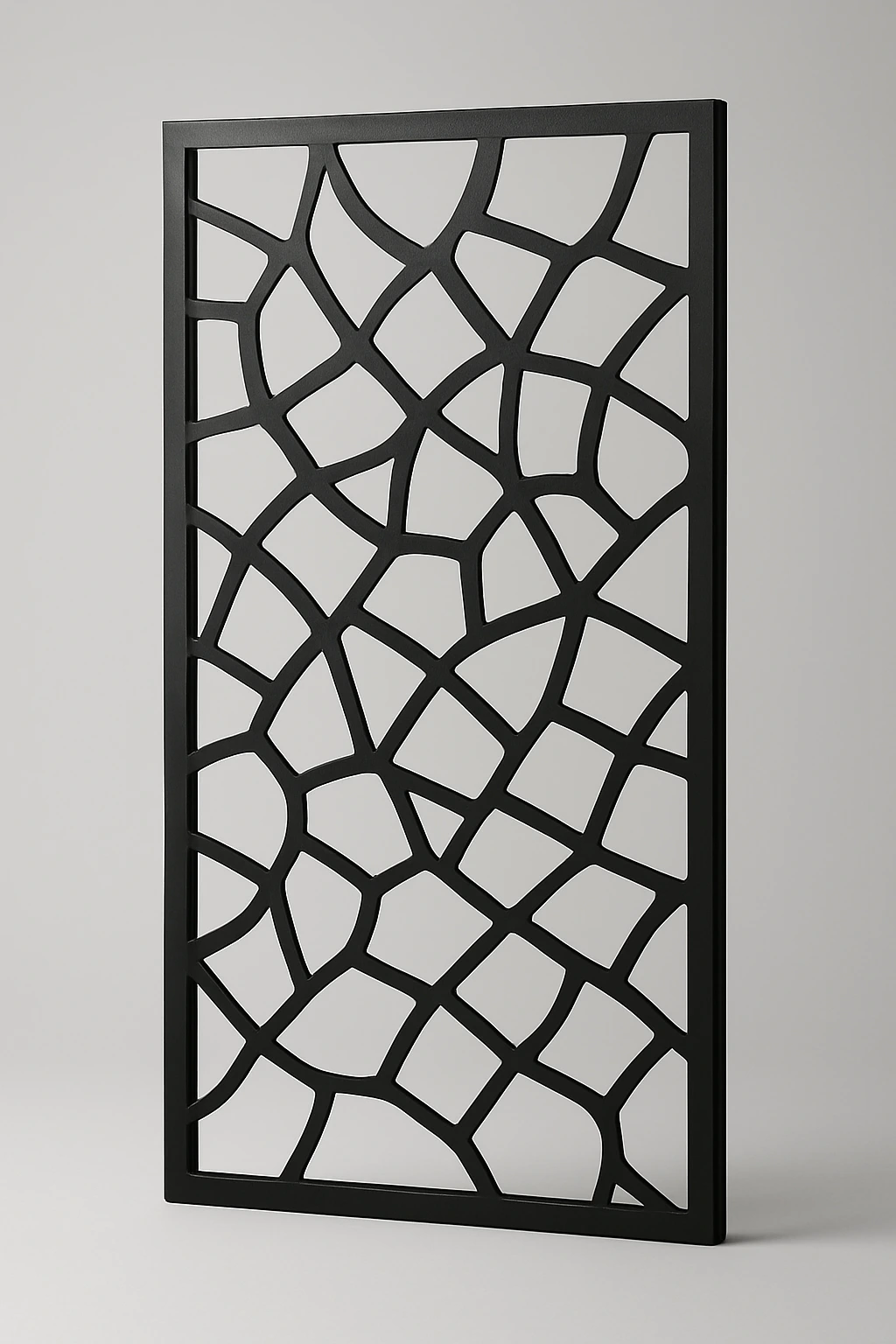
Irregular crazing that opens toward the base of the panel.
Request this pattern
Very large organic cells. A screen that separates a space without filling it.
Request this pattern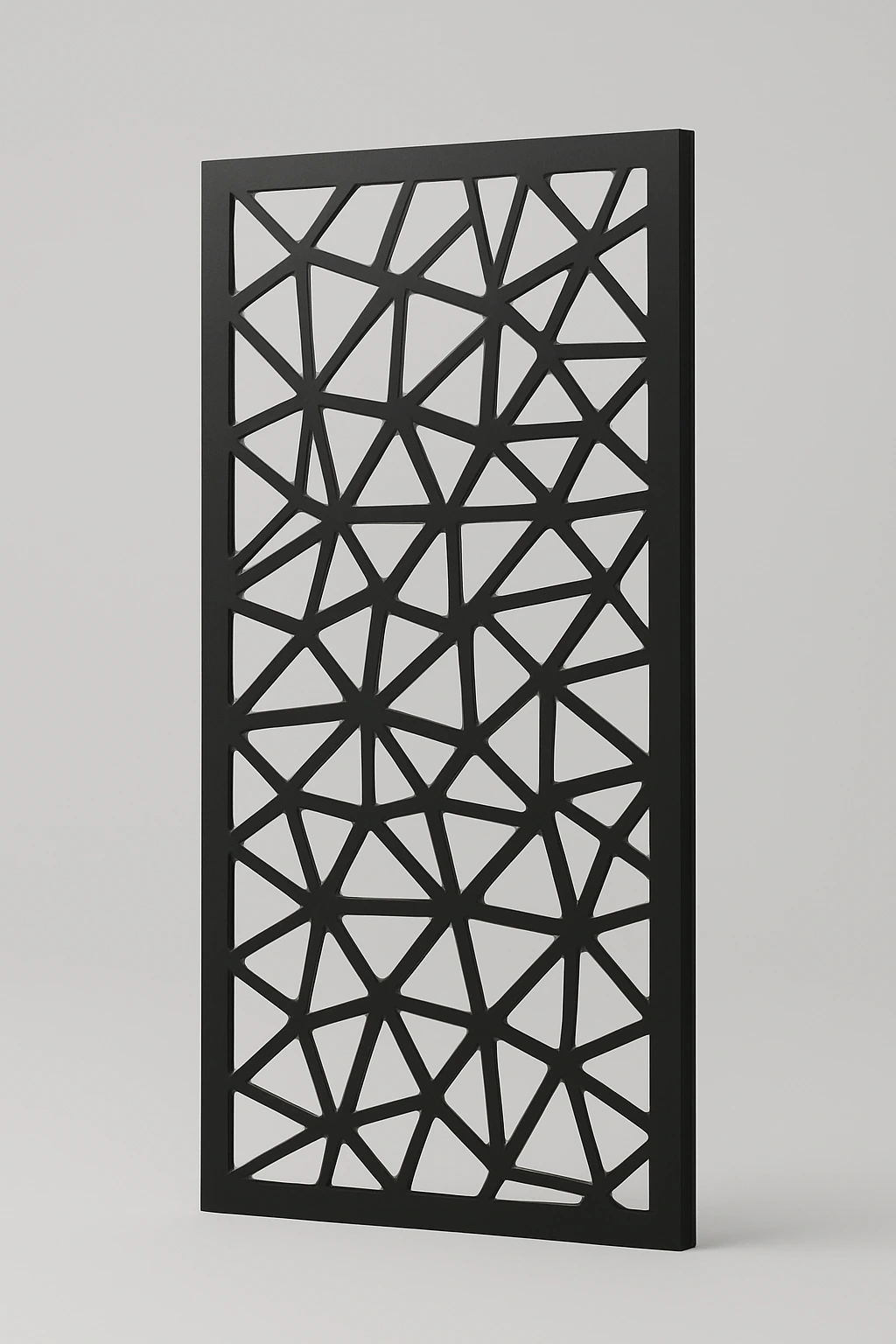
A sparse angular net of long straight cuts. Minimal coverage, strong lines.
Request this pattern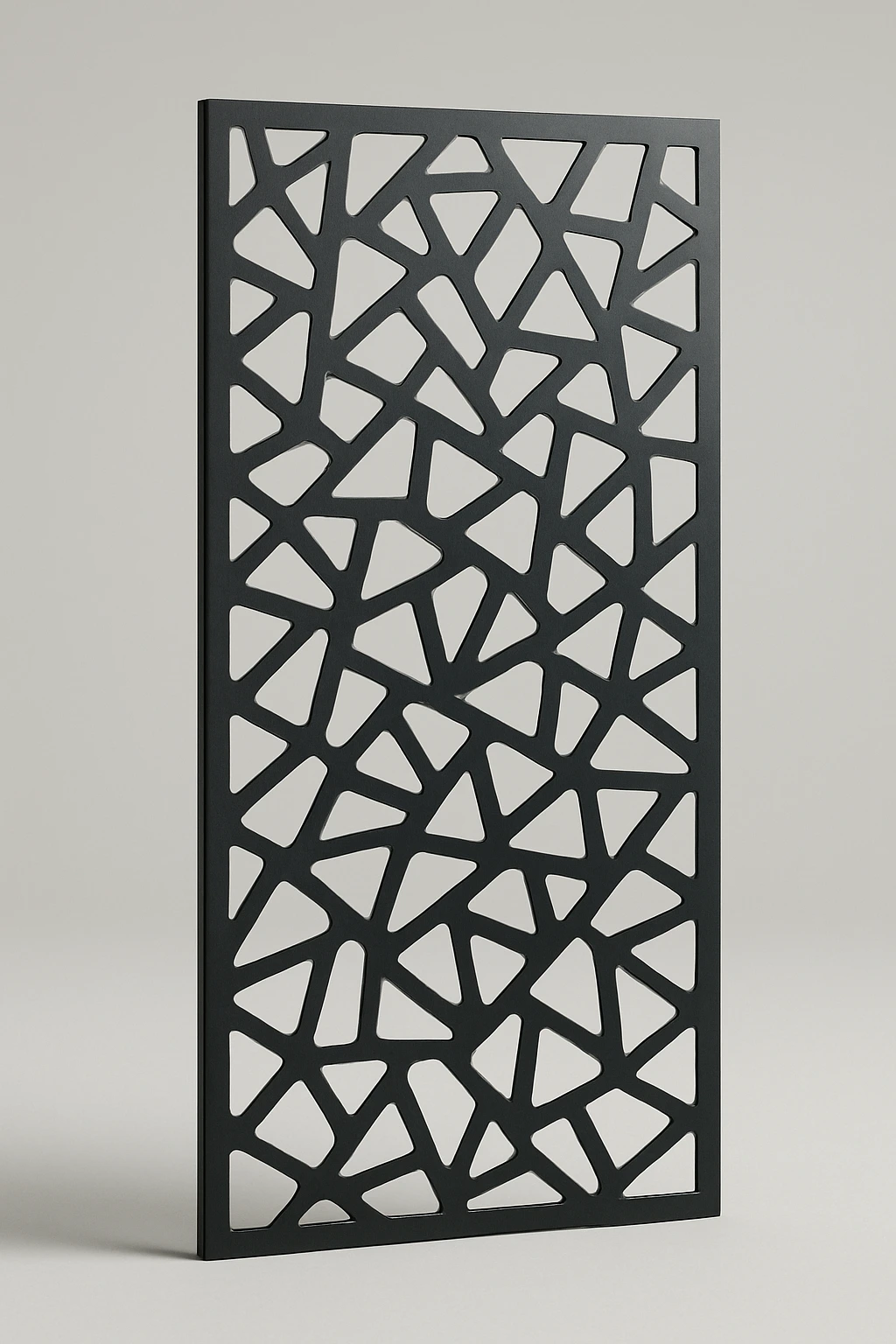
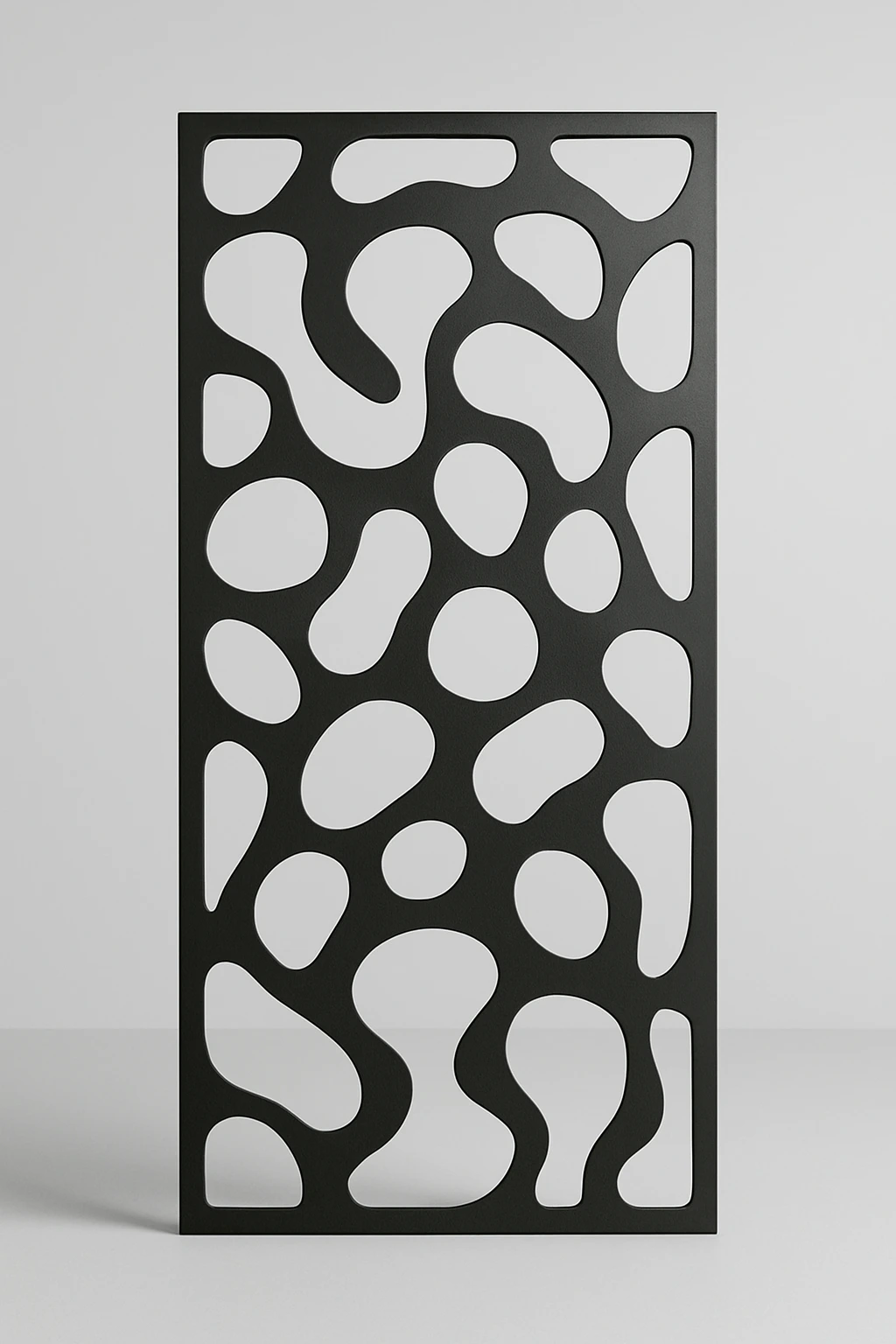
Soft organic blobs with no repeat. The most informal pattern in the library.
Request this pattern
Angular vertical bars stepping across the panel. Art Deco in feel, strictly linear.
Request this pattern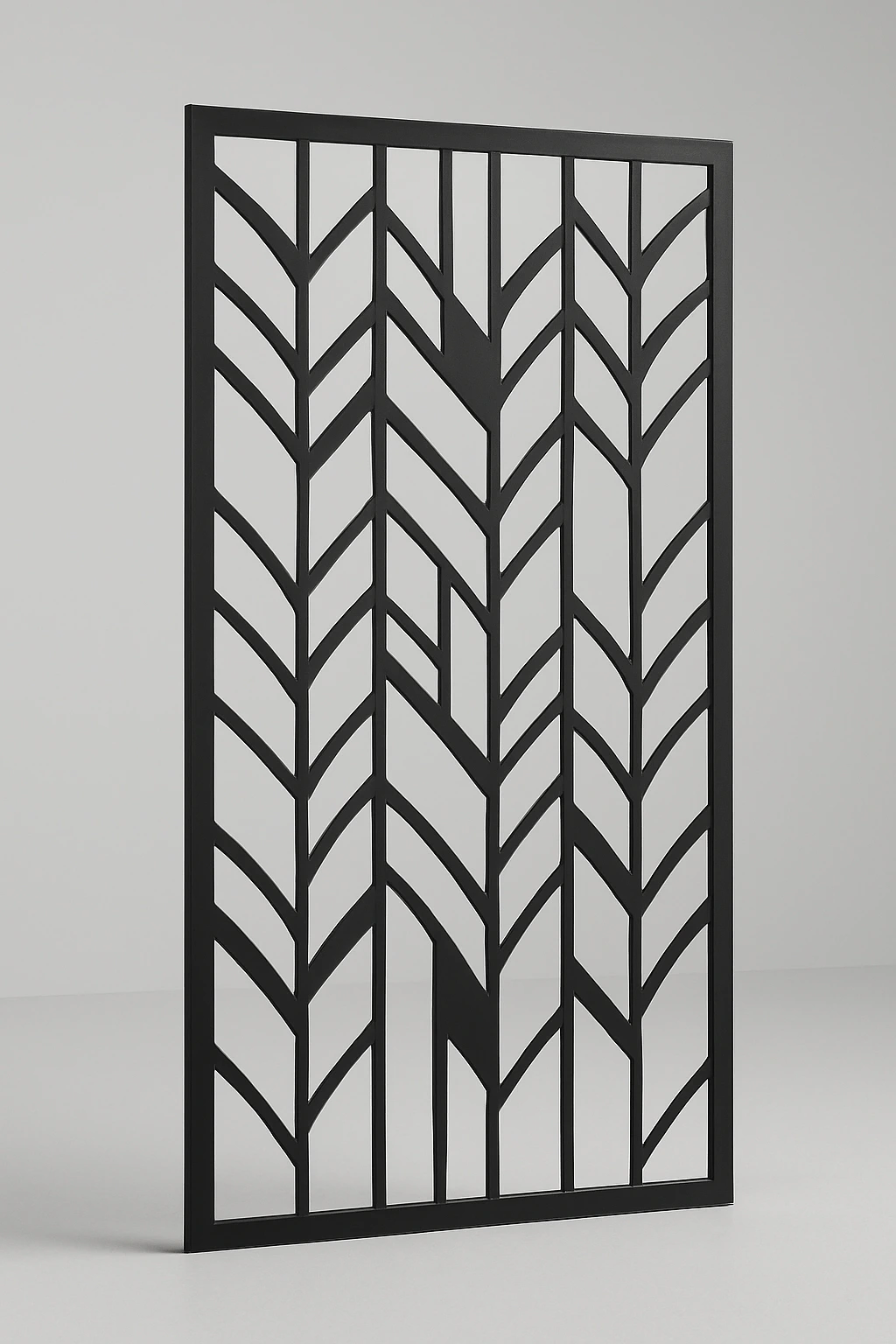
Chevron verticals reading as stalks. Open, directional and very simple.
Request this pattern
Interwoven flat bars laid at two angles. Solid-looking with a strong diagonal.
Request this pattern
Overlapping fan arcs rising from the base. The classic Deco motif drawn large.
Request this pattern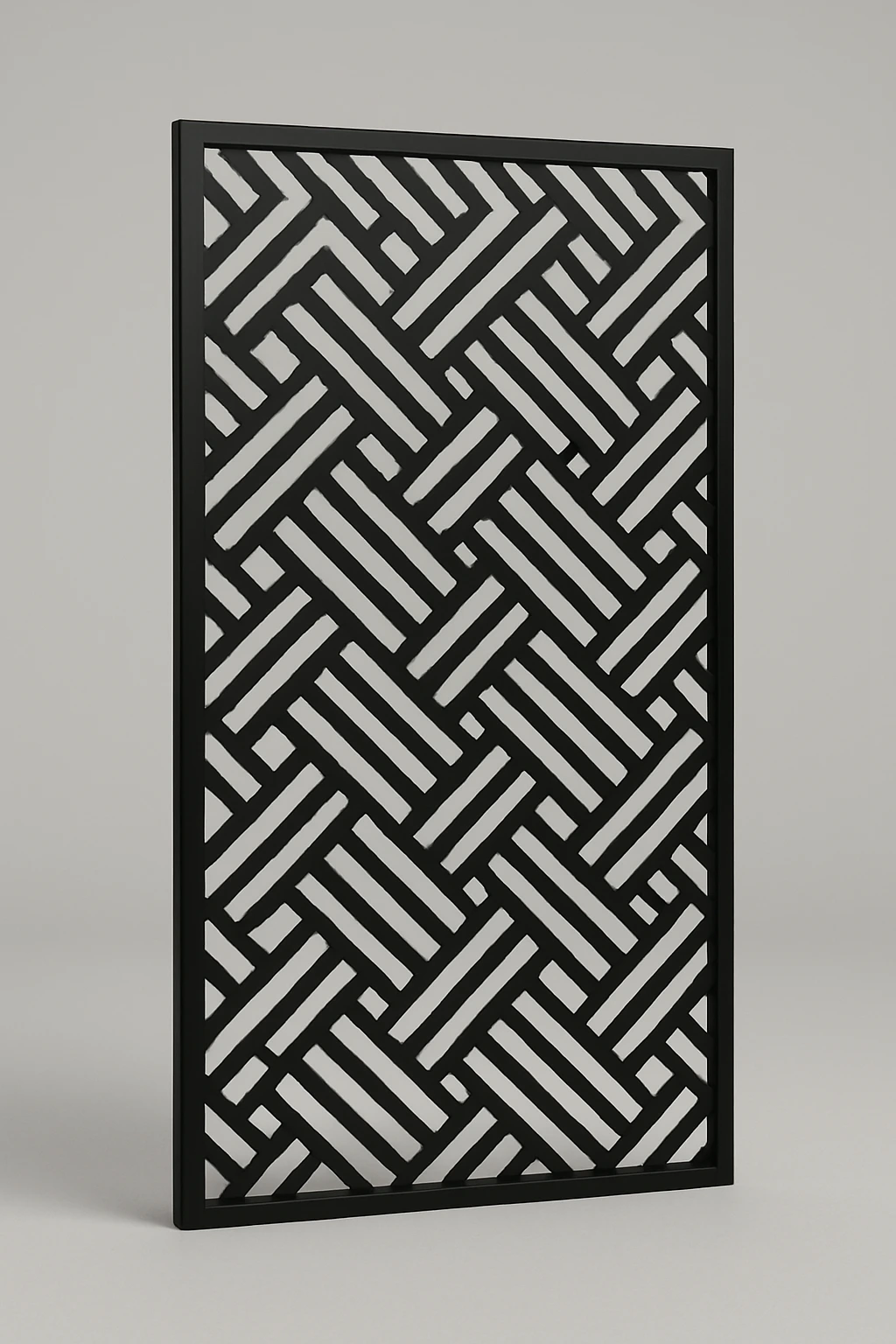
A diagonal basketweave of flat bars. High coverage, no motif.
Request this pattern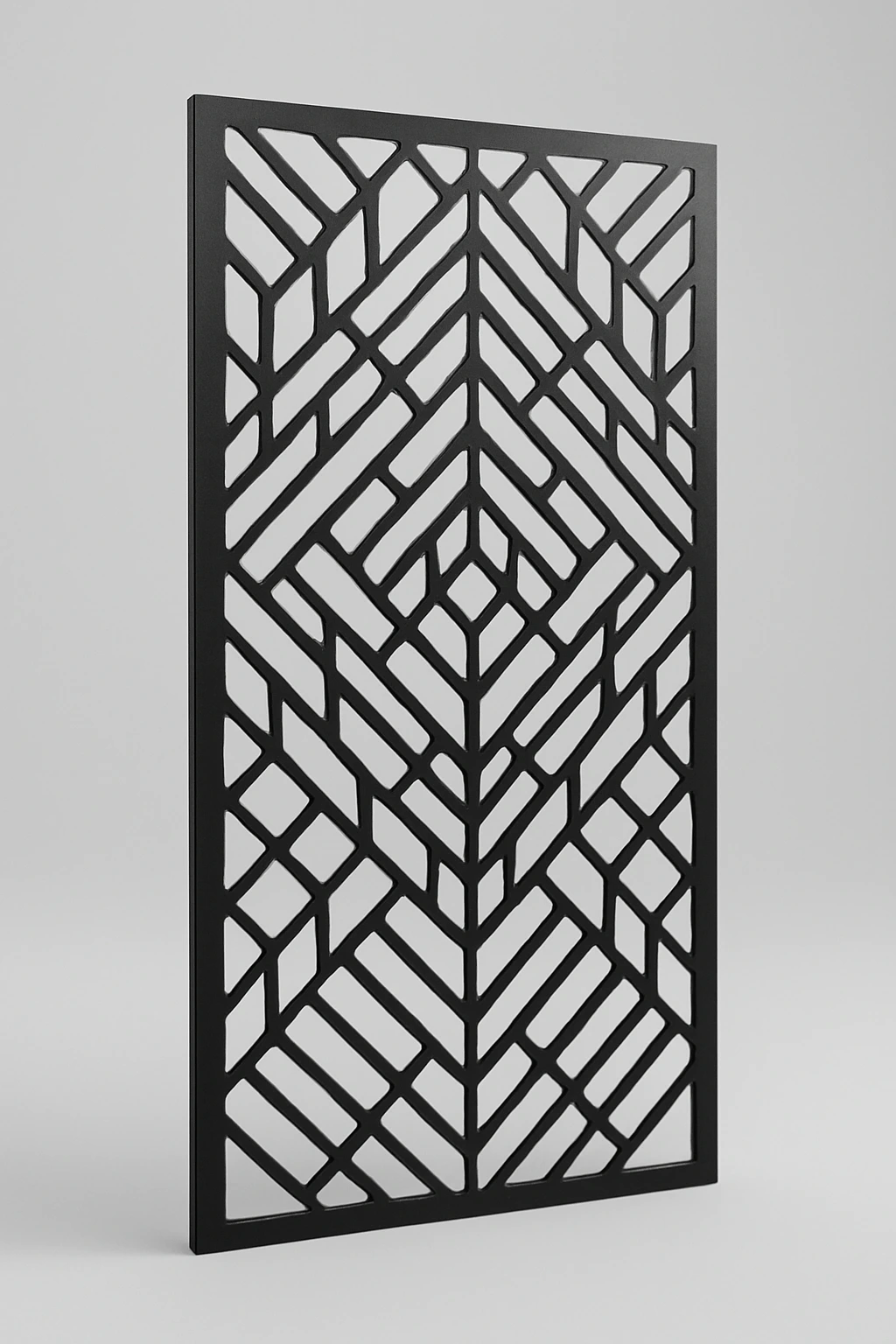
Herringbone geometry that changes scale down the panel.
Request this pattern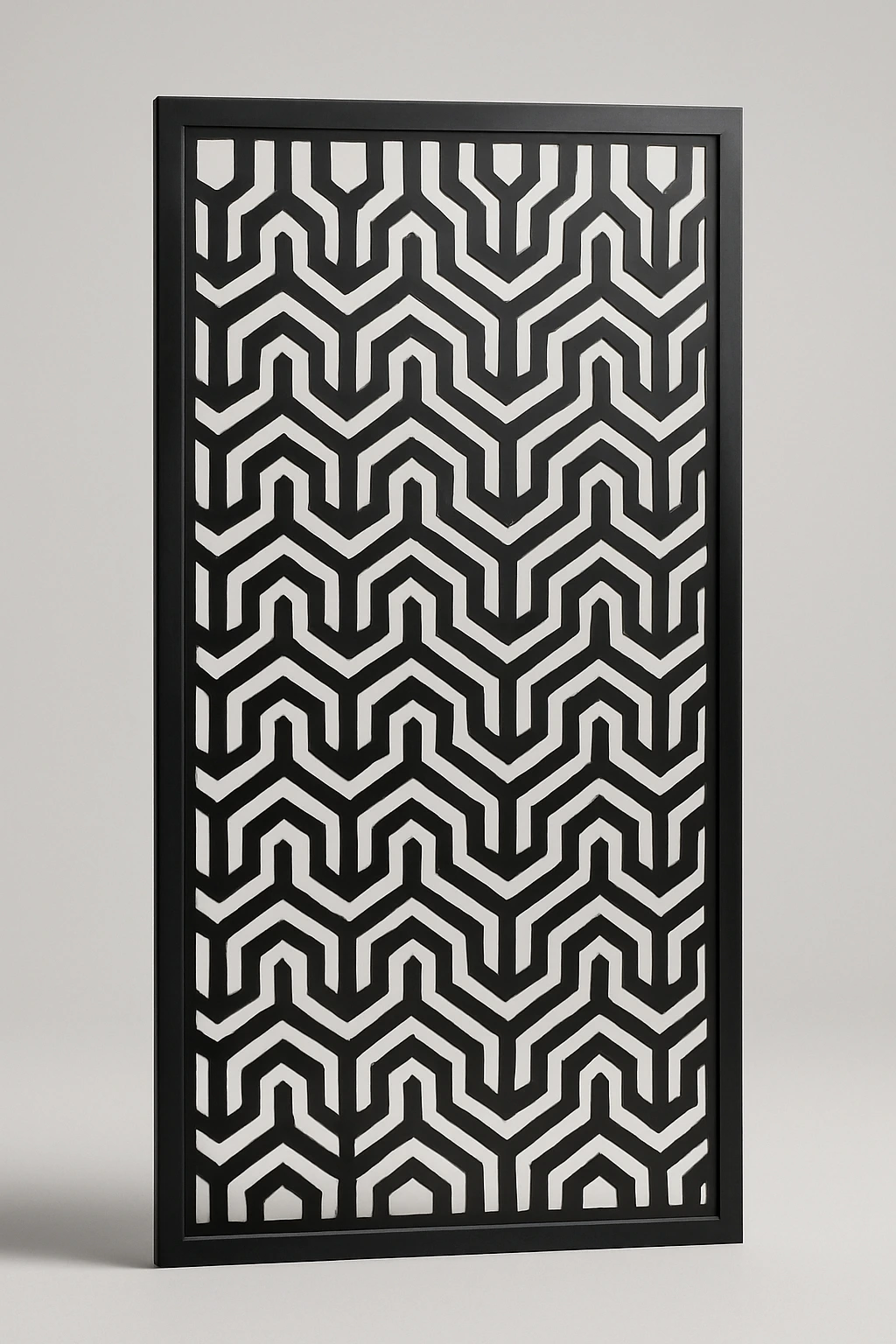
A tight chevron repeat. Very even and quiet, with a clear vertical pull.
Request this pattern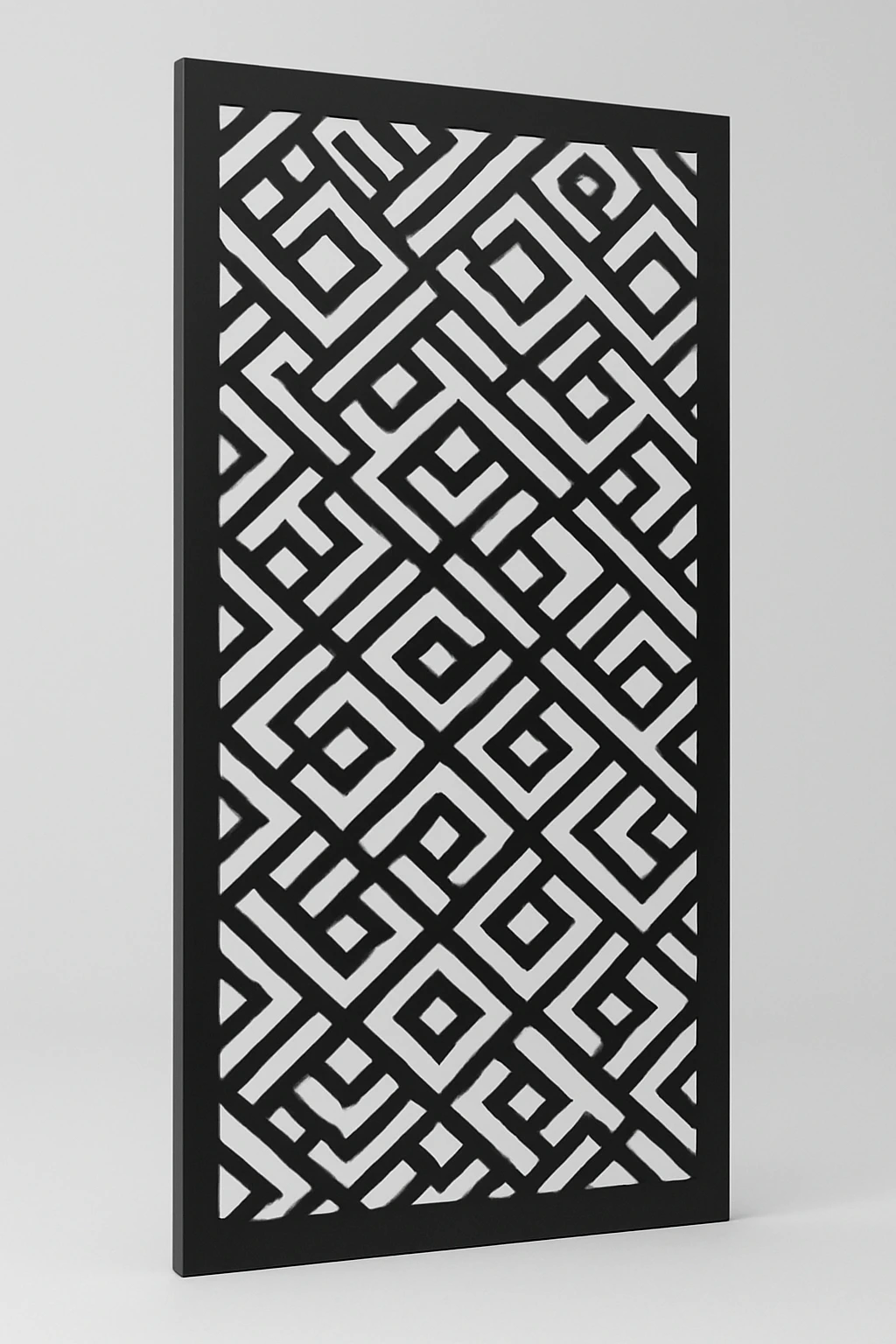
An angular key pattern that folds back on itself. Reads as a maze up close.
Request this pattern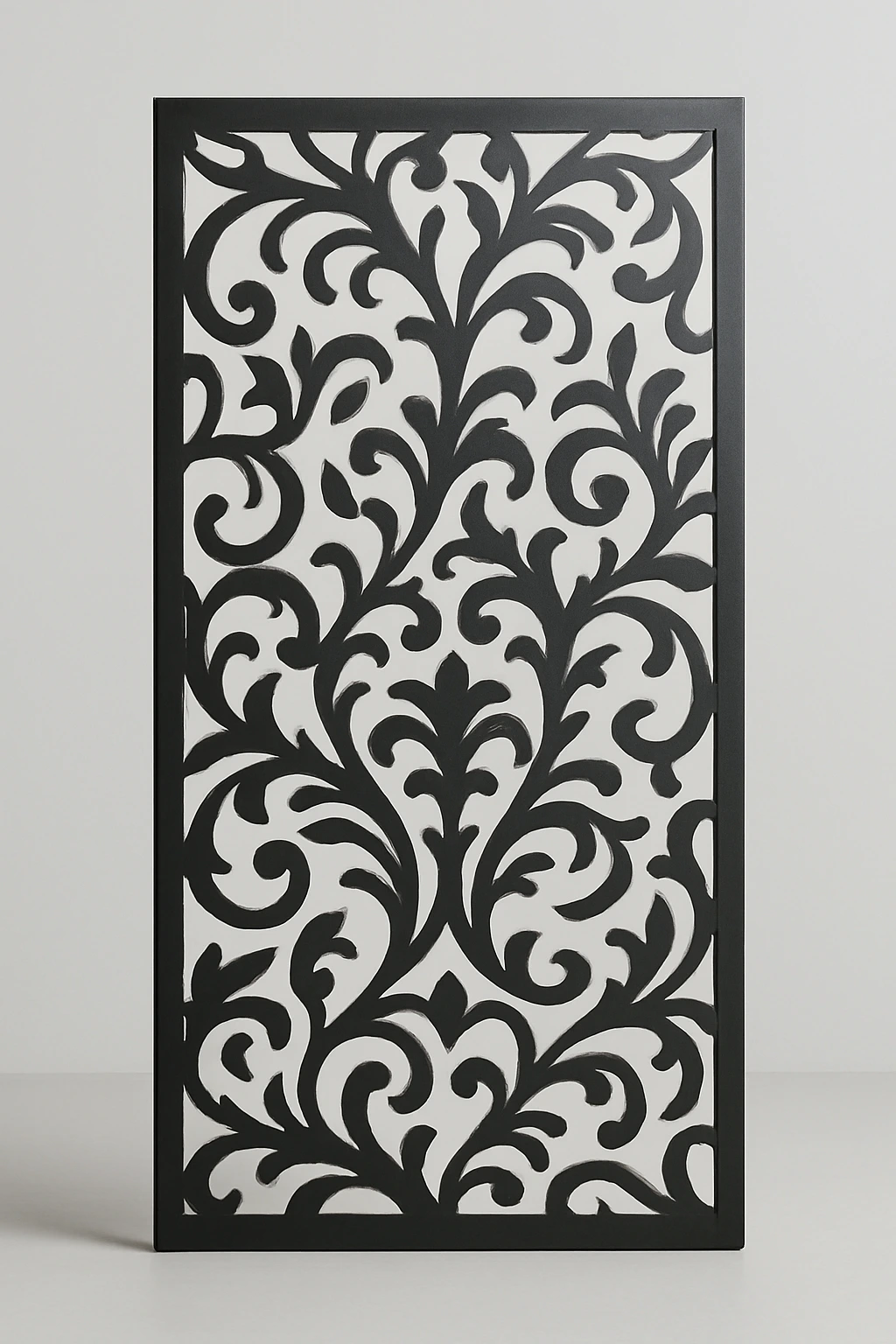
A symmetrical damask with a clear centre line. Traditional and formal.
Request this pattern
A large scroll medallion filling the panel. Best used where the screen is a focal point.
Request this pattern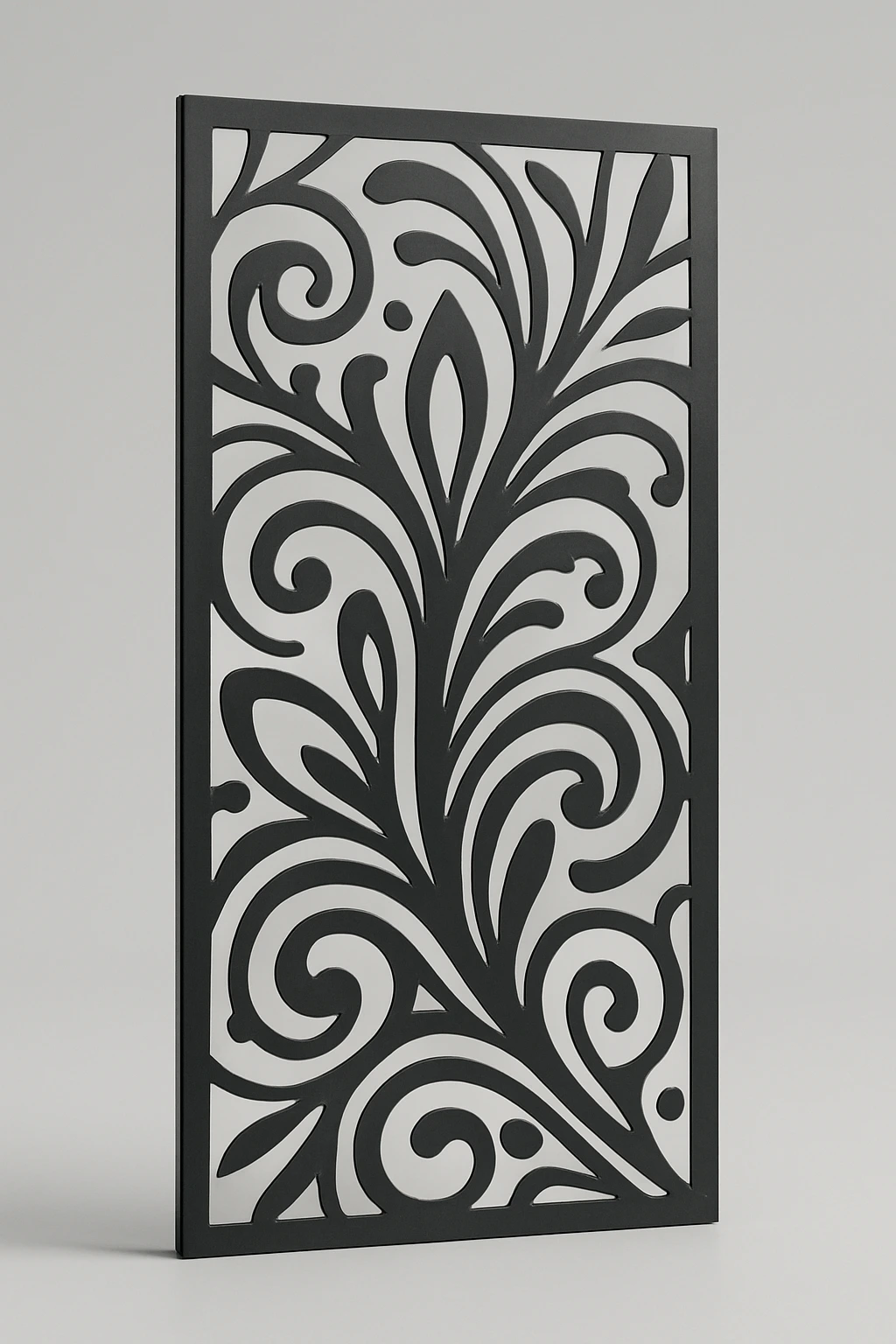
Flowing scrollwork rising from one corner. Soft-edged throughout.
Request this pattern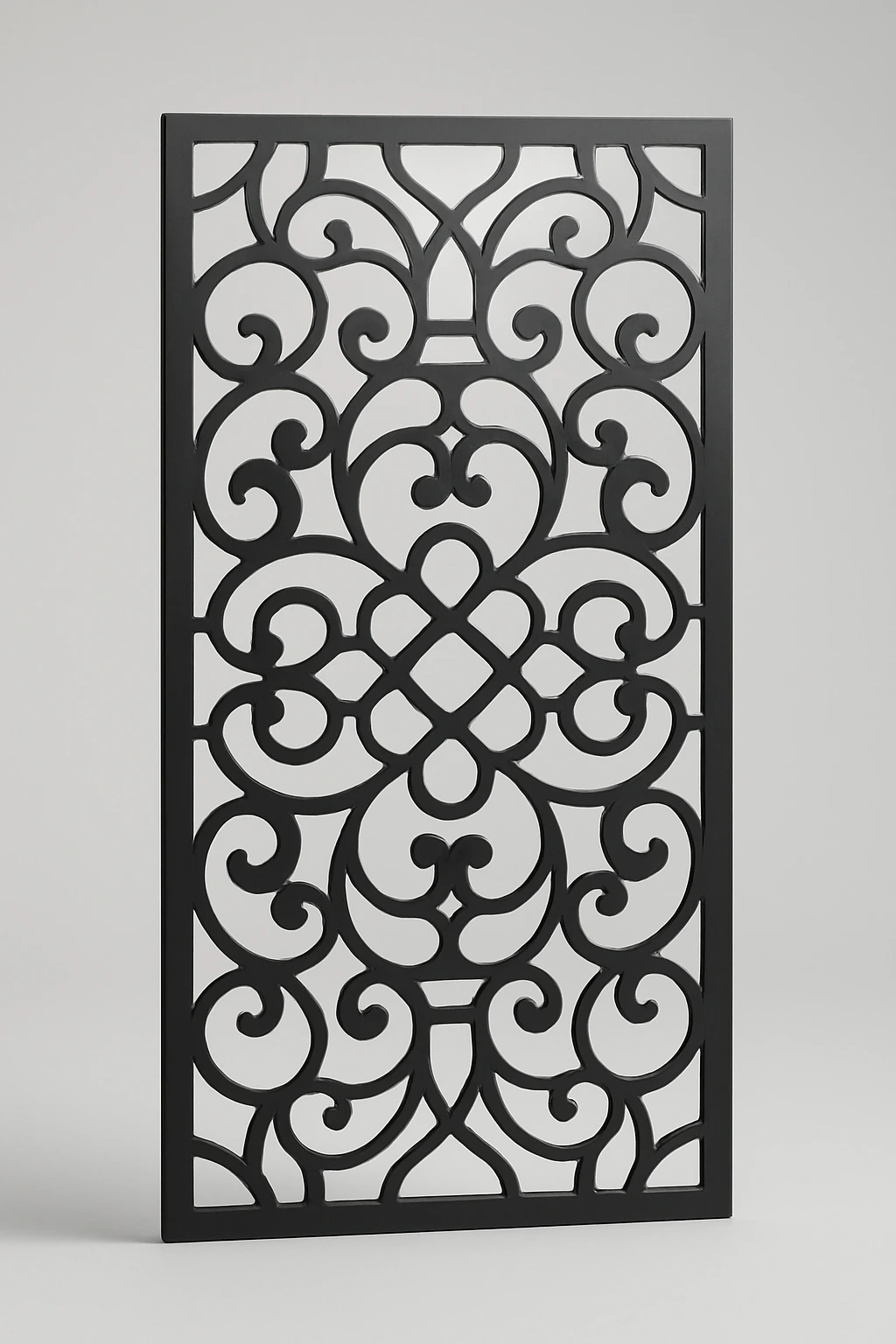
A fine scroll lattice on a strict repeat. Ornate but even.
Request this pattern
Dense symmetrical scrollwork. The most ornamental pattern here.
Request this pattern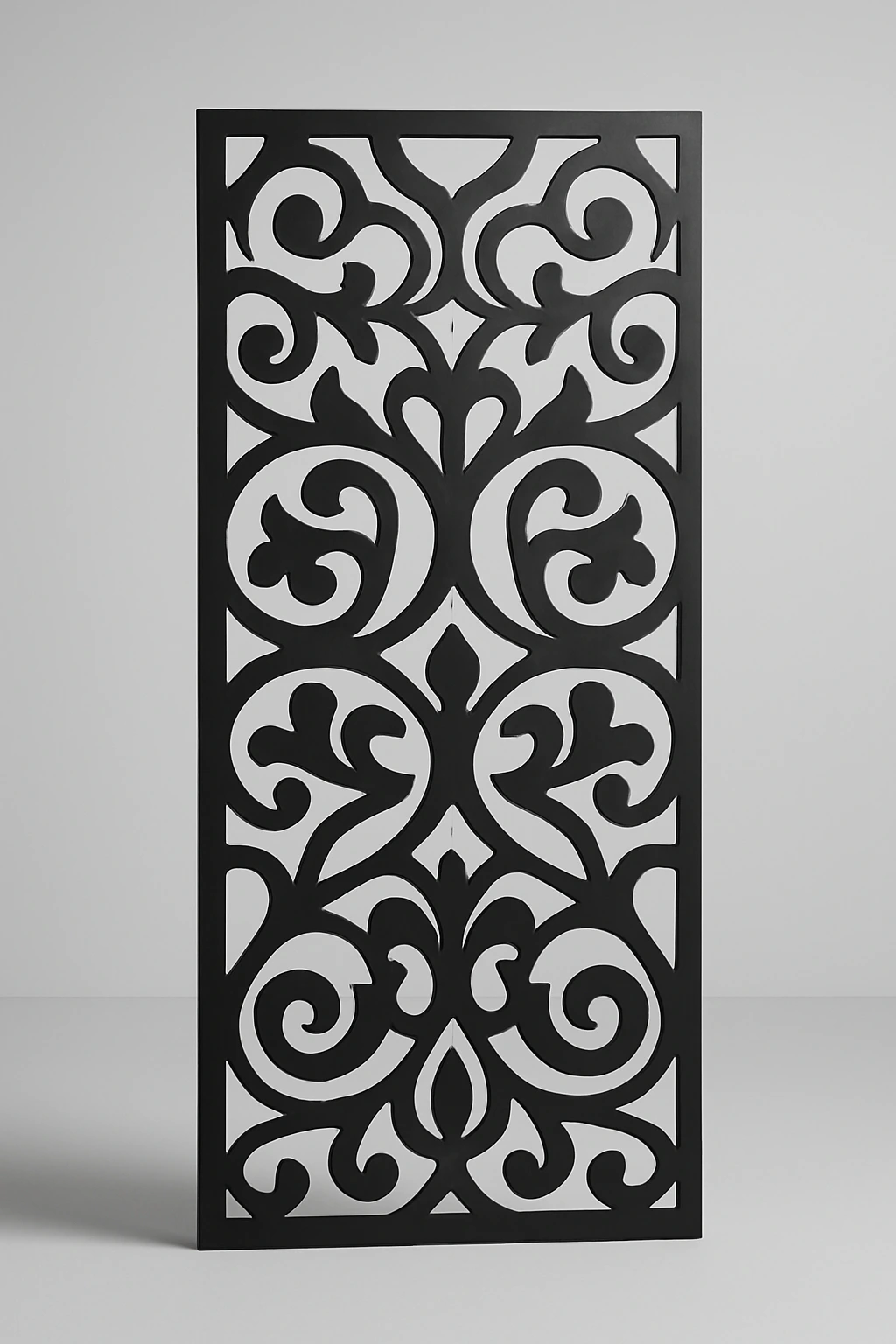

Open scrolling curls on bare ground. Light coverage with a hand-drawn feel.
Request this pattern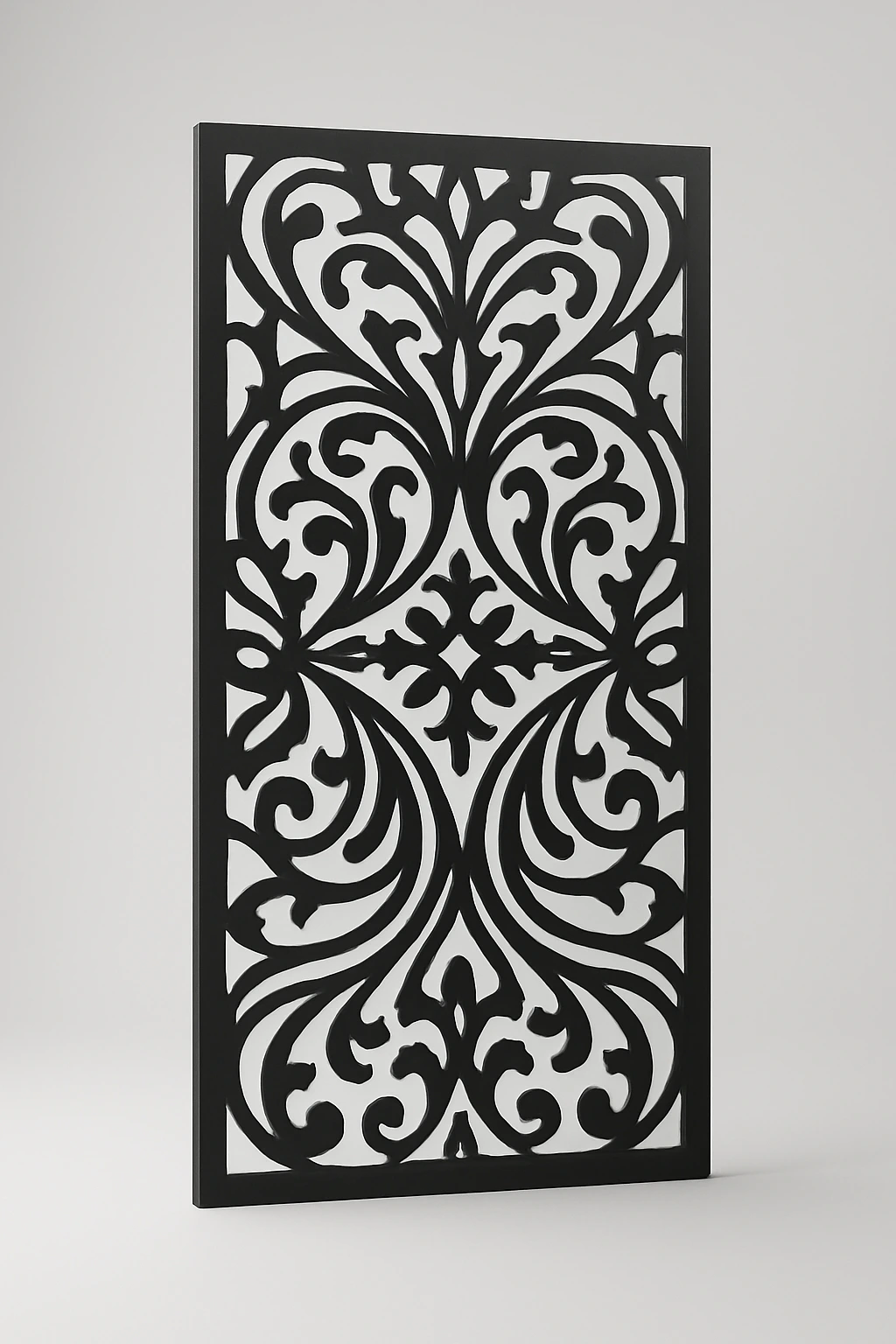
A centred scroll panel with defined corners. Reads as a framed motif.
Request this pattern
An elongated ogee lattice. A quiet vertical repeat that suits tall panels.
Request this pattern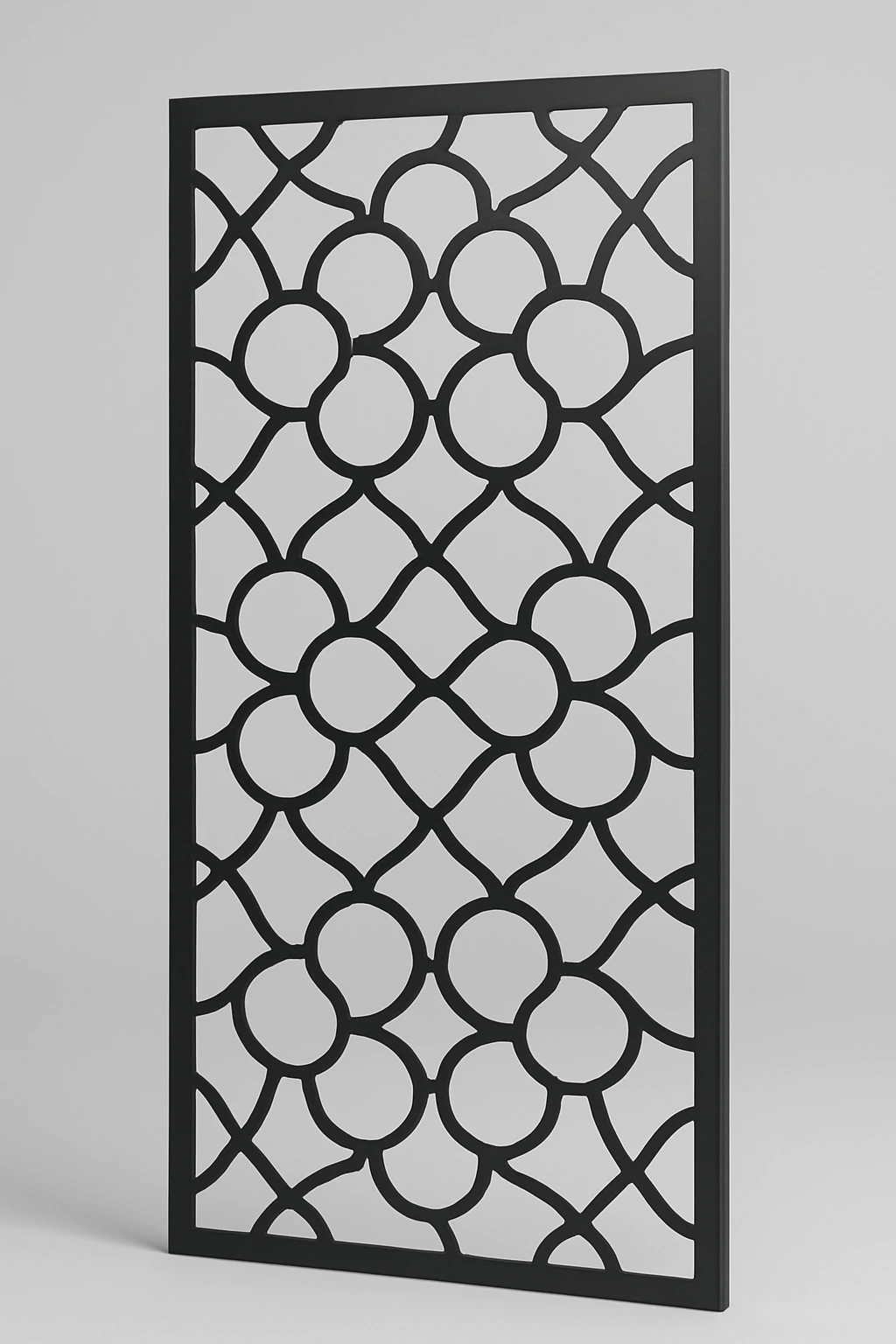
Circles set on a diagonal lattice. Geometric without being severe.
Request this pattern
A teardrop repeat on a soft grid. Even coverage top to bottom.
Request this pattern
The classic quatrefoil trellis drawn at a generous scale.
Request this pattern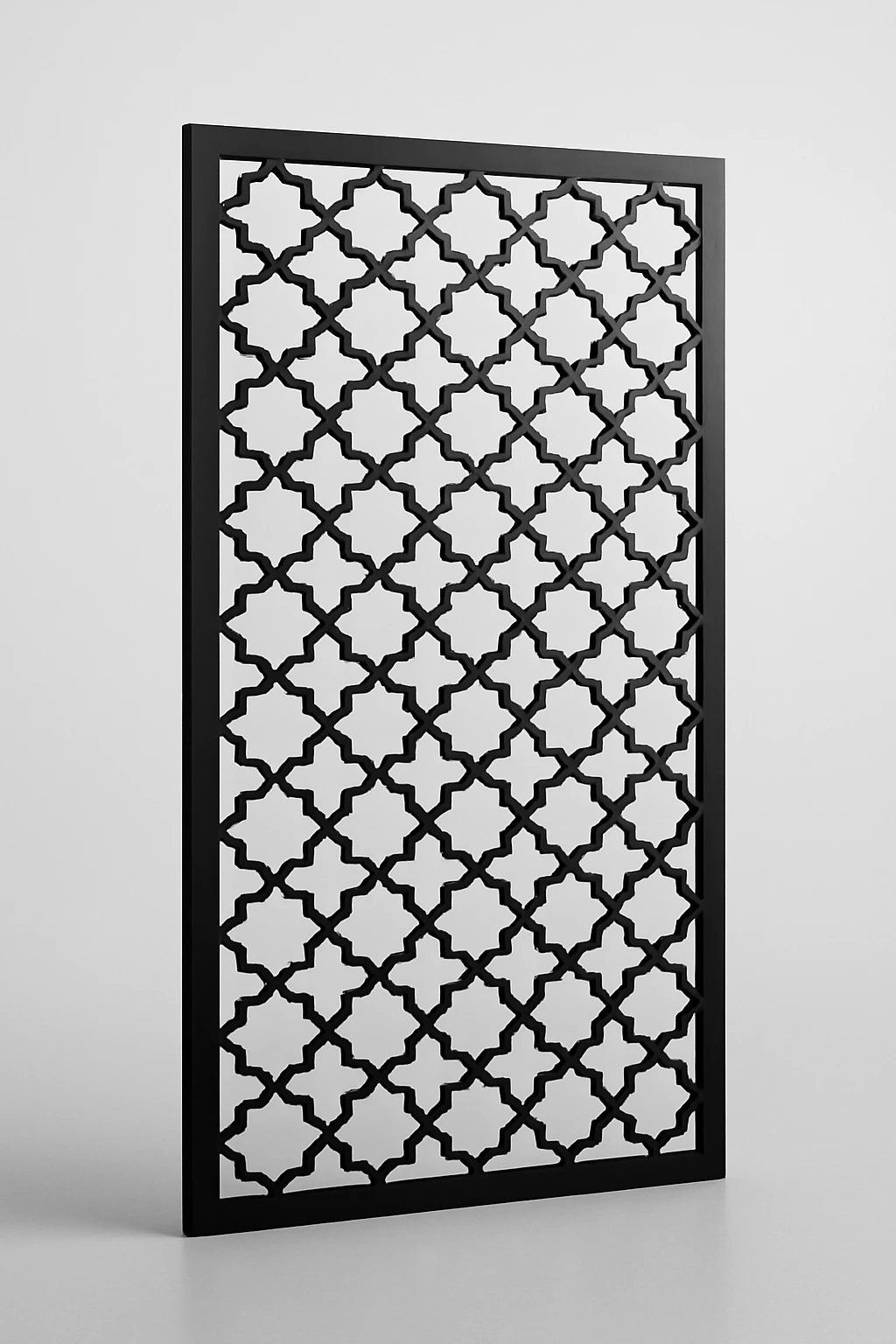
A tight quatrefoil trellis. Fine grain and high coverage.
Request this pattern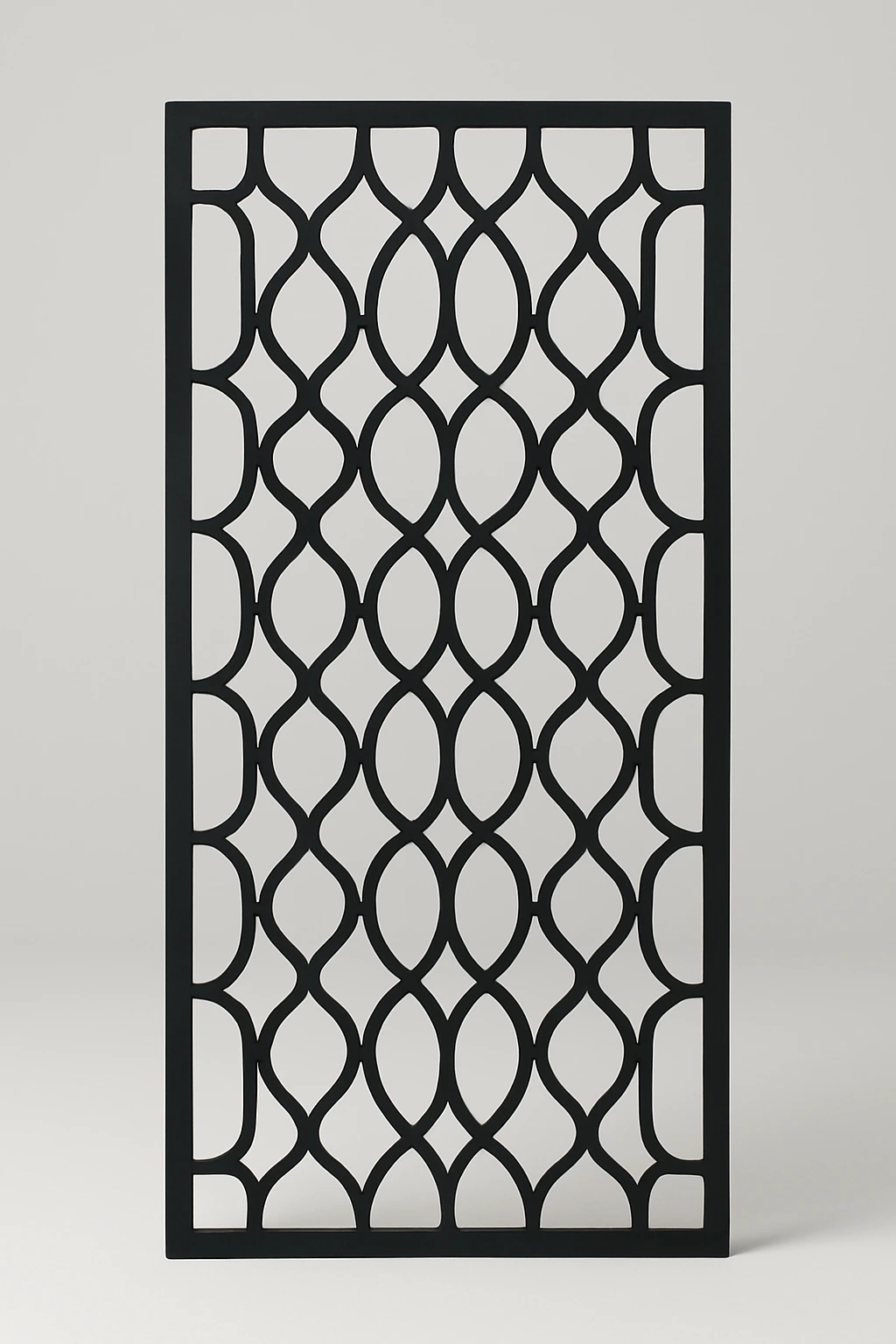
A vertical teardrop repeat with a clear rhythm and no motif.
Request this pattern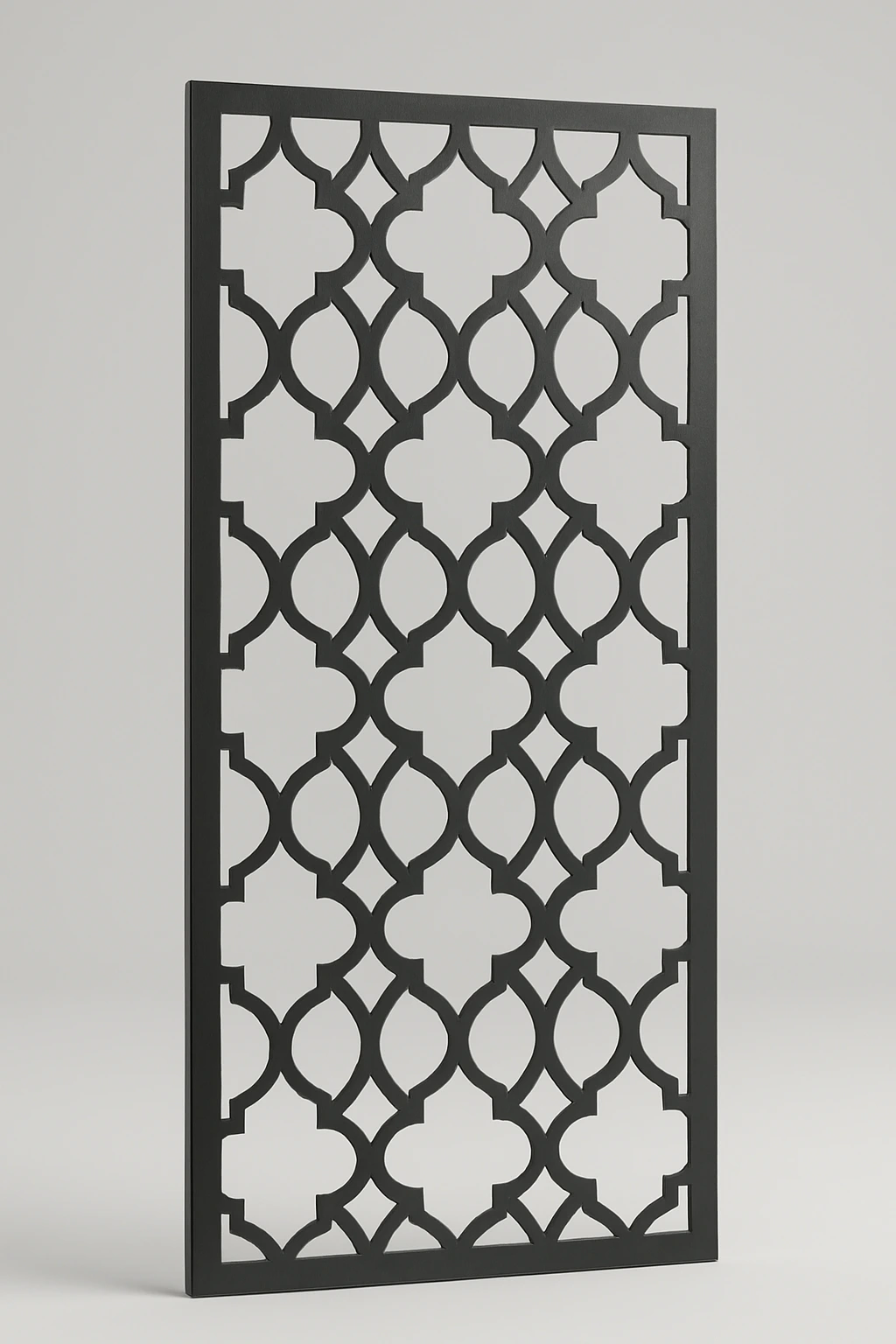
A lantern repeat on a strict grid. Traditional shape, modern spacing.
Request this pattern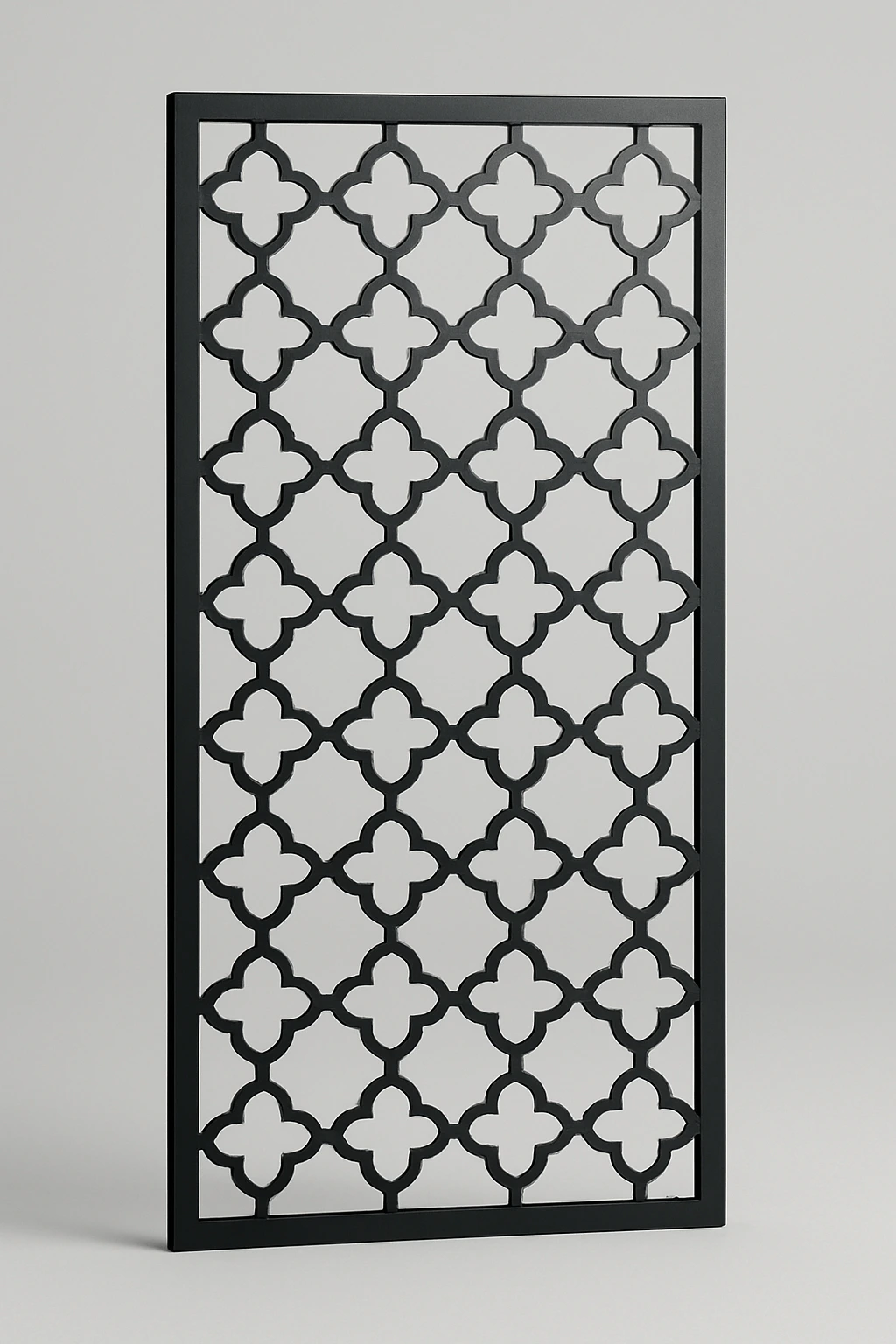
A quatrefoil clover grid. Simple, even and easy to scale.
Request this patternHow Custom Sizing Works
Choose a design from the collection and we can adapt the panel dimensions, frame and mounting format to suit your opening. Every screen is made to measure, subject to fabrication and mounting requirements. In practice that means the panel is drawn to your opening rather than cut down from a stock size, within the limits of sheet size, handling and how the screen is being fixed.
- Send the openingWidth, height, and a photograph taken from where people will actually be standing. The photograph matters more than the dimensions, because it shows us the sight line you are trying to break.
- We set the panel outThe pattern is laid over your opening at full size so you can see the density and the way the pattern lands at the edges before anything is cut.
- We check the mountingWhether the floor and ceiling can be fixed into, or whether the screen has to stand on its own feet. This decides the frame more than the pattern does.
- Wide openingsAnything wider than a single sheet is covered with two or three panels in one frame, with the pattern set out across the whole run so the joints fall where they are least visible.
Four Mounting Formats
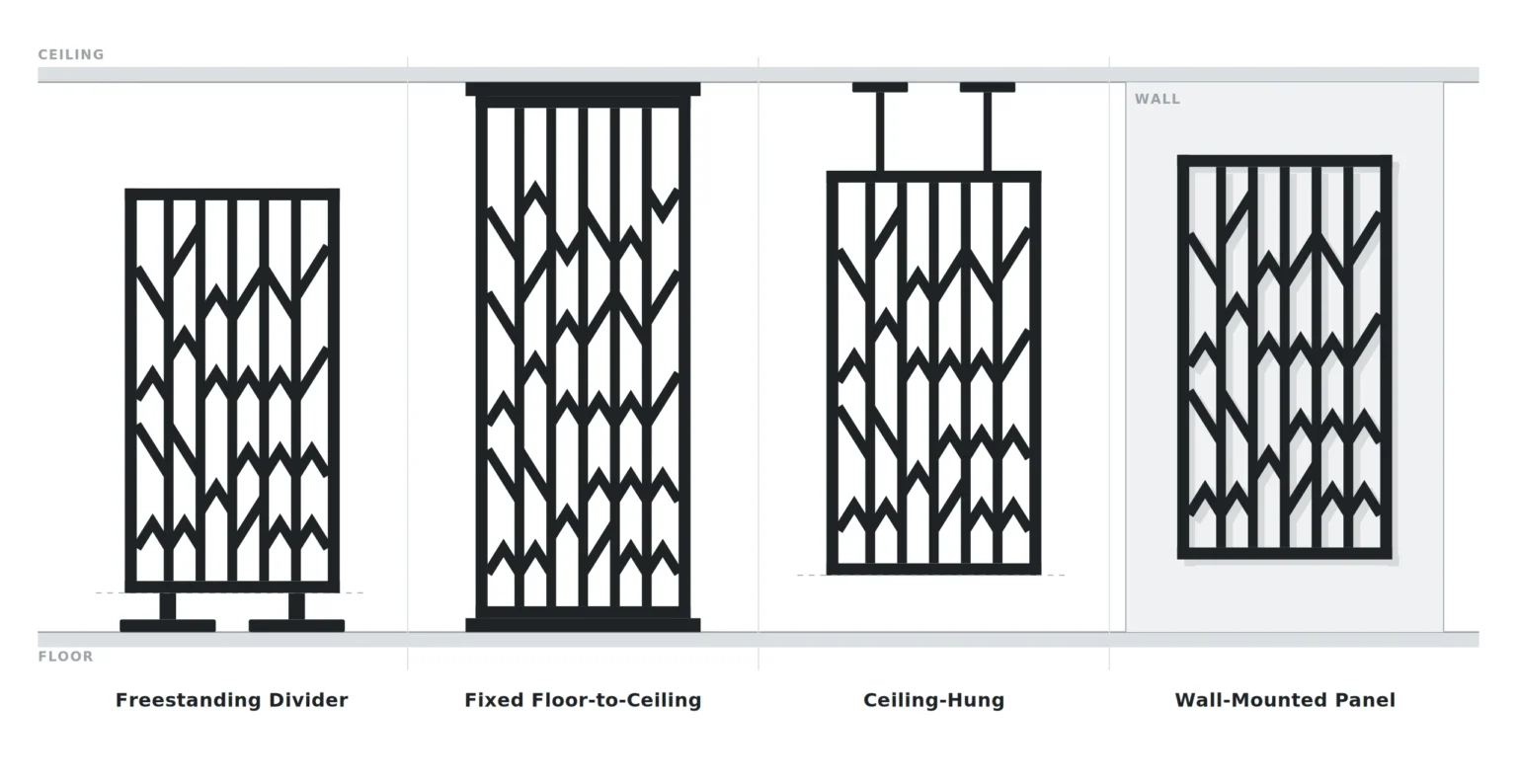
Most patterns can be adapted across multiple mounting formats. The format usually decides itself once we know whether the floor and ceiling can be drilled and whether the screen has to move.
Freestanding divider
Panel in a frame on weighted steel feet. Nothing is fixed to the building, so it suits rentals, stratas and anyone who wants to move it later. Feet are set back so they sit under furniture rather than in a walkway.
Fixed floor to ceiling
Frame anchored top and bottom, panel infill between. The most solid of the four and the one that reads as architecture. Needs a floor and ceiling we can fix into, which we check before quoting.
Ceiling hung
Suspended from the structure above with the floor left clear. Good over a kitchen island or a stair, and the only format that lets you run a screen over something that is already built or finished in stone.
Wall-mounted panel
A single framed panel treated as a feature rather than a divider. Stood off the wall so the pattern throws a shadow that changes through the day.
Materials and Finishes
Your Own Pattern
The library is a starting point, not a limit. We draw custom patterns from a motif you bring us, a material already in the room, a company mark, or a marked-up photograph. Pattern files can be supplied as vector artwork.
What we need
A reference image or vector file, the opening size, and what the screen has to do. A sketch on a photograph is enough to start.
What we check
Whether the pattern holds together once it is cut in steel. A panel has to stay one connected piece, so anything with floating islands or unbroken full-height slits gets redrawn before it is cut. We will tell you honestly if a pattern does not work as drawn.
What you get back
A set-out of the pattern against your opening, and a quotation. Custom pattern work carries a drawing stage that a library pattern does not, and we will say so up front.
How It Is Made
- DrawThe pattern is set out at full size against your opening so you can see the density before anything is cut.
- CutPanels are digitally cut through our specialist cutting partners, then fabricated into the finished screen system by TrussMetal. Every edge is deburred so it is safe to touch.
- FrameThe frame is welded, ground and dressed in our North Vancouver shop, and the panel is fitted into it.
- Finish and fitPowder coat or blackening through our finishing partners, then install or delivery ready to place.
Working with Designers and Trade
Screens can be delivered finished and flat-packed for your own installer, or fitted by us. If you are specifying several screens across one project we will hold the same finish batch across all of them.
Most of this work is residential renovation on the North Shore and in Vancouver, with a steady run of restaurant and amenity-room fit-outs. Designers and homeowners both start in the same place, which is a photograph of the room and a rough dimension.
Send us the sight line, not just the dimensions
A photograph taken from where people will be standing tells us more than a measured drawing. Send that and a rough width and height, and we will come back with a pattern suggestion and a price.
Request a Quote(778) 805-5333Questions We Get Asked
How much privacy does a screen actually give you?
Less than people expect head on and more than they expect from an angle. A pattern marked open reads almost solid when you walk past it and almost transparent when you stand square to it. That is usually the effect people want in a room. If you need to genuinely not see through something, a solid panel with a pattern cut only into the top third does the job better than an evenly perforated screen.
What do open, balanced and private mean on the pattern cards?
They describe how much of the panel is steel rather than opening, judged by eye across the library so the three groups stay consistent with each other. They are a design guide, not a measured figure, and the density of any pattern can be adjusted for your panel.
Can I have a pattern at a different scale?
Yes. Every pattern in the library can be scaled up or down, and most can be stretched or thinned. A pattern that looks busy at the size shown here often reads much calmer drawn twice as large on a tall panel.
Can a freestanding screen tip over?
The feet are sized against the panel, and a tall narrow screen gets a longer foot than a short wide one. We will tell you if a proportion you have asked for needs fixing to the wall instead. We do not publish stability ratings.
Will it rattle or ring?
A thin unframed panel will. That is why every screen here is framed and the panel is captured on all four edges rather than hung from the top. If a ceiling-hung screen is going somewhere with real air movement, tell us and we will detail the bottom edge for it.
Can you match a pattern I have seen somewhere?
We can work from a reference to develop something with the same feel. We will say so plainly when a reference is somebody else’s design that we are not going to copy. In practice the versions we draw for a specific room fit that room better than the original did.
Do you install, or just fabricate?
Both. Freestanding screens are usually delivered and placed. Fixed and ceiling-hung screens we install ourselves within Metro Vancouver, because the fixing is the part that goes wrong when it is handed off.
Get a Price on a Screen
Tell us the room, the width and height you are working with, and whether it can be fixed to the floor and ceiling. If you have a pattern in mind, send the model code from the library above. Pricing is confirmed by quotation based on size, pattern, frame and mounting format.