
Patina Finishes
A patina is age, applied on purpose. Chemistry does in an afternoon what weather and handling would take decades to do, and the result is a surface with depth and variation that no sprayed colour reproduces.
It is also the least predictable thing we do. If two panels being slightly different from each other would bother you, this is the wrong page and a powder coat is the right answer.
What a patina is, and is not
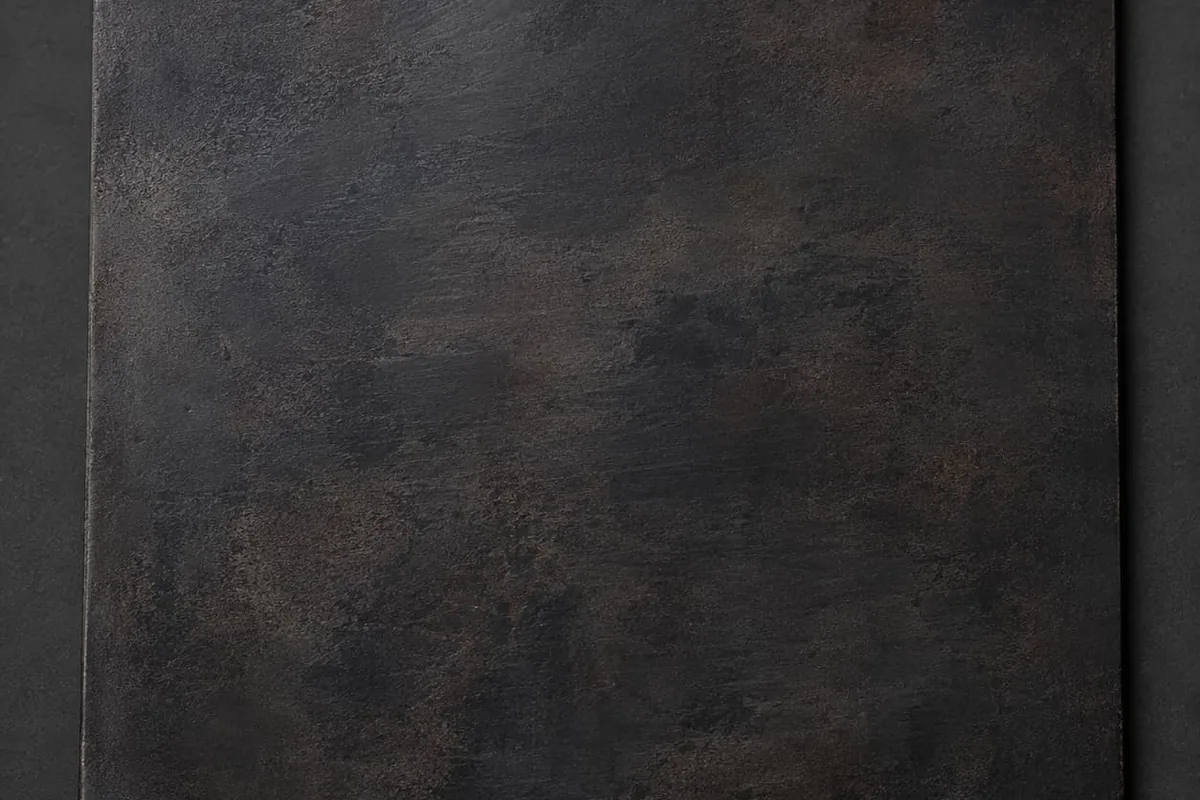
A chemical solution reacts with the metal surface to grow a coloured compound in place. The colour is the metal, changed. Nothing is sprayed on and nothing sits on top, which is why a patina reads as depth rather than as paint, and why light moves across it differently.
What it is not is a paint effect. There are painted finishes sold as verdigris and antique bronze, and at arm’s length in a photograph they can pass. In person they do not, because a painted surface has one plane and a patina has several.
What each metal will give you
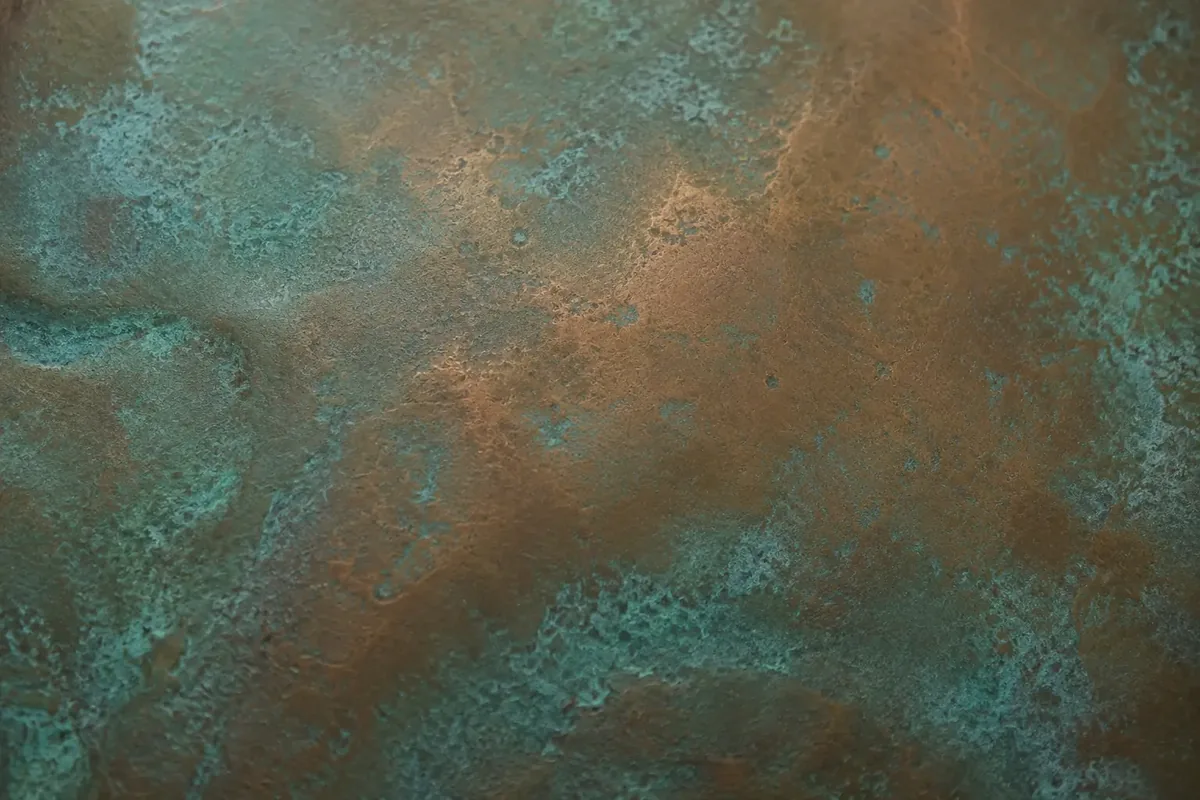
The metal decides the palette. You cannot get a green patina on steel or a true black on copper — the chemistry does not go there.
- Steel — black and brown. Deeper and more variable than chemical blackening, with cloudier movement across a panel. Interior only.
- Brass — the widest range. Brown through near-black for an antiqued look, or green for verdigris. Antiquing is usually relieved afterwards, meaning the raised areas are worked back to bright so the piece looks handled rather than dipped.
- Bronze — rich mid-browns and near-blacks. The classic architectural bronze look is a dark patina burnished back on the highlights.
- Copper — brown, chocolate, blue and the full verdigris green. Copper takes patina more readily than any other metal we work, and holds it best.
Hot and cold
Cold patina is brushed, sprayed or wiped onto the metal at room temperature and left to develop over hours. It is controllable, it can be layered, and it can be stopped when it reaches the colour you want. Most of what we do is cold.
Hot patina means heating the metal and working the solution onto it while it is hot. It develops in seconds, goes deeper, and gives colours — particularly the blues and the strong greens — that cold work will not reach. It is also far harder to control and effectively impossible to undo, so it belongs on feature pieces rather than on twelve matching panels.
Sealing, and the choice it forces
An unsealed patina keeps moving. That can be exactly what you want on an exterior copper screen, and exactly what you do not want on a brass bar front that people lean on.
- Sealed with lacquer — the colour is frozen on the day we seal it. Effectively no maintenance. If the lacquer is ever damaged the patina underneath will start moving again in that spot, and the repair is visible.
- Sealed with wax — slows the movement without stopping it, and keeps the surface feeling like metal. Wants re-waxing yearly.
- Left open — the patina continues to develop for years. Only sensible where continued change is the intention and where nobody is touching it.
Variation is the material, not a defect
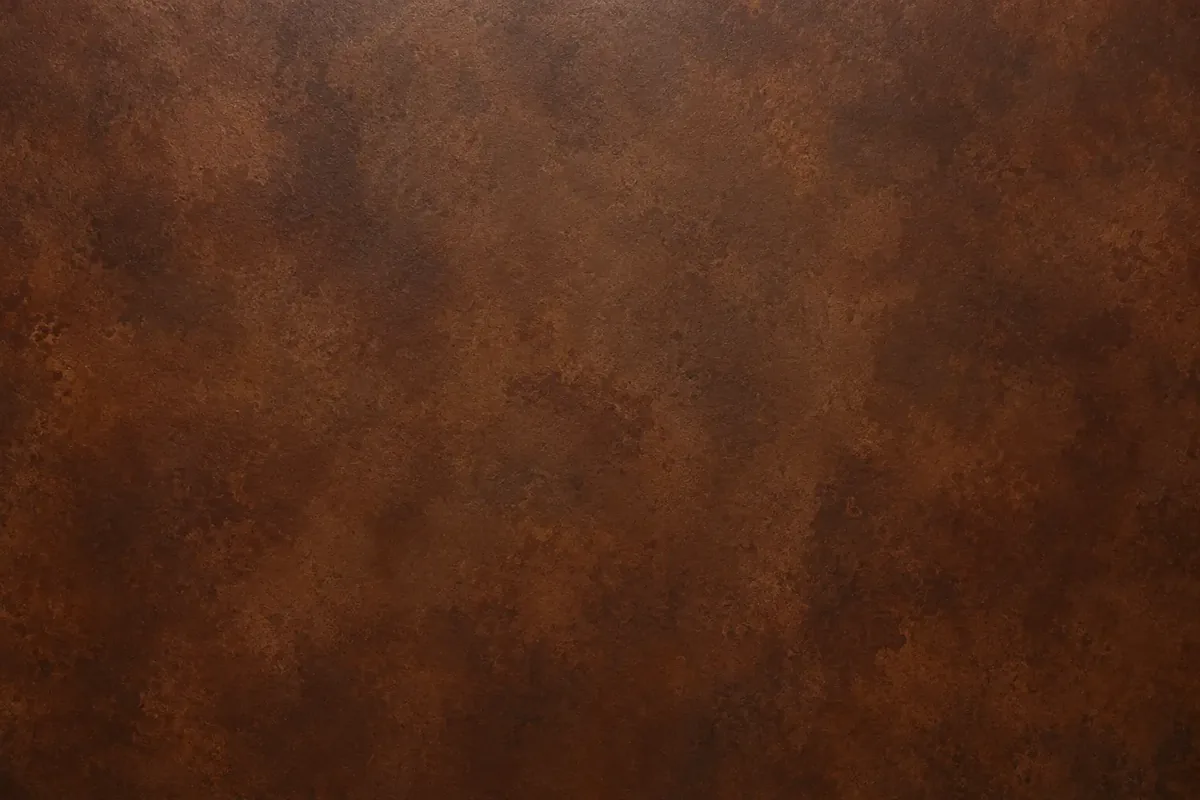
Two panels patinated in the same batch will differ. Panels patinated a month apart will differ more. Temperature, humidity, how long the solution sat, and microscopic differences in the mill surface all move the result.
So we work like this: we make a sample, you approve it, and the sample sets the range rather than the exact target. On a multi-panel job we patinate the whole run together and lay the panels out to sequence them before install, so the variation is distributed rather than pooled at one end of a wall.
If a client needs certainty, we say so early and steer them elsewhere. A patina job that has to match a drawing exactly is a job that will disappoint everyone.
Outdoors
Patinated copper and brass work outdoors. They are already corroded in a controlled way, and the patina is protective. A copper screen will keep changing and eventually settle into a green that is entirely stable.
Patinated steel does not work outdoors. The patina offers no meaningful protection and Vancouver rain will have rust through it within a season.
If you want the look of aged steel outside, the material that actually does it is corten weathering steel, which grows its own stable patina by design and needs no coating at all. That is a different material with a different specification, not a finish we apply — and it stains whatever sits beneath it for the first year, which has to be designed for.
Where we use it
- Feature walls, interior screens and room dividers
- Fireplace surrounds
- Bar fronts, reception desks and counter facings
- Brass and bronze hardware, handrails and trim
- Exterior copper cladding, screens and planters
Looking after it
Dust with a dry cloth. Nothing abrasive, no solvents, and no household cleaner containing ammonia or bleach — on an unsealed patina those will take the colour off in one wipe and leave a bright patch that cannot be blended without redoing the panel.
Waxed work wants fresh wax once a year. Lacquered work wants nothing at all.
Free in-house consultation
We come to you, measure the site, and talk through options and budget before you commit to anything. On patina work we make a sample first, every time.
Call (778) 805-5333 or email sales@trussmetal.com