
Powder Coating
Powder coating is the most durable colour you can put on steel or aluminum for the money, and it is what we specify by default on anything that goes outdoors in Metro Vancouver. Any RAL colour, in matte, satin, gloss or texture, and it repeats exactly the next time you order. Our steel display pedestals use it in Matte White and Matte Black.
Why it beats paint
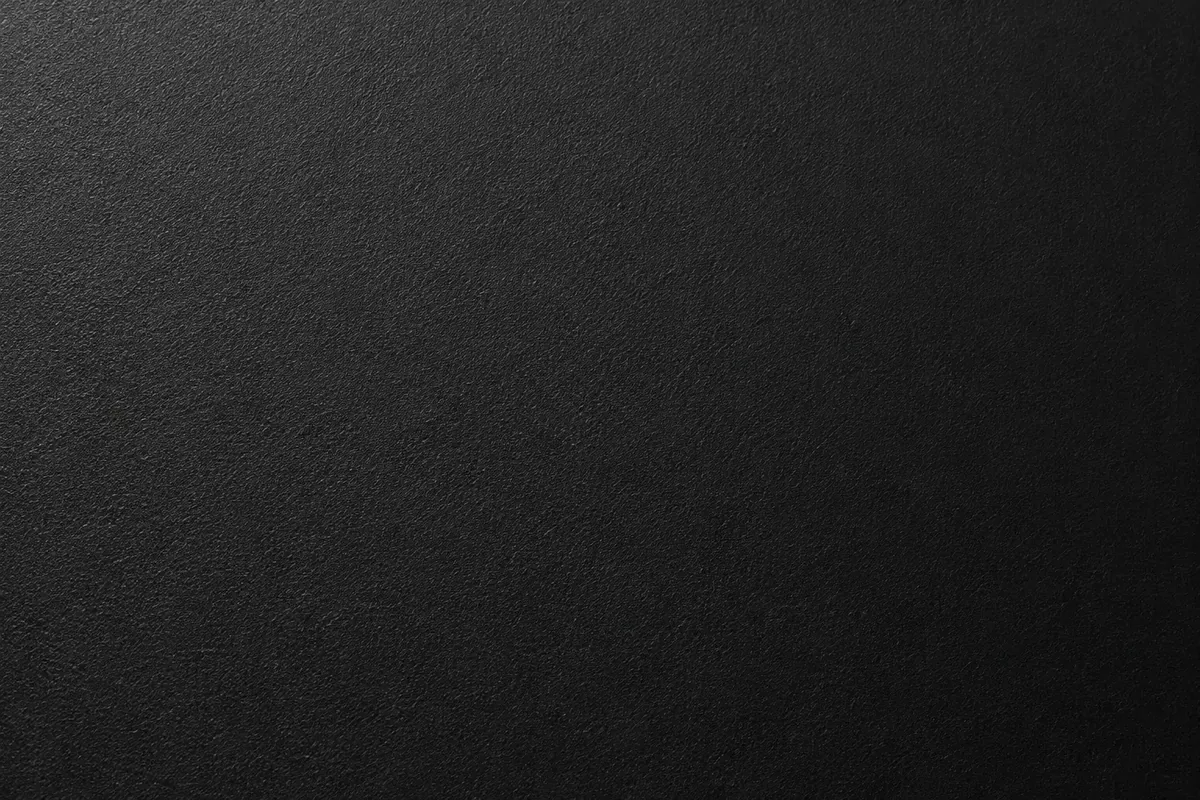
Dry polyester powder is sprayed onto the part with an electrostatic charge, then baked. The powder melts, flows and cross-links into a continuous film several times thicker than wet paint, chemically bonded rather than sitting on the surface.
In practice that means it does not run, it does not brush-mark, it survives being knocked about during install, and it holds colour through our winters. Wet paint on an exterior gate is a five-year finish. Powder coat is a fifteen-year one.
Colour: use a RAL number
Colour names are not specifications. “Charcoal”, “anthracite”, “graphite” and “gunmetal” all describe roughly the same grey and none of them will get you the same grey twice.
The RAL system solves this. Every colour has a number, every coater on earth reads the same number, and the gate you add in three years matches the one you installed today. The numbers we get asked for most:
- RAL 9005 Jet Black — the default black. In matte it is the closest powder coat gets to the look of blackened steel.
- RAL 7016 Anthracite Grey — the near-black grey on most modern window frames. Reads black in shade and grey in sun.
- RAL 7021 Black Grey and RAL 7024 Graphite Grey — where 9005 is too hard and 7016 too light.
- RAL 9010 Pure White and RAL 9016 Traffic White — 9016 is the cleaner, cooler white.
- RAL 8019 Grey Brown — the usual stand-in for a dark bronze look.
Bronze, brass and copper-tone metallic powders exist and we can get them. Be aware that a metallic powder is a paint imitating a metal: it will not age, it will not develop, and next to genuine solid brass the difference is obvious. It is a legitimate choice on budget and a poor one on a feature piece.
Gloss level changes more than you expect
- Matte — the current default on architectural work. Hides very little, so the fabrication underneath has to be clean.
- Satin — the practical middle. Wipes clean more easily than matte and does not glare like gloss.
- Gloss — the most durable and the easiest to clean, and it shows every ripple in the steel. Right on bollards and handrails, wrong on a large flat panel.
Texture, and why we push for it outdoors
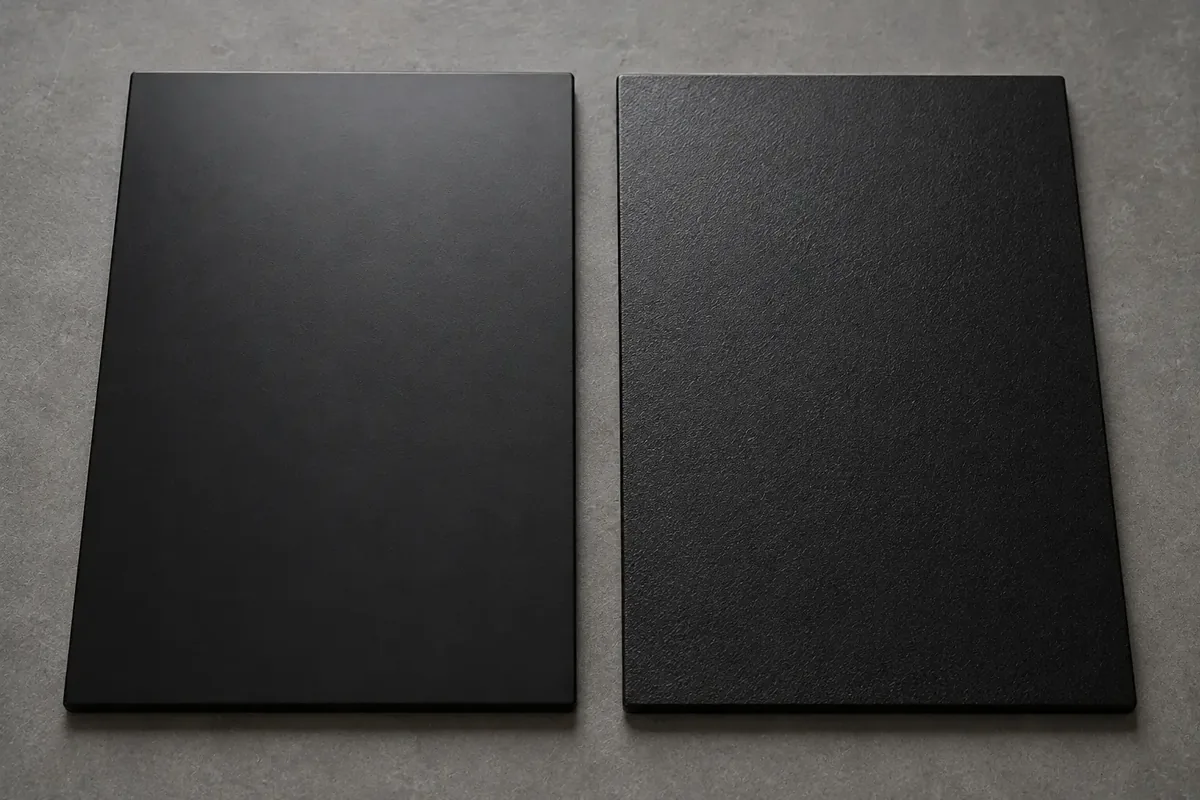
A textured powder has a fine grain rolled into the surface. It costs the same as a smooth one and it hides fingerprints, minor handling marks and small imperfections that a matte smooth finish will show forever.
- Fine texture — barely visible at arm’s length, forgiving up close. Our default recommendation for gates, railings and anything handled.
- Sand texture — coarser and more obviously tactile.
- Hammertone — a mottled, dimpled surface. Distinctive, and it dates a project to whenever it was specified.
- Wrinkle — a deliberate crinkled texture, mostly used on hardware and small parts.
Coastal work: galvanize first
Powder coat is a barrier, not a sacrificial protection. Where the film is broken — a chip from a stone, a drill mark, a cut edge — bare steel is exposed and rust starts under the coating and travels.
Inland that takes many years. Within sight of salt water in West Vancouver it takes far less. So for coastal exposure we hot-dip galvanize the steel first and powder coat over it. The zinc protects the steel even where the coating is broken, and the colour sits on top. It is two processes and two lead times, and it is the difference between a gate that lasts five years and one that lasts twenty-five.
The full corrosion strategy, including where we would use stainless instead, is on steel fabrication.
Powder coating aluminum
Aluminum does not rust, so powder coat on aluminum is doing a purely decorative job and lasts accordingly — it is the standard finish on architectural aluminum for good reason. The pretreatment differs from steel and the coater needs to be told which metal is coming. See aluminum fabrication.
What it cannot do
- Cover bad fabrication. Powder flows thin over a weld and a poorly dressed one will telegraph straight through. Matte and gloss both show it; texture hides a little.
- Be touched up invisibly. Repairs are wet paint, matched to the RAL number, and they can be made almost invisible. Almost.
- Go on after assembly, always. Parts have to fit the oven and hang from a hook. Large assemblies may need to be coated as components and bolted together on site, which changes the design and the price. This is worth raising at drawing stage.
- Look like real metal. If you want the depth of brass, bronze or blackened steel, a metallic powder will not get you there. Use the metal.
Looking after it
Warm water, mild detergent, a soft cloth, twice a year. Near the ocean, rinse it more often — salt sitting on the coating is what eventually gets under it. No solvents and no abrasive pads: they dull the surface permanently and the dull patch cannot be polished back.
Chips down to bare metal are worth touching up early rather than at your convenience, particularly on coastal work.
Free in-house consultation
We come to you, measure the site, and talk through options and budget before you commit to anything. Bring a colour you like and we will find the RAL number that matches it.
Call (778) 805-5333 or email sales@trussmetal.com