
Brass Fabrication
Solid and plated brass for feature work where the metal itself is the finish.
Solid Brass vs Plated
Solid brass is brass all the way through. Plated brass is a thin layer of brass over steel or zinc, applied by electroplating. From two feet away on the day of install they are indistinguishable. Two years later they are not.
Plating wears through at exactly the places a hand touches — the leading edge of a handle, the top of a rail, the corner of a bracket — and once it is through you are looking at the base metal, which usually means grey or rust. It cannot be repaired in place; the part has to be re-plated or replaced.
Solid brass wears into itself. The high spots go bright, the recesses go dark, and the piece reads as older rather than damaged. That is the whole point of specifying it.
We build in solid brass. If the budget genuinely will not carry it, we would rather propose blackened steel or bronze-toned powder coat than sell you plating that will disappoint you.
Patina and Ageing
Brass is a living finish. Left alone it moves from bright yellow through gold to a deep brown, and eventually toward a dark near-black with green in the recesses. In a Vancouver interior the first visible shift usually shows within a few months and keeps developing for years.
The pace depends on handling and humidity. A bar rail gripped fifty times a night will patina in weeks and hold a bright band where hands land. A wall-mounted screen in a dry hallway may take a year to lose its shine.
We can also force it. Chemical patination in the shop gets you to a brown or near-black in an afternoon, which is the right call when a client wants aged brass on opening day rather than in 2029. Forced patina still keeps developing afterwards — it starts the clock further along rather than stopping it.
Lacquered and Unlacquered
This is the decision people regret most often, so it is worth being blunt about it.
Lacquered brass is sealed under a clear coat and holds the colour it went on with. It stays bright with no maintenance. But lacquer eventually fails — from UV, from heat, from abrasion — and it fails in patches, so you get bright metal next to dulled metal with a visible edge between them. Restoring it means stripping the whole piece and starting again.
Unlacquered brass is left bare. It will tarnish, unevenly, in the pattern of how it is used. It needs no maintenance unless you want it bright, in which case a metal polish brings it back in minutes.
Our rule of thumb: lacquer for anything nobody will touch and everybody will look at. Leave it bare for anything hands will be on. Handles, rails and hardware should be unlacquered — the wear pattern is the finish.
Typical Applications
Brass is expensive per kilo and slow to work, so it is rarely the material for an entire piece. It is at its best as the thing the eye lands on.
- Gate and door hardware — handles, pulls, latches, letterplates, house numbers
- Bar fronts, foot rails and back-bar shelving
- Handrails and railing top caps, often on a steel structure
- Fireplace surrounds and hearth trim
- Table and console inlay, edging and legs
- Signage, lettering and feature screens
The common pattern is a steel or stainless structure carrying the load with brass where it is seen and touched. You get the material you wanted at a fraction of what solid brass throughout would cost.
Brass, Bronze and “Antique Brass” Are Not the Same Thing
Three different things get called brass in a specification, and they behave differently once they are installed. Solid brass is a copper and zinc alloy, and it is the same material all the way through, so a scratch is still brass. Bronze is copper and tin, sits redder and darker, and is usually a different price and a different lead time. “Antique brass” is normally a plated or coated finish on a steel or zinc substrate — it looks correct on a sample chip and wears through on a handle inside a year.
If a drawing or a mood board says brass, the first question worth asking is which of the three is actually intended, because the answer changes the cost, the ageing behaviour and what happens the first time somebody polishes it.
Where Brass Belongs
- Interior handrails, grab rails and stair details where hands make contact and a living finish is wanted
- Feature fireplace surrounds, shelving trim and reveal edges — small areas where the material reads as an accent
- Wine cellar and cabinet hardware, pulls, and door furniture
- Inlay and banding set into steel or timber, where brass is the highlight and not the structure
- Signage, house numbers and letter faces
Where Brass Is the Wrong Choice
- Exterior coastal exposure where the finish will be judged against a photograph — brass will move on colour and will not stay uniform
- Anything structural or load-carrying — brass is not a substitute for a steel section
- Large flat panels, where cost, panel flatness and finish consistency all work against it
- High-traffic commercial doors and edges specified in plated “antique brass”, which wears back to the substrate
- Any location where a client expects the finish to look identical in five years
Finishes for Brass and Bronze
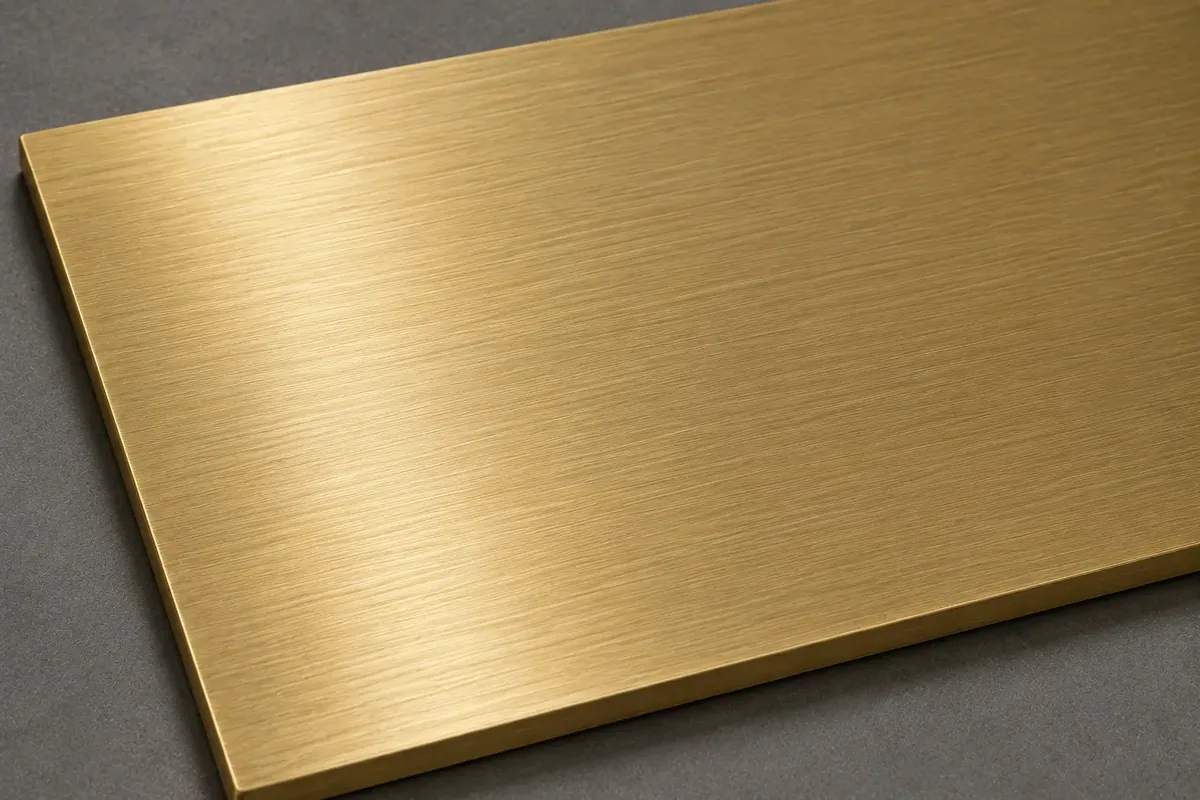
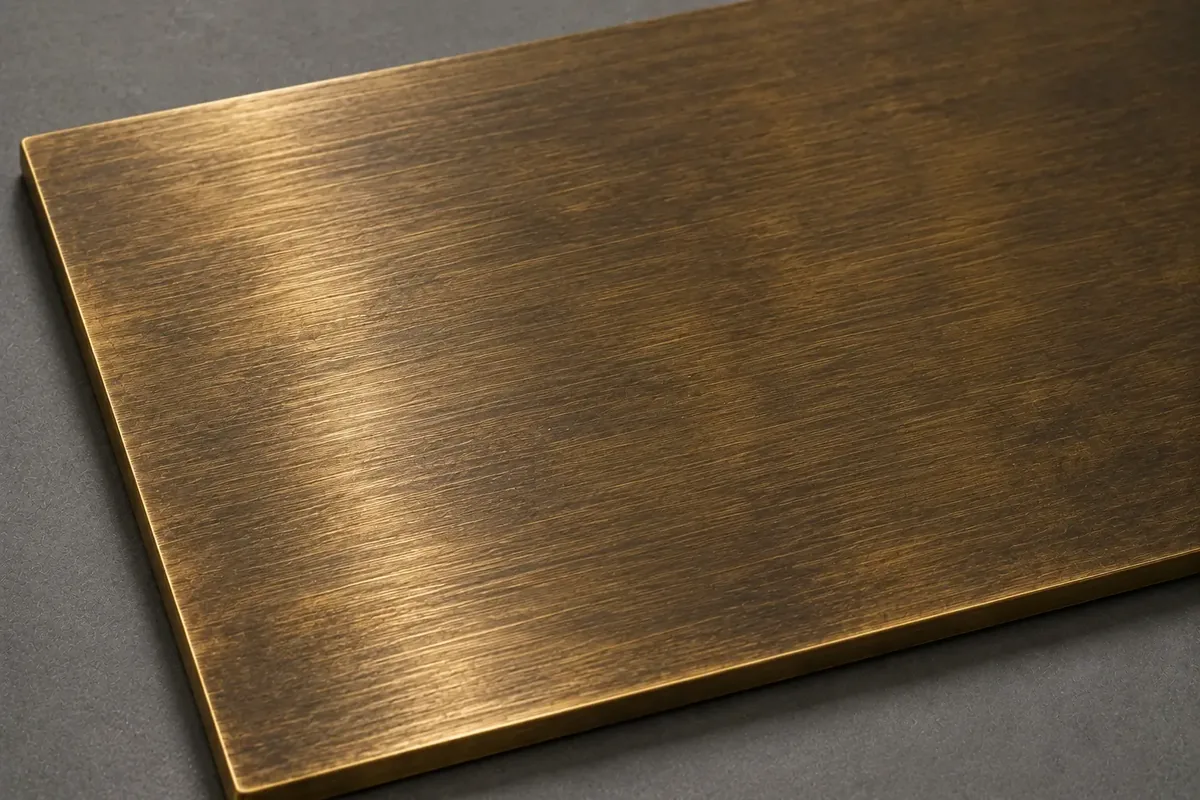
With brass and bronze the metal is the finish. Because we use solid stock rather than plate, the surface can be reworked in twenty years instead of replaced — which is most of the argument for using it at all.
- Satin — the quietest of the bright finishes. Darkens gently where hands touch it, which is usually the intention.
- Brushed — a directional grain that shows fingerprints far less than a polished face.
- Burnished — worked back by hand so the highlights land where the light falls. The classic architectural bronze look is a dark patina burnished back on the raised areas.
- Antiqued — chemically aged and then relieved, so it reads a century old on the day it goes in. See patina finishes for how far this can be pushed, including verdigris green.
Lacquered or not is the decision that matters most. Lacquer freezes the brass where it is and asks nothing of you; left unlacquered it will keep moving for years and settle somewhere you cannot fully predict. Neither is wrong, but the choice has to be made before we finish the piece.
For how brass compares with the finishes available on steel and stainless, see metal finishes.
Cost and Lead Time
Brass is a specify-and-order material rather than something pulled off a rack, and it is priced on copper, so quotes are shorter-lived than they are for steel. Sections and sheet come in a narrower range of sizes than steel, which sometimes means a detail has to be redrawn around what is actually available rather than what was drawn. Finish samples add time as well — if a specific patina or a matched finish is required, it needs to be approved on a physical sample before the main order goes in.
Fabrication Considerations
- Brass is softer than steel: it marks in handling, in clamping and in transit, so protection and packing are part of the job rather than an afterthought
- Joints are usually detailed to be hidden or deliberately expressed, because a brass joint cannot be ground and blended invisibly the way a steel weld can
- Mixing brass with steel or aluminium in a wet exterior location sets up a dissimilar-metal problem — the junction needs isolating
- Fasteners should match: a stainless screw in a brass plate is visible forever
- Anything that will be handled should be sampled at full size, not chosen from a 50 mm chip
Maintenance
Unlacquered brass needs nothing at all if a patina is wanted, and a soft cloth with a proprietary brass polish if it is not — but polishing is a commitment, because a partly polished handrail looks worse than one left alone. Lacquered brass should be wiped only, never polished; abrasive polish removes the lacquer and creates exactly the patchy result the lacquer was specified to prevent. Avoid ammonia-based cleaners on both.
Brass Questions We Get Asked
Will brass turn green?
Outdoors and in damp conditions it can develop a green verdigris over time, particularly near salt air. Indoors it normally goes through gold to a warm brown rather than green.
Can brass be matched to an existing piece?
Close, but a guarantee of an exact match is not realistic — alloy, age and finish all vary. The honest approach is a physical sample compared against the existing piece in the actual light of the room before anything is ordered.
Is brass suitable for an exterior handrail in Vancouver?
It is possible, but it will not stay the colour it was installed in. If the finish has to remain consistent, stainless steel or powder-coated steel is the more predictable specification.
What is the difference in price against steel?
Materially higher per kilogram, and it varies with the copper market, so it is quoted per project rather than from a fixed rate. For small accent areas the difference is often minor against the overall job; for large areas it is usually the deciding factor.
Related: gate hardware, fireplace surrounds and the other metals we work in.
Free in-house consultation
We come to you, measure the site, and talk through options and budget before you commit to anything. No charge, no obligation.
Call (778) 805-5333 or email sales@trussmetal.com