
Stainless Steel Fabrication
304 and 316 stainless for kitchens, marine exposure and anywhere rust is not an option.
304 vs 316
304 is the standard austenitic stainless and it covers most interior work — kitchen counters and shelving, splashbacks, interior railings, furniture frames. 316 adds molybdenum, which is what buys resistance to chlorides: salt spray, pool chemistry, de-icing salt.
The price gap is real but smaller than people expect, and it is almost always the wrong place to save. If a railing is going on a deck with an ocean view, specify 316 and stop thinking about it. If it is going in a hallway, 304 is not a compromise — it is the correct answer.
The one thing neither grade tolerates is contamination. Stainless that has been cut or ground with tooling previously used on mild steel will pick up embedded iron particles and bloom orange rust within months. We keep separate consumables for stainless work. Not every shop does, and it is worth asking whoever you are quoting with.
Coastal and Marine Exposure
Metro Vancouver is a marine environment far further inland than most people assume. Salt-laden air reaches well up the North Shore slopes and along the Fraser, and it collects on horizontal surfaces where rain does not wash it off.
For anything on the water — Ambleside, Dundarave, Deep Cove, waterfront Richmond — 316 is the baseline, and it still wants rinsing. Fresh water on the metal a few times a year removes the chloride film that causes pitting. That single habit is the difference between stainless that looks new in a decade and stainless with brown freckles in year three.
We will tell you at the consultation which side of that line your site falls on. It is not always the obvious one.
Cost and Lead Time
Stainless costs more than mild steel per kilo and more again to fabricate. It work-hardens, so it is slower to cut and drill; it needs a shielding gas and cleaner preparation to weld; and welds must be passivated or mechanically finished afterwards or they will corrode before the parent metal does.
Expect a stainless version of a piece to run meaningfully above the steel equivalent, with the gap widening as the finish gets finer. A mirror-polished piece carries a lot of hand labour.
Lead time is longer than steel because stock is less commonly held and the finishing steps cannot be rushed. Tell us your date at the consultation and we will tell you honestly whether it works.
Where Stainless Makes Sense
Stainless is chosen for two different reasons that people often confuse. The first is corrosion resistance in a demanding environment. The second is appearance — a metal surface that is the finish, with no coating to chip, fade or need recoating. Which reason applies to your project changes the grade, the finish and the cost.
It earns its place on railings and guards where the metal is exposed and handled, on bollards and site elements close to salt water, on canopy fittings and glass canopy hardware, in wash-down and food-service environments, and in interior work where a brushed or satin metal is the design intent.
Where Stainless Is Not the Answer
Stainless is not stain-proof and it is not rust-proof. It is corrosion-resistant, which is a different claim. In a marine or chloride-rich setting, stainless that is never rinsed will develop surface staining — tea-staining — regardless of grade. It looks like rust and it is largely cosmetic, but it is disappointing to someone who was told stainless does not do that.
It is also more expensive per section than steel, harder to repair well on site, and no substitute for coated steel where the real problem is impact rather than corrosion. Where a piece is going to be hit by vehicles or equipment, galvanized and coated steel is usually the better answer and it costs less.
Grades: 304 and 316
Two grade designations come up constantly in this work.
304 is the general-purpose austenitic grade used across most architectural and interior applications.
316 contains molybdenum, which improves resistance to chlorides — the mechanism behind salt-related pitting and staining.
What we will not do is tell you that one grade is universally correct for a location. Grade selection depends on the actual exposure, how close and how exposed the site is to salt spray, whether the surface will be rinsed and how often, the finish, the geometry — crevices and trapped water are worse than open surfaces — and any requirement confirmed for your project. Two buildings on the same street can justify different answers because one is washed and sheltered and the other is not. Where a project specifies a grade, we build to the specification.
Coastal and Chloride Exposure
On the North Shore, on the waterfront and anywhere salt spray reaches, three things matter more than the grade choice on its own.
Rinsing. Stainless that gets rained on and washed performs very differently from stainless under a soffit that is sheltered from rain but still reached by salt-laden air. The sheltered one is frequently the one that stains.
Geometry. Crevices, tight laps, unsealed joints and anywhere water sits are where pitting starts. Detailing that drains and dries is worth more than a grade upgrade.
Fasteners and contact. A stainless assembly built with the wrong fasteners fails at the fasteners. Contact with carbon steel — including grinding dust from steel landing on a stainless surface — embeds iron particles that then rust and look like the stainless has failed. Fabrication in a shared shop has to control for that, and it is one of the reasons stainless costs what it does.
Finishes for Stainless
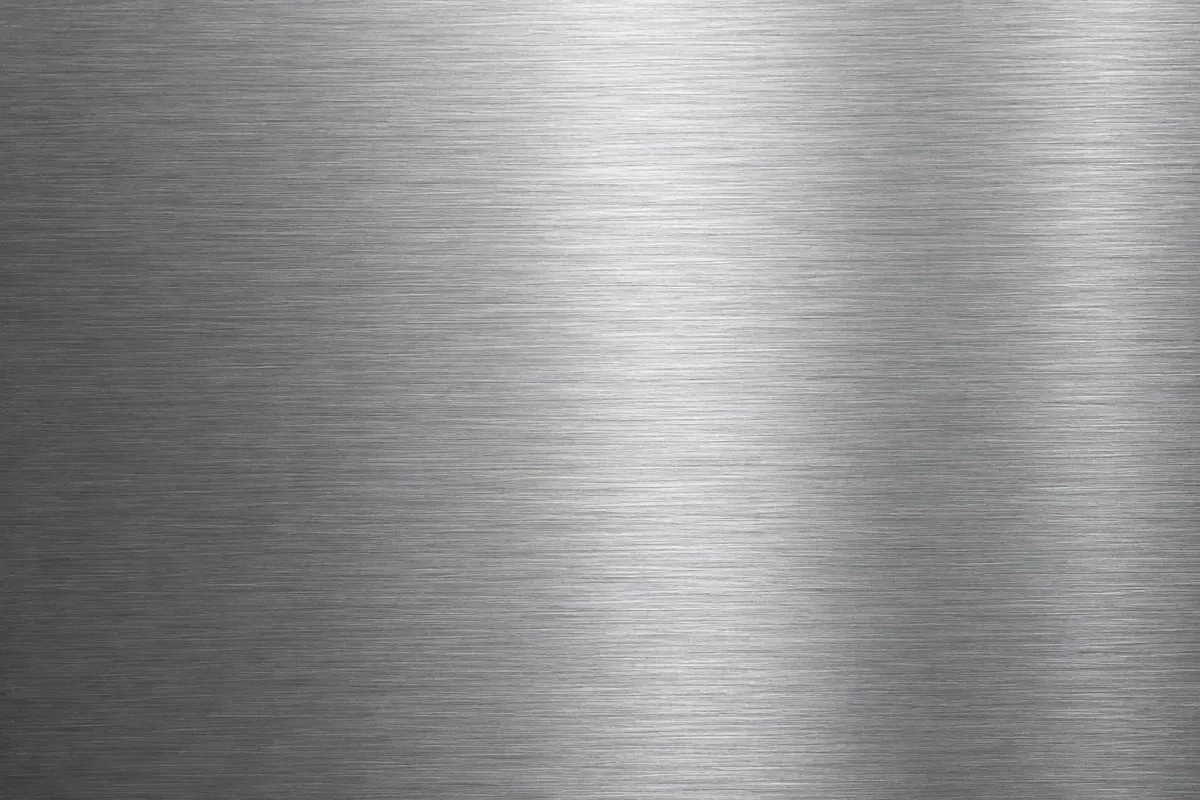
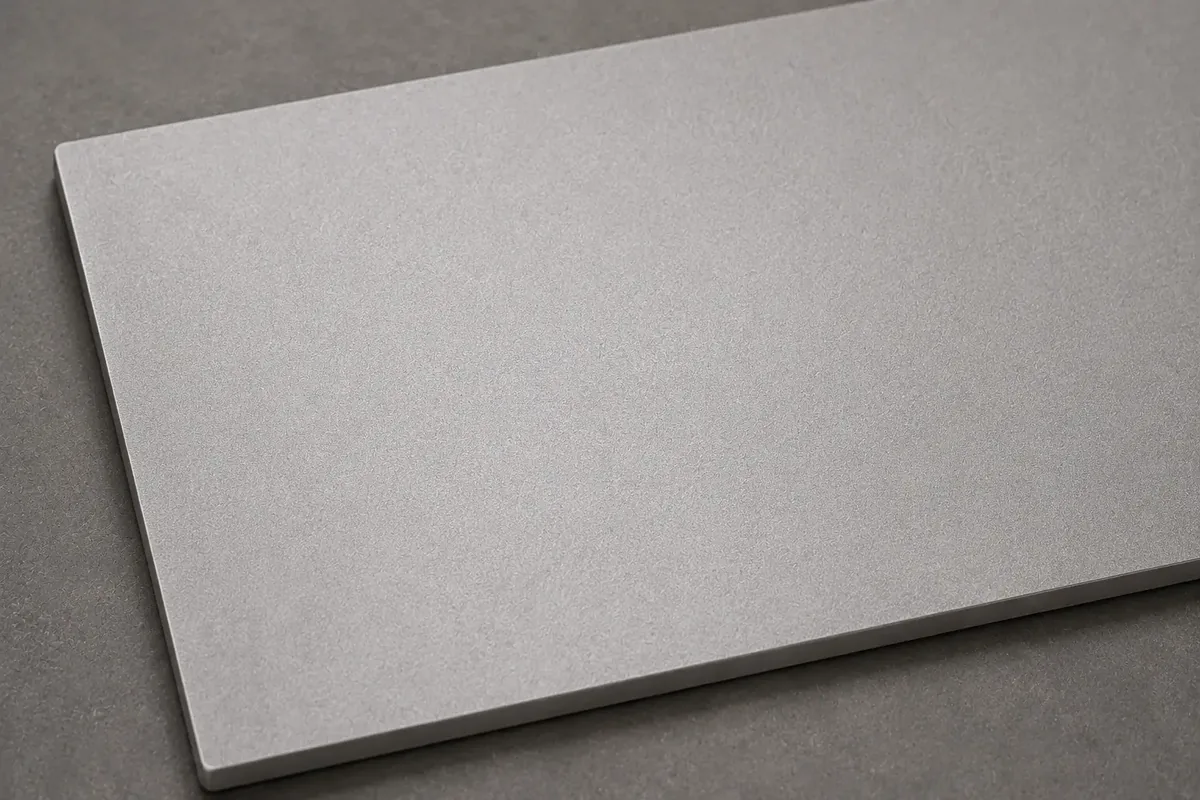
On stainless the finish is ground into the surface rather than applied to it, which makes it part of the fabrication rather than a step that happens afterwards. It has to be agreed before we start.
- No.4 brushed — the architectural default. Directional grain, forgiving of handling, and easy to blend if it is ever scratched.
- Hairline — a finer, tighter grain than No.4. Quieter in an interior and slightly less forgiving.
- No.8 mirror — shows every fingerprint and every imperfection in the sheet beneath it. Beautiful where nothing touches it, a liability where things do.
- Bead-blasted — an even matte grey with no direction at all. The most forgiving stainless finish for busy places, and the easiest to keep looking consistent.
Grain direction is a decision, not an accident. It should run the same way across a run — vertical on posts, horizontal on rails is the usual answer — and it should be stated on the drawing. Fixing it afterwards means refinishing the whole assembly.
Stainless can also be powder coated or PVD-coloured where a dark finish is wanted in a wet room. For how these compare with finishes on other metals, see metal finishes.
Fabrication Considerations
Stainless work harder and moves more under welding heat than carbon steel, so distortion control and sequence matter more. The heat-affected zone discolours — heat tint — and that tint is not just cosmetic: it reduces corrosion resistance where it appears and has to be removed mechanically or chemically rather than left.
Weld dressing and grain matching on visible work is skilled, slow and a genuine cost. It is also the difference between a stainless railing that looks made and one that looks assembled.
Maintenance
Periodic washing with clean water and a mild detergent, wiped in the direction of the grain. In coastal settings, more often. Never clean stainless with steel wool or a brush that has been used on carbon steel — that embeds iron and creates exactly the rust spots the material was chosen to avoid. Surface staining that has already appeared can usually be removed with a proprietary stainless cleaner.
Stainless, Steel or Aluminum?
Coated steel where strength, impact and cost lead. Aluminum where weight leads. Stainless where the metal is the finish, where the environment is genuinely aggressive, or where a coating cannot be maintained. Cost per section is highest here, and it buys appearance and longevity rather than strength.
Related Products
Stainless appears on railings and guards, bollards, canopy fittings, site seating, screens and interior work including fireplace surrounds and furniture. Send us the exposure and the drawing and we will tell you honestly whether stainless is worth its cost on your project.
Free in-house consultation
We come to you, measure the site, and talk through options and budget before you commit to anything. No charge, no obligation.
Call (778) 805-5333 or email sales@trussmetal.com