
Aluminum Fabrication
Light, corrosion-resistant and maintenance-free — the right call for large gates and rooftop work.
Where Aluminum Wins
Aluminum is roughly a third the weight of steel and it does not rust. Those two facts decide most of the jobs it gets.
Weight matters more than people expect on gates. A wide automated driveway gate in steel puts real load on its hinges, posts and operator; the same gate in aluminum is easier on all three, opens faster and is kinder to the motor over years of cycling. On rooftop and balcony work, where you are adding load to a structure someone else engineered, the weight saving can be the difference between a simple install and an engineering review.
It is also the low-maintenance choice. A powder-coated aluminum railing on an exposed deck will outlast a powder-coated steel one with no attention at all, because a scratch through the coating does not start a rust bloom underneath.
Where steel still wins: long unsupported spans, anything structural, and jobs where the design needs the crisp thin sections that only a stiffer metal allows.
Alloys and Tempers
Most of our work is in the 6000 series — 6061 and 6063.
- 6061-T6 — the structural one. Strong, machines well, welds well. Frames, posts, brackets, anything carrying load.
- 6063-T5 and T6 — the architectural one. Extrudes into crisper profiles with a better surface for anodising. Railings, screens, trim, gate infill.
- 5052 — sheet that bends without cracking. Panels, infill, enclosures.
Temper matters as much as alloy. Welding an aluminum extrusion locally softens the metal in and around the heat-affected zone, and that loss is permanent unless the part is heat treated afterwards. On a load-bearing piece we design around it rather than pretending it did not happen.
Welding Aluminum
Aluminum is harder to weld well than steel, and the difference shows.
It conducts heat away from the arc fast, so it needs more power and a quicker travel speed. It carries a tough oxide layer that melts at a far higher temperature than the metal underneath, which has to be cleaned off mechanically and held off with the right polarity. And it gives almost no colour warning before it collapses — steel glows, aluminum simply goes.
We weld it TIG for visible work, where the bead is part of the finish, and MIG with a spool or push-pull setup for volume and thicker section. On anything where the weld will be seen, ask to look at a sample. Aluminum welding is where the gap between shops is widest.
Anodizing and Powder Coating
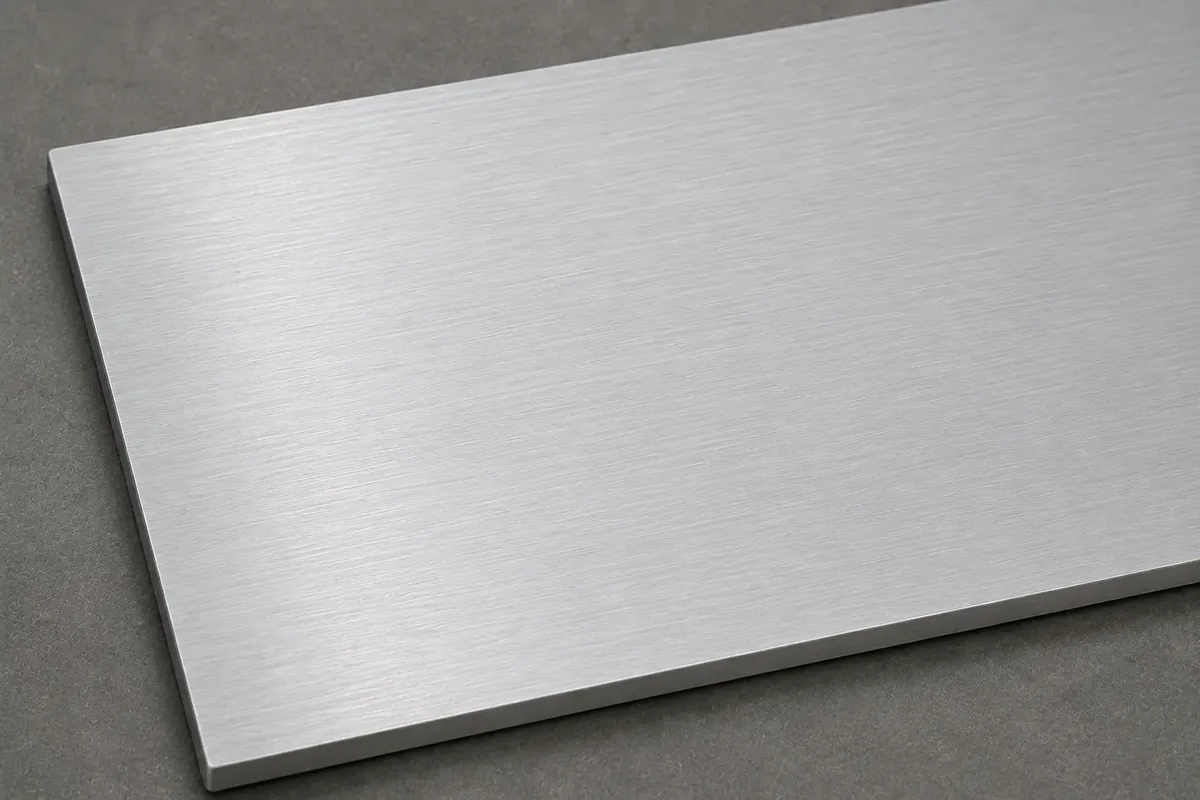
Anodising and powder coating are not two names for the same thing, and the right one depends on the job.
Anodising grows a hard oxide layer out of the metal itself, so it cannot chip or peel — there is no coating sitting on top to fail. It keeps a metallic look, comes in clear and a limited palette, and it is the more durable option in high-wear and high-UV positions. It is unforgiving of surface defects, because it magnifies rather than hides them.
Powder coating gives you any colour, any gloss level, and it fills minor surface imperfections. It is what most architectural aluminum gets. On aluminum it needs a chromate-free pretreatment to bond properly — skipping that step is why cheap coated aluminum railings start flaking at the edges after a few winters.
For most gates and railings we recommend powder coat. For handrails people actually grip, and for anything in constant sun, anodising is worth the conversation.
Where Aluminum Makes Sense
Aluminum earns its place when weight or corrosion is the governing problem rather than strength. It weighs roughly a third of steel for the same volume and it does not rust, and those two properties decide most of the projects where we specify it.
That means balcony and high-rise work where every section is carried up by hand or through a lift, rooftop and podium structures where what the building can carry is a real constraint, long fence runs where handling dominates labour, rooftop equipment screens, balcony privacy screens, and anywhere close to open water where a coating on steel would need maintenance nobody will do.
Where Aluminum Is the Wrong Choice
Aluminum is softer and less stiff than steel, so it needs larger sections to do the same structural job. On a wide span, a heavily loaded frame or a slim architectural profile, that either changes the look or changes the cost — and sometimes rules it out.
It also takes impact badly. Aluminum dents and deforms where steel would spring back, and it is far harder to repair well on site. For bollards, parkade guards, driveway gates and anything that gets hit, galvanized and coated steel is the better answer.
And while aluminum does not rust, it does corrode. In the wrong contact conditions it corrodes quickly.
Corrosion and Dissimilar Metals
Aluminum protects itself with a thin oxide layer that reforms when damaged. That works well in normal exposure and it fails in two specific situations worth understanding before design.
Contact with dissimilar metals. Aluminum in wet contact with carbon steel, stainless or copper sets up galvanic corrosion, and the aluminum is the one that suffers. This shows up at connections — an aluminum screen bolted to steel supports, or stainless fixings through an aluminum frame — long before anything else on the piece looks worn. It is resolved with isolation washers, sleeves, coatings or gaskets at detail stage, and it is one of the most common failures we see on work built by someone who did not think about it.
Trapped alkaline or salt-laden moisture. Concrete and mortar contact, and standing salt water in an unwashed crevice, both attack the oxide layer. Detailing that drains and dries matters here as much as with steel.
Finishes for Aluminum
Aluminum does not rust, so a finish on aluminum is doing a decorative job rather than a protective one. That makes the choice simpler than it is on steel.
- Powder coat — the standard architectural finish, in any RAL colour and any gloss level. The pretreatment differs from steel, so the coater has to be told which metal is coming.
- Mill, brushed or satin — the raw metal, cleaned up. Softer than stainless and it marks more easily, so it belongs where it will not be handled hard.
- Bead-blasted — an even matte surface that hides handling far better than a brushed one.
- Anodising — a different process again, and one we source through a specialist rather than carry out ourselves. Ask us before you specify it so we can confirm lead time and what the finisher can actually match.
For how aluminum finishes compare with what steel, stainless and brass can do, see metal finishes.
Fabrication Considerations
Aluminum is a different problem from steel rather than the same problem in a lighter metal. It conducts heat away much faster, which changes welding technique and heat input. It moves more under welding, so distortion control matters more on long or flat parts. It is unforgiving about contamination — oil, moisture or the wrong filler produces poor welds — and it needs cleanliness that carbon steel does not.
Alloy and temper matter and are worth telling us. Some alloys weld well and some do not; some bend to a tight radius and some crack at the same radius. “Aluminum” on a drawing is not enough information for anything demanding, and telling us the alloy and temper changes what we can do with it.
Cut and machined edges expose bare metal that will not match a coated or anodized surface, so where a part is cut after finishing, that has to be planned.
Maintenance
Wash periodically, more often near salt water. Powder-coated aluminum benefits from the same care as any coated surface. Check fixings and isolation details at connections — that is where the problems appear first. Scratches through a coating on aluminum are less urgent than on steel, because the exposed metal will not bleed rust down the elevation, but they still want attention.
Aluminum, Steel or Stainless?
Aluminum where weight, handling or unmaintained corrosion resistance decide it. Steel where strength, impact resistance, slim sections or repairability decide it. Stainless where the bare metal is the finish and the environment is aggressive. On a balcony guardrail replacement in a tower near the water, all three are defensible and the deciding factor is usually access and what the building will let you carry up.
Related Products
Aluminum is common on railings and guards, fencing, privacy screens, rooftop equipment screens, pergolas and wide gate leaves. Tell us the access constraints and the exposure and we will tell you whether aluminum is worth the difference.
Free in-house consultation
We come to you, measure the site, and talk through options and budget before you commit to anything. No charge, no obligation.
Call (778) 805-5333 or email sales@trussmetal.com