
Blackened Steel
Blackened steel is not painted black. The colour is a chemical conversion in the surface of the steel itself, which is why it looks like metal rather than like a coating, and why it wears the way metal wears.
It is the finish behind most of the dark interior steelwork people send us photographs of — stair stringers, shelf brackets, fireplace surrounds, table bases, interior screens. It is also the finish most often specified for places it will not survive, so this page is as much about where it fails as where it belongs.
What it actually is
The steel is cleaned back to bare metal, then a chemical solution converts the surface layer into black iron oxide — the same compound as the black oxide on a gun barrel or a good hand tool. Nothing is added on top. The steel is a few microns thinner and now black.
That conversion offers almost no corrosion protection on its own, so the surface is always sealed afterwards, usually with wax or oil. The seal is the part that wears, and the part you maintain.
You will see the same finish called black oxide, gun bluing, or simply blackening. On architectural work the differences between them come down to the chemistry and the temperature, not to the look.
Hot and cold blackening
- Hot blackening submerges the part in a heated salt bath. The result is even, durable and repeatable, and it is what we use where a piece has to match another piece. It needs a tank the part will fit in, which sets a hard size limit.
- Cold blackening is applied to the surface by hand. It works at any size, including a fabricated assembly that will never fit in a tank, and it is more variable panel to panel. On large work that variation reads as depth. On a set of matching brackets it reads as a mistake.
Which one a job gets is a size and consistency decision, and we will tell you which you are getting before we quote it.
Wax, oil or lacquer
The seal changes the look and the upkeep more than the blackening does.
- Wax — the deepest, softest black and the one most people picture. It needs re-waxing every year or two on anything handled, and it will mark if something wet sits on it.
- Oil — similar depth, slightly more sheen, and easier to refresh because you simply wipe more on.
- Matte lacquer — effectively no maintenance, and it freezes the finish where it is. It also puts a film between you and the steel, which costs a little of the depth. On a handrail people grip every day, that trade is usually worth making.
How it ages, and why that is the point
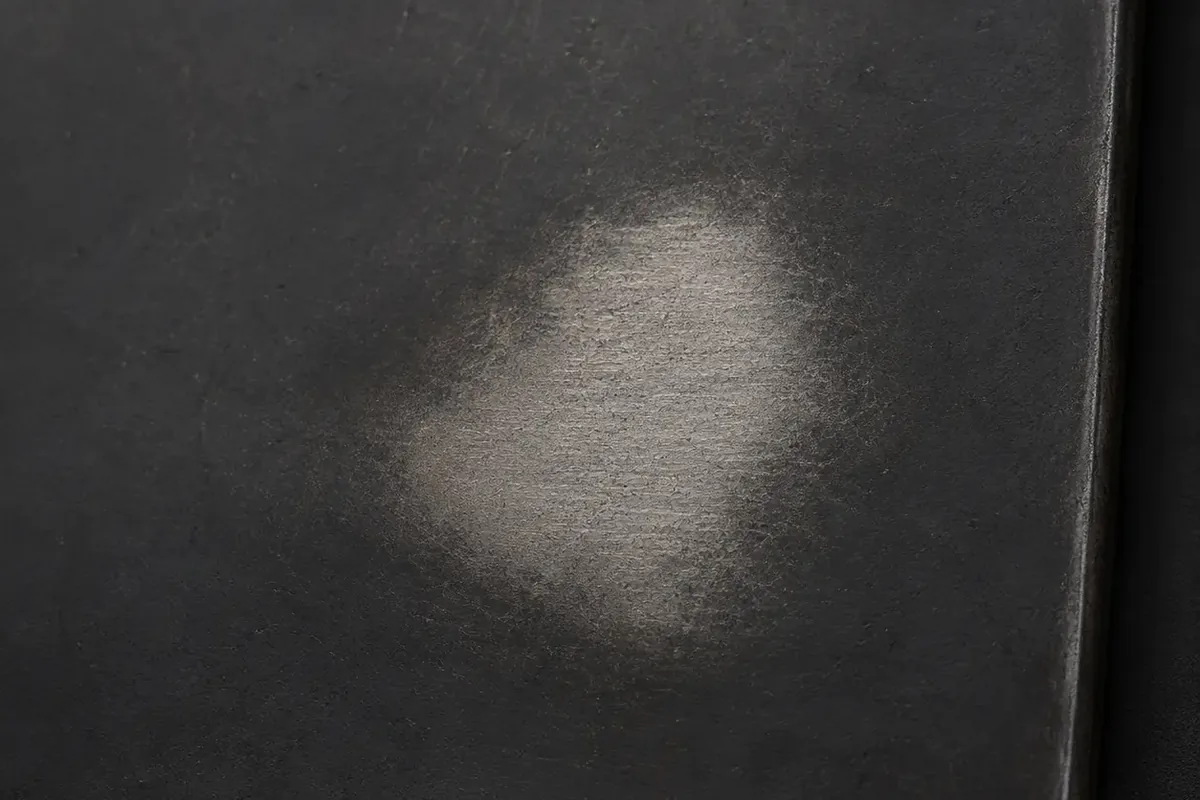
Blackened steel lightens where it is touched. Edges, corners, the top of a handrail and the front of a shelf bracket all come back toward grey over a few years, while the flats stay dark. It stops looking new and starts looking used.
Some clients want precisely that and are disappointed when we lacquer it. Others expect a black finish to stay uniformly black and are unhappy the first winter. There is no right answer, but there is a wrong one, which is not deciding until after it is installed.
If you want the look of blackened steel with none of the movement, the honest alternative is a fine-texture matte black powder coat. It is not the same finish and up close it does not read the same, but it will look identical on the day it is installed and identical in ten years.
Where it belongs
- Interior stair stringers, treads and balustrade frames
- Fireplace surrounds and hearth details
- Table bases, shelving and furniture frames
- Interior partitions, screens and door frames
- Hardware, brackets and exposed fixings on joinery
Where it does not
Outdoors, anywhere in Metro Vancouver. Blackening is a conversion layer a few microns deep with a wax or oil seal over it. Our rain gets through both within a season and the steel underneath rusts. We will not supply blackened steel for an exterior application, because we would be back to look at it inside a year.
Wet interiors. Bathrooms, pool surrounds and commercial kitchens will mark and eventually corrode it. For a dark finish in those rooms, use stainless with a dark PVD coating, or powder coat.
Anything that must match exactly, forever. Two blackened panels made a year apart will not be identical twins. If you need a repeatable colour across phases of a project, specify a RAL powder coat instead.
Blackening, patina and mill scale are three different things
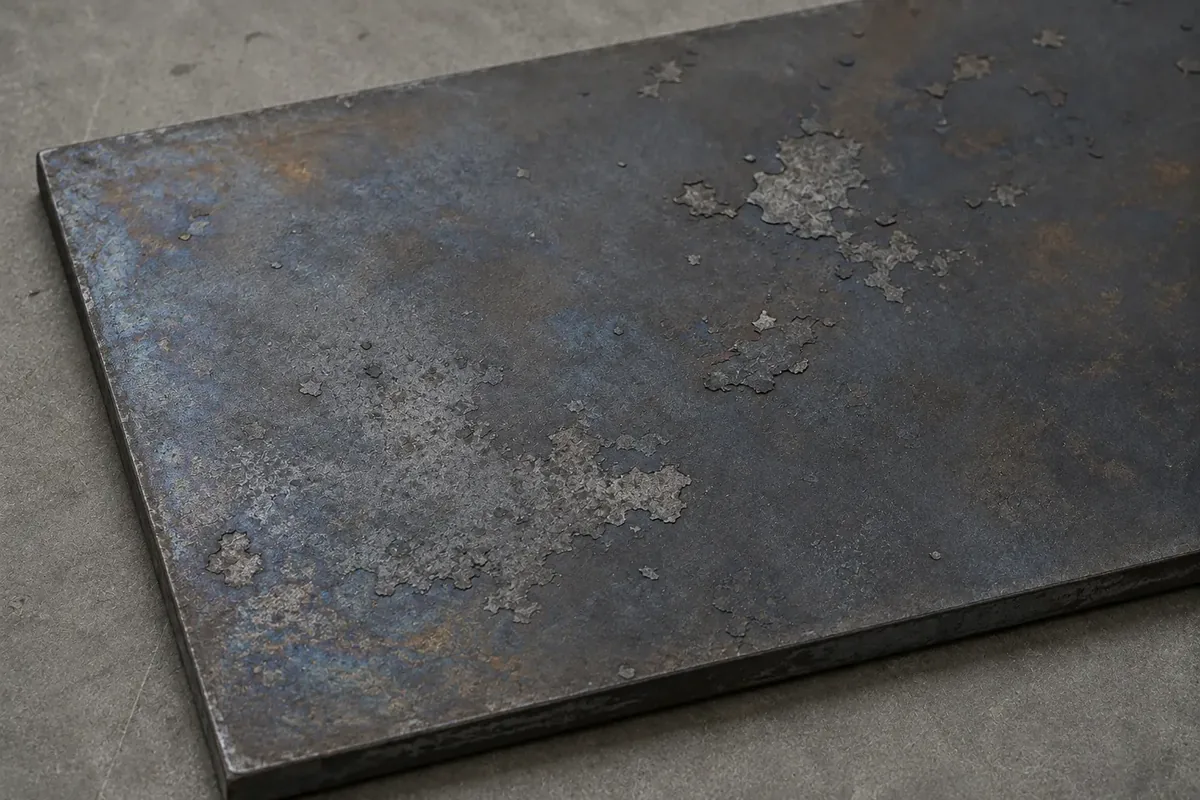
They get used interchangeably and they should not be:
- Blackened steel is a controlled chemical conversion. Relatively even, relatively repeatable, always black.
- Patina is an applied and accelerated ageing that can be black, brown, blue or green, and is deliberately uneven.
- Mill scale is not a finish at all. It is the blue-grey skin the mill leaves on hot-rolled plate, which we clear-coat and leave alone. See steel fabrication.
Looking after it
Dry cloth for dust. A barely damp cloth for marks, dried immediately afterwards. No solvents, no abrasive pads and nothing containing bleach or ammonia — all of them will strip the seal and take the black with it.
On waxed work, a fresh coat of clear paste wax once a year on the surfaces people touch is the whole maintenance regime. If a spot has worn back to bare steel it can be re-blackened in place; it does not need to come out.
Free in-house consultation
We come to you, measure the site, and talk through options and budget before you commit to anything. On blackened work we would rather make you a sample first and agree it than argue about the shade after install.
Call (778) 805-5333 or email sales@trussmetal.com